|
| |
|
| |

| |
|
| |
| |
| |
| |
| |
| |
| |
| |
| |
| |
| |
| |
| |
| |
| 1846-1847; 1881-1882 (completed)
Jan Van Hunks
aka The Dutchman's Wager
Full of smoke was the quaint old room |
|
| |
![Page Images Available for
Fazio Degli Uberti. “Canzone. His Portrait of his Lady, Angiola
of Verona.” [complete]](http://www.rossettiarchive.org/img/thumbs_small/s164.jpg "Go to the Commentary for
Fazio Degli Uberti. “Canzone. His Portrait of his Lady, Angiola
of Verona.” [complete]")
| |
| |
| |
| |
| |
| |
| |
| |
| |
| |
| 1847; 1869
Ave
Mother of the Fair Delight, |
|
| 1847; 1869 (text); 1862 (begun before); 1870 (picture, completed)
The Portrait
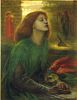
This is her picture as she was: |
|
| |
| |
| 1847 1847 1849
Filii Filia
aka For an Annunciation. Early German
aka Returning to Brussels
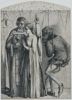
The lilies stand before her like a screen |
|
| |
| |
| |
| |
| |
| |
| |
| |
| |
| |
| 1848
Afterwards
aka Unburied Death
She opened her moist crimson lips to sing; |
|
| |
| 1848
Another Love
aka One with Two Shadows
Of her I thought who now is gone so far: |
|
| |
| 1848
Almost Over
I think I should not think upon her now: |
|
| |
| |
| 1848
Height in Depth
aka Heighth in Depth
He turned his face apart, and gave a sigh |
|
| 1848
At Issue
aka Through Death to Life
That voice I hear,—how heard I cannot tell,— |
|
| |
| |
| 1848
A Foretaste
At length the then of my long hope was now; |
|
| |
| |
| |
| 1848
My Sister's Sleep
aka Songs of One Household No. 1
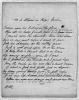
She fell asleep on Christmas Eve: |
|
| |
| |
| |
| |
| 1848
The Blood's Winter
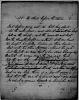
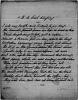
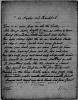
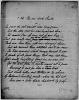
I shall not conquer, much as I may strive, The end is come. However much I strive |
|
| |
| |
| |
| |
| 1848
Sunset
Some few birds still beat on, weary & late, |
|
| |
| |
| |
| |
| |
| |
| |
| 1848; 1868 March (recovered)
Disio
O bocca che nell' ora del disio |
|
| 1848; 1869 (revised and redrafted)
Compenso
O bocca che nell' ora del compenso |
|
| |
| |
| |
| |
| |
| |
| |
| |
| |
| |
| |
| |
| |
| |
| |
| |
| |
| |
| |
| |
| |
| |
| |
| |
| |
| |
| |
| |
| |
| |
| |
| |
| |
| |
| |
| |
| |
| |
| |
| |
| |
| |
| |
| |
| |
| |
| |
| |
| |
| |
| |
| |
| |
| |
| |
| |
| |
| |
| |
| |
| |
| |
| |
| |
| |
| |
| |
| |
| |
| |
| |
| |
| |
| |
| |
| |
| |
| |
| |
| |
| |
| |
| |
| |
| |
| 1848 (first version); 1869 (last version), with
intermediate versions
Jenny
Lazy laughing languid Jenny, |
|
| |
| |
| 1848-1849; 1869 (substantially revised) 1848; 1869 (substantially revised) 1848 1848
The Card-Dealer
Could you not drink her gaze like wine? |
|
| 1848-1850 1852 (circa)
Dante at Verona
‘Yea, thou shalt learn how salt his food who fares |
|
| |
| |
| |
| |
| |
| |
| |
| |
| |
| 1848 September 4
Autumn Song
aka The Fall of the Leaf
aka The Angel of Death
Know'st thou not at the fall of the leaf |
|
| |
| |
| |
| |
| |
| |
| |
| |
| |
| |
| |
| 1849
Madonna
aka Madonna Consolata
aka She Wept, Sweet Lady
La bella donna* |
|
| |
| |
| |
| |
| |
| |
| |
| |
| |
| |
| |
| |
| |
| |
| |
| |
| |
| |
| |
| |
| |
| |
| |
| |
| |
| |
| |
| |
| |
| |
| |
| |
| 1849 1849 (text); 1857 (picture, circa)
Old and New Art (group of 3 poems)
aka St. Luke the Painter [sonnet I]
aka The Mission of Luke [sonnet I]
Give honour unto Luke Evangelist; |
|
| |
| |
| |
| |
| 1849 January?
On Browning's Sordello
aka Sonnet on a first reading of “Sordello”
“Sordello's story,” (The Sphinx yawned and said,) |
|
| |
| |
| |
| |
| |
| |
| |
| |
| |
| |
| |
| |
| 1849 October
For Ruggiero and Angelica by Ingres
aka Sonnets for Pictures 5. Angelica rescued from the
Sea-monster, by Ingres; in the
Luxembourg
A remote sky, prolonged to the sea's brim: |
|
| |
| |
| |
| |
| |
| |
| |
| |
| |
| |
| |
| 1849 September 28
The Sea-Limits
aka From the Cliffs. Noon
aka At Boulogne. Upon the Cliffs: Noon
Consider the sea's listless chime: |
|
|
| |
| |
| |
| |
| 1850
Adieu
Let time & chance combine, combine, |
|
| |
| |
| |
| |
| 1850?
Fortuna
The wind blows east, the wind blows west, |
|
| |
| |
| |
| |
| 1850 1861, 1864
Love's Greeting
aka Lines from the Roman de la Rose
Tendre eut la chair comme rousée, |
|
![Page Images Available for [Verses to Robert Browning]](http://www.rossettiarchive.org/img/thumbs_small/31-1850.baylorms.1.jpg "Go to the Commentary for [Verses to Robert Browning]")
| |
| |
| 1850 January 20
St. Wagnes' Eve
The hop-shop is shut up: the night doth wear. |
|
| |
| 1850 September
The Mirror
aka A Symbol
She knew it not,—most perfect pain |
|
| |
| 1851-1852 1870 (circa)
Sister Helen
‘Why did you melt your waxen man, |
|
| |
| |
| |
| 1852 October
Broken Music
The mother will not turn, who thinks she hears |
|
| 1853
Known in Vain
aka Work and Will
As two whose love, first foolish, widening scope, |
|
| |
| |
| |
| |
| 1853
The Hill Summit
aka From the Hilltop
This feast-day of the sun, his altar there |
|
| 1853
Penumbra
I did not look upon her eyes, |
|
| |
| |
| |
| |
| |
| |
| |
| |
| |
| |
| 1854
The Birth-Bond
aka Nearest Kindred
Have you not noted, in some family |
|
| |
| |
| 1854; 1869 (much revised)
Love's Nocturn
aka Nocturn
Master of the murmuring courts |
|
| |
![Page Images Available for [To Ford Madox Brown]](http://www.rossettiarchive.org/img/thumbs_small/8-1854.ubcms.1.jpg "Go to the Commentary for [To Ford Madox Brown]")
| |
| 1854 October
The Landmark
Was that the landmark? What,—the foolish well |
|
| |
| |
| |
| 1855 1858 June 25
Beauty and the Bird
aka Bella's Bulfinch
She fluted with her mouth as when one sips, |
|
| |
| |
| |
| |
| |
| |
| |
| 1855 January
A Dark Day
The gloom that breathes upon me with these airs |
|
| |
| |
| |
| |
| 1858, 1859 (possibly)
A New-Year's Burden
aka Belcolore
aka Song. A New Year's Burden
Along the grass sweet airs are blown |
|
| |
| |
| |
| |
| 1859
A Little While
aka Song. A Little While
A little while a little love |
|
| |
| 1859; 1854 (perhaps)
Even So
So it is, my dear. |
|
|
| |
| |
| |
| |
| |
| |
| 1860 1859
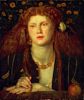
Bocca Baciata
aka The Song of the Bower
Say, is it day, is it dusk in thy bower, |
|
| |
| |
| |
| |
| |
| |
| |
| |
| |
| |
| |
| |
| |
| |
| |
| |
| |
| |
| |
| |
| |
| |
| |
| |
| |
| |
| |
| |
| |
| |
| |
| |
| |
| |
| |
| |
| |
| |
| |
| |
| |
| |
| |
| |
| |
| |
| |
| |
| |
| |
| |
| |
| |
| |
| |
| |
| |
| |
| |
| |
| |
| |
| |
| |
| |
| |
| |
| |
| |
| |
| |
| |
| |
| |
| |
| |
| |
| |
| |
| |
| |
| |
| |
| |
| |
| |
| |
| |
| 1862
Lost Days
aka (Sonnet).
The lost days of my life until to-day, |
|
| |
| |
| |
| |
| |
| 1865 October 1865-1868
Aspecta Medusa
Andromeda, by Perseus saved and wed, |
|
| |
| 1866
My Lady
I'll tell you of my Lady all I know; |
|
| |
| 1866 1864-1869
Body's Beauty
aka Lady Lilith
aka Lilith
Of Adam's first wife, Lilith, it is told |
|
| 1866 1864-1870
Soul's Beauty
aka Sibylla Palmifera
Under the arch of Life, where love and death, |
|
| |
| |
| 1867 June
Con Manto d'Oro, etc.
aka With Golden Mantle, etc.
aka Robe d'Or, etc.
With golden mantle, rings, & necklace fair, |
|
| |
| |
| 1868-1880
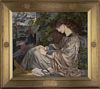
La Pia. Dante
“Ah! when on earth thy voice again is heard |
|
| 1868 August 1868 1868
Newborn Death
To-day Death seems to me an infant child |
|
| 1868 December 1869 1869 1869 1869
Willowwood
I sat with Love upon a woodside well, |
|
| |
| |
| 1869
Sleepless Dreams
aka Sleepless Love
Girt in dark growths, yet glimmering with one star, |
|
| 1869
Secret Parting
aka Love's Moments
Because our talk was of the cloud-control |
|
| 1869
Parted Love
What shall be said of this embattled day |
|
| 1869
Death-in-Love
aka Dies Atra 1st May 1869
There came an image in Life's retinue |
|
| 1869
Inclusiveness
aka For Answer
The changing guests, each in a different mood, |
|
| |
| 1869
Vain Virtues
What is the sorriest thing that enters Hell? |
|
| |
| 1869
Love's Testament
aka Flammifera
aka Love's Redemption
O Thou who at Love's hour ecstatically |
|
| |

| 1869
English May
aka May 1869
Would God your health were as this month of May |
|
| 1869
Lovesight
When do I see thee most, beloved one? |
|
| |
| |
| 1869
On Burns
In whomsoe'er, since Poesy began, |
|
| |
| |
| |
| |
| |
| |
| |
| |
| 1869
The Kiss
What smouldering senses in death's sick delay |
|
| |
| |
| |
| |
| 1869
Sonnets
As when desire, long darkling, dawns, and first |
|
| 1869
Songs
As when desire, long darkling, dawns, and first |
|
| |
| |
| 1869
The Love-Moon
‘When that dead face, bowered in the furthest years, |
|
| |
| 1869, 1873 1869 1873
The Sun's Shame
Beholding youth and hope in mockery caught |
|
| |
| |
| |
| |
| |
| |
| |
| |
| |
| |
| |
| |
| |
| |
| |
| |
| |
| 1869?
Nuptial Sleep
aka Placata Venere
At length their long kiss severed, with sweet smart: |
|
| 1869 (probably spring 1869; possibly spring 1868)
Three Songs
Along the grass sweet airs are blown |
|
| 1869[?]
Plighted Promise
aka Bellebuona
aka The Moon-Star
In a soft-complexioned sky, |
|
| |
| 1869 1863-1864 (circa) or 1869 (circa)
Eden Bower
It was Lilith the wife of Adam: |
|
| |
| |
| |
| 1869-1870 1863-1864; 1869-1870
Troy Town
Heavenborn Helen, Sparta's queen, |
|
| |
| 1869-1881
Limericks
There is a big artist named Val, |
|
| |
| 1869 July
Love's Lovers
Some ladies love the jewels in Love's zone |
|
| |
| 1869 June
Love-Lily
Between the hands, between the brows, |
|
| |
| |
| |
| |
| |
| 1869 or 1871
At Last
Fate claimed hard toll from Love, and did not spare; |
|
| |
| 1869 September
Love's Baubles
I stood where Love in brimming armfuls bore |
|
| 1869 September 10 1869 September-1869 November (circa)
Parted Love!
aka The Wombat
Oh! how the family affections combat |
|
| |
| |
| |
| |
| |
| 1869 summer
Bridal Birth
aka Bridal Birthdays
As when desire, long darkling, dawns, and first |
|
|
| |
| 1870
Stillborn Love
aka The Stillborn Hour
The hour which might have been yet might not be, |
|
| |
| 1870
Hoarded Joy
aka Joy Delayed
I said: ‘Nay, pluck not,—let the first fruit be: |
|
| 1870
Barren Spring
Once more the changed year's turning wheel returns: |
|
| 1870
Death's Songsters
aka Deadly Sweetness
aka Death's Sweetness
When first that horse, within whose populous womb |
|
| 1870
He and I
Whence came his feet into my field, and why? |
|
| |
| |
| 1870
Passion and Worship
aka Love and Worship
One flame-winged brought a white-winged harp-player |
|
| |
| 1870
Youth's Spring-Tribute
aka Love's Spring-Tribute
aka Spring-Tribute
On this sweet bank your head thrice sweet and dear |
|
| |
| |
| |
| |
| |
| 1870 February
A Day of Love
Those envied places which do know her well, |
|
| 1870 February
Life-in-Love
Not in thy body is thy life at all |
|

| |
| |
| |
| |
| |
| |
| 1871
Pride of Youth
aka Love's Changes
Even as a child, of sorrow that we give |
|
| 1871
Mid-Rapture
aka Between Kisses
Thou lovely and beloved, thou my love; |
|
| 1871
Heart's Compass
aka Love's Compass
Sometimes thou seem'st not as thyself alone, |
|
| 1871
Soul-Light
aka Lovelight
What other woman could be loved like you, |
|
| |
| 1871
Last Fire
Love, through your spirit and mine what summer |
|
| 1871
Her Gifts
aka My Lady's Gifts
High grace, the dower of queens; and therewithal |
|
| 1871
Equal Troth
aka Love-Measure
Not by one measure mayst thou mete our love; |
|
| |
| 1871
Heart's Hope
By what word's power, the key of paths untrod, |
|
| 1871
Chimes
Honey-flowers to the honey-comb |
|
| 1871
The Lamp's Shrine
aka The Love Lamp
Sometimes I fain would find in thee some fault, |
|
| |
| |
| |
| |
| |
| 1871
Without Her
What of her glass without her? The blank grey |
|
| |
| |
| |
| |
| |
| |
| |
| |
| |
| |
| |
| |
| 1871
Beauty's Pageant
aka Love's Pageant
What dawn-pulse at the heart of heaven, or last |
|
| |
| |
| |
| |
| 1871
Silent Noon
Your hands lie open in the long fresh grass,— |
|
| |
| |
| 1871, 1881
Rose Mary
Of her two fights with the Beryl-stone: |
|
| 1871; 1869 (possibly)
First Fire
This hour be her sweet body all my song. |
|
| |
| |
| 1871-1881
Soothsay
aka Commandments
Let no man ask thee of anything |
|
| 1871-3
A Death-Parting
aka The Water Willow
Leaves and rain and the days of the year, |
|
| |
| |
| 1871 August
Sunset Wings
To-night this sunset spreads two golden wings |
|
| |
| |
| 1872 1871-1882 1872 1872
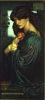
Proserpine
aka Proserpina
Lungi è la luce che in sù questo muro |
|
| |
| |
| |
| |
| |
| |
| |
| |
| |
| |
| 1873 May
Spring
Soft-littered is the new-year's lambing-fold, |
|
| |
| |
| |
| |
| 1874 February
Winter
How large that thrush looks on the bare thorn-tree! |
|
| |

| |
| 1875
Hero's Lamp
That lamp thou fill'st in Eros' name to-night, |
|
| |
| |
| |
| |
| |
| |
| |
| |
| |
| |
| |
| 1876
Adieu
Waving whispering trees, |
|
| |
| |
| |
| |
| |
| |
| |
| 1878 (ca.)
Anomalies
Anomalies in earth's/earth's against all rules |
|
| |
| |
| |
| |
| 1879 (unfinished) 1863, 1882
Joan of Arc
This word had Merlin said from of old:— |
|
| |
| |
| |
|
| |
| |
| |
| 1880
Dîs Manibus
Gustave Flaubert, who held/played filled the imperial rôle |
|
| 1880
Mnemosyne
Thou fill'st from the winged chalice of the soul |
|
| |
| 1880 1880 1880
La Ricordanza
aka Memory
Maggior dolore è ben la Ricordanza, |
|
| 1880 April 12
The Song-Throe
By thine own tears thy song must tears beget, |
|
| |
| |
| 1880 February
John Keats
The weltering London ways where children weep |
|
| |
| |
| |
| |
| |
| 1881
Insomnia
Thin are the night-skirts left behind |
|
| 1881
Possession
There is a cloud above the sunset hill, |
|
| |
| |
| |
| |
| |
| |
| |
| |
| |
| |
| |
| |
| |
| |
| |
| |
| |
| |
| |
| |
| |
| |
| |
| |
| |
| 1882
D. G. R.
Sunshine of day, & clear starlight of night! |
|
| 1884 July
Nocturne
My Dante lies at Birchington, |
|
The point of departure for reading Rossetti's poetry has to be Walter Pater's essay published in 1883, shortly after Rossetti's death. Pater's was the strongest as well as the subtlest critical intelligence of the period in England. (Oscar Wilde, another Rossetti enthusiast, would soon emerge as the most brilliant).
The defining feature of Pater's Rossetti is his “poetic originality.” For Pater, he is a writer whose study of Dante and his circle led him to develop an “unmistakably novel” style. The chief quality of this sweet new style is what Pater calls a “transparency in language” devoted to “the imaginative creation of things that are ideal from their very birth.” Stylistic limpidity is crucial in Rossetti's case because his subjects and meanings are “always personal and even recondite, in a certain sense learned and casuistical, sometimes complex or obscure.”
Pater's essay investigates the paradox of a writer seen as both limpid and obscure. He wants to show how Rossetti's poetic idealizations are (paradoxically) tied to often extreme forms of “particularisation.” The work everywhere exhibits what Pater calls an “almost grotesque materialising of abstractions.” He covets these effects because his central subjects are Art and Love, where “matter and spirit ... play inextricably into each other.” Though Pater does not pursue the thought, these are also subjects that can only be taken up as activities, in performative and, finally, in interactive ways. The blending of the material and the spiritual, of soul and body, of idea and act, defines Rossetti's poetry as much as it does his pictorial work. Pater astutely calls Rossetti's poetry “sacramental”—despite its resolute “fleshliness”—exactly because of its performative character. Its extreme idealizations emerge in and through acts of writing, much as the meaning of prayer is the instantiated act of (textual) devotion itself.
Rossetti's juvenilia comprises a moderate corpus of poems, dramas, prose tales, and translations written in the 1830s and early 1840s. All of this work shows a thorough committment to romantic, not to say gothic, preoccupations. Much has not survived, and while little of the work before 1845 possesses any intrinsic value, it is important for what it shows about certain tendencies in his writing. Even more than his later friends Swinburne and Morris, Rossetti would eventually turn pastiche into a form of creative writing. His early translations and imitations are already playing with the art of pastiche, which will eventually get incorporated into his devotional method of work: that effort to turn writing (and art in general) into a magical act. (For a good example of Rossetti's use of pastiche see “Ave”).
The important original writing begins suddenly in 1847, the year he composed the earliest version of one of his masterpieces, “The Blessed Damozel”, as well as a number of other significant works like “My Sister's Sleep”. In the next few years—into 1851—Rossetti produces an astonishing body of poetry and imaginative prose, including the first versions of some of his greatest works— “Jenny”, “Hand and Soul”, the Sonnets for Pictures, “Dennis Shand”, “Sister Helen”, and many others. At that point, as he turned his main efforts and attention to his pictorial work, Rossetti had initiated what would become a recurring pattern in his creative output. That is to say, while he never altogether gives up either his art or his writing, he tends to concentrate on one or the other. There is no question that his predominant activity is artistic rather than poetical, and hence that the periods of writing come as intense eruptions, more or less extended in time, within his career as an artist. (On the other hand, there are as many who believe his greatest work was done as a writer rather than as an artist.)
The mature and finished character of Rossetti's poetry, not least in this early period of its flowering, was achieved because of the discipline he acquired translating Dante and the poets of the early stil novisti circle. These translations—probably begun as early as 1845—plunged him into a deep involvement with Europe's most significant body of love poetry. They also put him through a rigorous course in writing technique. Finally, they involved him with a group of writers—Dante and Cavalcanti being just the two most eminent—who had established unsurpassed models for a poetry addressing itself to what Shelley would later call Intellectual Beauty. We rightly think of Rossetti as a poet of love and physical passion. Nonetheless, he is also (like Dante) an intellectual writer pursuing a definite set of ideas. The period 1848-1851 is a distinctly programmatic one for Rossetti. His work and ideas inspired the founding of the original Pre-Raphaelite Brotherhood, along with its polemical theoretical organ The Germ, which appeared in four numbers in 1850.
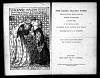
After the demise of The Germ, however, Rossetti's pictorial work became the focus of his imaginative life for a great many years. Although he continued to write (largely poetry) through the 1850s and 60s, the period is dominated by his work in painting, drawing, and graphic design. Significantly, he did publish one book in this period—his first book, the collection of his translations called The Early Italian Poets (1861). He also planned to publish another book, Dante at Verona and other Poems , which was advertised for publication at the back of Rossetti's book of translations. This publication was cancelled, however, because of the death of Rossetti's wife Elizabeth. His sense of grief (and guilt) at her death was such that he buried his original poems in a manuscript book in his wife's grave.
One other literary work of this period is notable: Alexander Gilchrist's Life of William Blake, which was published posthumously in two volumes by his wife Anne in 1863. The second volume contains Rossetti's commentaries on Blake's work as well as a selection of Blake's writings edited by Rossetti. The last chapter of the first volume is a wide-ranging essay on Blake by Rossetti.
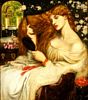
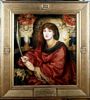
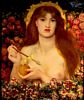
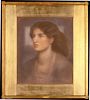
In the late 1860s Rossetti was moved to turn back to his writing. A second period of vigorous poetical activity occurs in 1869-1871. It is forecast in 1867-1868 with a handful of sonnets that Rossetti writes on pictorial subjects, like “A Superscription”, or explicitly for (his own) pictures, like “Soul's Beauty”, “Body's Beauty”, and “Venus Verticordia”. Rossetti's poetry in this second period is predominantly in sonnets. That is to say, it orbits around The House of Life and the book in which that work first appeared, the Poems of 1870.
Just as The Germ centers Rossetti's first period of important writing, so this book centers the second. It was organized by Rossetti as a kind of summary of his work as a poet. It was to contain not only the best of his recent original work, but a gathering of the best of his earlier work as well.
The latter purpose was hampered because Rossetti no longer had copies of some of his most important early poems. These had been buried in 1862 in his wife's grave. With the encouragement of his friends, Rossetti had the grave exhumed in October 1869 and the manuscript volume of his poetry removed.
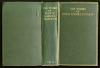
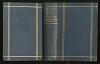
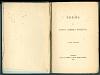
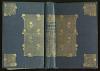
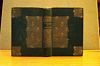
At that point Rossetti was able to carry through a process of printing and revising his texts that he had begun in the summer of 1869. The process evolved though a series of proof texts and “Trial Books” in which he experimented with different arrangements. The Trial Books, printed “for private circulation,” were sent to various friends for criticisms and suggestions. 1869-70 were devoted to the gradual construction of the book that would eventually become Rossetti's most celebrated and important work. It was designed by Rossetti from cover to cover and contained the first book version of his masterwork, The House of Life. The latter would be revised and augmented in a major way during his third and final period of literary activity.
The aftermath of the publication of the 1870 Poems proved almost as significant as the event itself. The book was received initially to a chorus of praise—much of it orchestrated by Rossetti, who saw to it that friends and friendly critics would write key reviews. In October 1871, however, Robert Buchanan published a sharply hostile notice of the book in the Contemporary Review, the (infamous) “The Fleshly School of Poetry”. The review raised a storm. It called out responses from Swinburne and Rossetti himself (who wrote a long rejoinder called “The Stealthy School of Criticism” which he published in The Athenæum in December 1871).
After 1871 Rossetti's poetical work once again subsided for a time as he turned to the execution of a series of major pictorial works. The only significant literary event was the publication in 1874 of a revised edition of his 1861 collection of translations, this time under the title Dante and His Circle.
In 1879-81 Rossetti had a new burst of literary activity. Most prominent here are the long ballads he wrote at this time, including “The King's Tragedy”, “The White Ship” and “Rose Mary” (the latter a work he had begun years earlier). At the same time he began to gather and re-work many of the sonnets and other poems he had written during the 70s. His primary object was to recast The House of Life sequence into a form that would incorporate sonnets written primarily in late 1870 and in 1871—sonnets that were inspired largely by his love for Jane Morris.
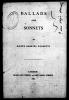
The ballads and other new work led Rossetti to make plans for a New Edition of the Poems volume that he had published in 1870. But finding that he had too much new material for one volume, he decided to separate the work into two books. Besides Poems. A New Edition, he published Ballads and Sonnets, which included the much expanded text of The House of Life, as well as many other new poems, including the new narrative poems. This came out in the fall of 1881, immediately preceding the New Edition of the Poems, which also contained some new work.
Rossetti died in 1882. Four years later his brother William Michael published the first of his series of editions, The Collected Works of Dante Gabriel Rossetti in two volumes. This work, which contained many unpublished writings, was repeatedly revised and augmented over the next twenty-five years, until it achieved its culminant form in the one-volume Works of Dante Gabriel Rossetti in 1911.
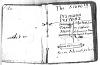
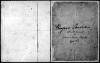
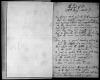
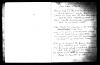
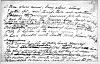
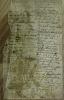
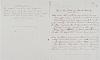
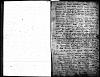
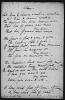
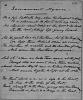
Although not all of his writing followed the same compositional protocol, Rossetti did have a distinct pair of preferred procedures. He kept notebooks in which he would spontaneously enter fragments of verse, quotations, thoughts, and even quotidian memoranda. He would subsequently mine these notebooks for more substantial acts of composition. Some of these notebooks survive intact but most have been disbound by Rossetti and others for different purposes. Poetical scraps of many kinds descend to us in these notebooks and their disbound remains. Rossetti also used the bound notebook format for most of his deliberated acts of composition. He would typically compose on the recto and leave the verso blank for additions and revisions.