 page:
page: cover
Added TextJ. M. Herbert Syr.
Editorial Note (page ornament): An ornamental border frames all but the printer’s name and address, at the bottom of the page.
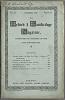
No. X.
OCTOBER, 1856. Price 1
s
THE
Oxford + Cambridge
Magazine,
Editorial Note (page ornament): Initial O, C, and M are ornamental
CONDUCTED BY MEMBERS OF THE
TWO UNIVERSITIES.
Editorial Note (page ornament): Publisher’s mark.
CONTENTS.
- Twelfth Night; or What You Will. A Study in Shakespeare . . . . . . .
581
- The Sceptic and the Infidel . . . . . . .
605
- Cavalay. A Chapter of a Life. Part II. . .
620
- The Hollow Land. A Tale . .
Morris . .
632
- Rogers’s Table Talk . . . . . . . .
641
- Pray but one Prayer for us. A Poem .
Morris. . .
644
LONDON:
BELL AND DALDY, FLEET STREET.
PRINTED BY C. WHITTINGHAM, TOOKS COURT, CHANCERY LANE.
 page:
page: [unpaginated]
Transcription Gap: (Advertisements)
![Image of page [581]](http://www.rossettiarchive.org/img/thumbs_small/ap4.o93.1.581.jpg) page:
page: [581]
Editorial Note (page ornament): An ornamental design appears at the top of the page.
Editorial Note (page ornament): Initial I is ornamental
It is believed that Twelfth Night is the thirty-fourth and last written of Shakespeare’s Plays. We may reasonably therefore look therein for evidence of the
maturity of his genius:
nor shall we look in vain. It has not indeed the terrible energy of Lear, Othello, and others of his greatest works—for supposing
it to have been composed
for a new Twelfth Night piece, such as was usually represented before the Court in the reigns of Elizabeth and of James, anything more grave would
have been out of place: but the
master hand is well discernible in this play, in its freedom from blemishes, its finish, the compactness of the plot, the
smooth, swift dialogue, the good stage
effects, and, above all, in the bright, but calm and comprehensive wisdom with which the main subject—which is love—is viewed.
The serene yet
warm light shed over this drama may be likened to the golden summer afternoon sunshine,
Column Break
whose beams lie wide on the green sward of some far extending common,
slope upward on the trunks and foliage of the oaks with which it is here and there bestudded, glance on the tall, feathery
ferns, glow on the foxgloves and heath, nor
forget to penetrate with pure light the transparent cup of the delicate, slightly trembling bluebell. This serenity, power,
and warmth we may conceive to have been
attributes of the mind of Shakespeare at this period of his life—if, as is thought, the play was written at Stratford on Avon,
after he had retired from
stage management and London, in 1614, and only two years before his death, at the age of fifty-two. It cannot be uninteresting
to see what were the final conclusions
of this mighty and gentle mind regarding that passion which plays so large a part in the World’s Drama; and we shall proceed
therefore to search out
Shakespeare’s Principles of Love as shown to us in this his latter, if indeed it be not his last writing.
*
Transcribed Footnote (page [581]):
* The above conjecture of the Commentators as to the date when this play was written is partly founded on a passage in the
third Act, where Sir
Toby says to
 page:
page: 582
-
Enter Orsino, Duke of Illyria, Curio. Atlendants, Musicians.
- “
Duke. If music be the food of love, play on,
- Give me excess of it; that surfeiting,
- The appetite may sicken, and so die.—
- That strain again;—it had a dying fall:
- O, it came o’er my ear like the sweet south,
- That breathes upon a bank of violets,
- Stealing and giving odour.—Enough; no more;
- ’Tis not so sweet now as it was before.
- O spirit of love, how quick and fresh art thou!
-
10That notwithstanding thy capacity
- Receiveth as the sea, nought enters there,
- Of what validity and pitch soever,
Column Break
- But falls into abatement and low price,
- Even in a minute! so full of shapes is
fancy*
- That it alone is high fantastical.
-
Curio. Will you go hunt, my lord?
-
Duke. What, Curio?
-
Cur. The hart.
-
Duke. Why so I do, the noblest that I have:
-
20O, when mine eyes did see Olivia first,
- Methought she purged the air of pestilence;
- That instant was I turn’d into a hart;
- And my desires, like fell and cruel hounds,
- E’er since pursue me.—How now? What news from her?
-
Enter Valentine.
-
Val. So please my lord, I might not be admitted,
Transcribed Footnote (page 582):
Antonio, “Nay, if you be an undertaker, I am for you.” This is thought to be a stage allusion to the political world. There
were certain
persons who had in that year, 1614, undertaken to carry things for the King in the House of Commons, to the great scandal
of the nation, and these individuals
were called Undertakers. Certainly Shakespeare’s play was written after Marston’s What You
Will, entered at Stationers’ Hall in 1607. Whoever reads the two will see how our author dealt with the hints he took from
others, and how out of chaos and obscurity he would seize upon some element and work it into a distinct form of beauty—“a
joy for
ever” to the world. The coincidences in the two dramas, however slight, are numerous.
First. In Marston’s play two individuals personate a third; as Viola personates her brother; and these appear on the stage
at the same time.
Second. We are reminded of Shakespeare’s “high phantastical” duke in these passages in Marston.—One says,
- “My master’s mad, starke mad, alasse for love.”
- “But troth say what straine’s his madness of?”
- “ Phantasticall.”
Third. The Clown’s question to Malvolio about the soul has this parallel in Marston.
- “I was a scholler—seauen vsefull springs
- Did I defloure in quotations
- Of cross’d oppinions ’bout the soule of man.
- The more I learnt the more I learnt to doubt:
- Knowledge and wit, fayths foes, turne faythe about.
- How ’t was created, how the soule existes,
- One talkes of motes, the soule was made of motes,
- Another fire, ’t other light, a third a spark of starlike nature,
- Hippo water, Anaximenus ayre,
-
10Aristoxenus musicke, Critias I know not what.”
Fourth. Olivia’s mood may have been suggested by Marston’s “Do but scorne her; shee is thine own,”
&c., and
Fifth. Viola’s spirit is prefigured in Marston’s lines,
- “ If love be holy, if that mystery
- Of co-united hearts be sacrament,
- If the unbounded goodness have infused
- A sacred ardor—if a mutual love
- Spring from a cause above our reason’s reach,
- If that cleere flame deduce his heat from heaven,
- ’Tis like his cause eternall, alwaies one,
- As is th’ instiller of deuinest loue
- Vnchanged by time, immortall mauger death.”
Transcribed Footnote (page 582):
* Love.
 page:
page: 583
- But from her handmaid do return this answer:
- The element itself, till seven years heat,
- Shall not behold her face at ample view;
- But, like a cloistress, she will veiled walk,
-
30And water once a day her chamber round
- With eye offending brine: all this, to season
- A brother’s dead love, which she would keep fresh,
- And lasting, in her sad remembrance.
-
Duke. O, she, that hath a heart of that fine frame,
- To pay this debt of love but to a brother,
- How will she love, when the rich golden shaft
- Hath kill’d the flock of all affections else
- That live in her! when liver, brain and
heart,*
-
40 These sov’reign thrones, are all supplied, and fill’d
- (Her sweet perfections!) with one self king!
- Away before me to sweet beds of flowers;
- Love thoughts lie rich, when canopied with flowers.”—
Act i.
scene 1.
There can be gathered from these sentences no good augury for the happy issue of the passion of which they are the exponent.
Yet Orsino at once wins our
interest, nor does he fail altogether to command respect.
The words,
- “O, when mine eyes did see Olivia first,
- Methought, she purged the air of pestilence,”
are not those of a voluptuary: they express, very exquisitely, a high poetical passion, sprung from a momentary impression.
The use, in our
poet’s day, of the word “fancy,” in many cases where we now should say “love,” proves the general
recognition, formerly, of the fact that love, most often, does arise from the impression of a moment; of some moment in which
the fancy is struck, perhaps
inexplicably so, and the sense is awakened in the breast that a certain object possesses a beauty such as is owned by no other
creature. But, what shall come of
that impression—whether it shall fade like the ripple made by a pebble thrown upon the water, or,
- “Keep as true in soul
Column Break
- As doth that orbed continent the fire
- That severs day and night,”
must depend on subtle sympathies, the existence or non-existence of which is left to time to prove.
There is no indication in the passages above quoted of any such sympathy: on the contrary, everything we hear betrays the
uncongeniality of the two persons.
That Orsino should obtrude his suit on Olivia’s profound grief, shows how little he understands her; nor does her own account
of her state of mind
awaken in him one touch of sympathy. From her pathetic message he gathers this only—food for admiration, and for hope;—he
does not sorrow
that she is in sorrow: but, whilst she is bathed in tears, and will not let the air itself “behold her face at ample view,”
he withdraws, not to mourn in spirit with her, but to seek those delicious scenes of nature most suggestive to the poet and
the lover of the “love
thoughts” with which he be-decks the idol of his imagination. Just as Romeo loves not Rosalind, but has a mental image of
beauty for which Rosalind
stands, till Juliet, the true impersonation of it appears, so does Orsino love, love—but not Olivia.
Well does she read him. We find her in an after scene discoursing thus with one who has come to plead his cause:
- “
Olivia. Where lies your text?
-
Viola. In Orsino’s bosom.
-
Oli. In his bosom? In what chapter of his bosom?
-
Vio. To answer by the method, in the first of his heart.
-
Oli. O, I have read it; it is
heresy.
And, with the same discrimination, she will not let the envoy speak the speech Orsino has written, though told
- “
Vio. Alas! I took great pains to study it, and it is poetical.
-
Oli. It is the more like to be feigned. I pray you keep it in.”—
Act i.
scene 5.
The fate of this love both to its subject
Transcribed Footnote (page 583):
* The supposed seats of passion, judgment, and sentiment.
 page:
page: 584
and object is foreboded by the Clown, who thus quaintly observes, on the Duke’s restless change of
amusements:
“
Clo. Now, the melancholy god protect thee; and the tailor make thy doublet of changeable taffata, for thy mind is a very
opal.—I would have men of such constancy put to sea, that their business might be everything, and their intent everywhere;
for
that’s it, that
always makes a good voyage of nothing.”—
Act ii.
scene 3.
It is not that the passion has sprung from a vivid momentary impression that we despair of it; nor yet that it meets with
no reciprocation; but that it lacks
every symptom of true love, and abounds in every symptom of the spurious kind; inasmuch as it inspires not the man with sympathy,
even for the beloved object, nor
breathes into his life noble energy and purpose, or yet nobler self-denial—but on the contrary, to the exclusion of all these,
fills him with an
insatiable thirst for its own indulgence, as well as (and the Clown is right in arguing as he does from the circumstance),
with an incredible caprice in the whims
which constitute that indulgence.
This “spirit of love” may indeed “fall into abatement and low price, even in
a minute,” and we shall see, later, that the Duke himself has ever and anon an uneasy consciousness, against which he struggles,
of the insecurity of
his feeling, notwithstanding its violence.
In spite of all that is disparaging, however, we trace in Orsino, even in this first scene, a man of a most pure nature, of
highly poetical and artistic
temperament; a man of heart too, and of a reflective, philosophical cast of mind. Subsequently we find also that (though the
aspect under which he first presents
himself to us is such as we have seen under those bowery canopies where he, like Jacques’s
- “ Poor sequester’d stag
- That from the hunter’s aim had ta’en a hurt,
- Did come to languish,)”
his life previously had been sterner
Column Break
and more heroic. His fame had reached to other lands: and apparently he was one of those whose warlike
enterprises were usefully directed to clear the seas of the fierce and terrific pirates who from the time of the Romans downwards
had infested the Mediterranean
and Adriatic. There is a rougher music in the words in which, in the fifth Act, he relates one of these adventures than in
the liquid verse in which he
“tunes his distresses and records his woes” in the opening scene. Speaking of one whom he supposes to be a pirate, he
says:
- “That face of his I do remember well;
- Yet when I saw it last it was besmear’d
- As black as Vulcan in the smoke of war:
- A bawbling vessel was he master of,
- For shallow draught and bulk unprizable;
- With which such scathful grapple did he make
- With the most noble bottom of our fleet,
- That very envy and the tongue of loss
- Cry’d fame and honour on him.”
And addressing the same individual, he adds:
- “Notable pirate! thou salt water thief!
- What foolish boldness brought thee to their mercies,
- Whom thou, in terms so bloody, and so dear,
- Hast made thine enemies?”
Act v.
scene1.
In these spirited words heroic delight in martial enterprise is clearly indicated, as well as the awful power and wrath of
the supreme and ruling prince,
about to exercise his high prerogative of dealing justice to the enemy of the country. But so different is he from his best
self when first we see him, that we
must coincide in the remark in which a speaker, who knew him well, glances at him in a subsequent scene, when she says, in
her own gentle way, that
- “ Wise men folly-fallen quite taint their wit.”
We must now turn to the second scene of this drama, which has altogether a different tone from the first. Here, in contrast
with that Orsino,
 page:
page: 585
who, in the capital, indulges in “rich love thoughts” amongst “sweet beds of
flowers;” in contrast too with the Countess Olivia, who, immured in her princely mansion, nourishes her regret, the shipwrecked stranger,
Viola, wanders along the shore, struggling as she may with grief and danger. Nobly born and rich, very young and most beautiful,
cast by the storm on a country
not deemed safe even for a brave man to traverse alone, her position is one of peril; but it is not her own danger that weighs,
in the first instance, on her
mind; another more grievous anxiety oppresses her, and it is not until relieved in some degree of this that her own difficulties
and dangers occur to her mind.
The dialogue which we proceed to quote is between herself and the captain and sailors saved with her.
- “
Viola. What country, friends, is this?
-
Cap. Illyria, lady.
-
Viola. And what should I do in Illyria?
- My brother he is in Elysium.
- Perchance he is not drown’d:—What think you, sailors?
-
Cap. It is perchance that you yourself were saved.
-
Viola. O my poor brother! and so perchance may he be.
-
Cap. True, madam; and, to comfort you with chance,
- Assure yourself, after our ship did split,
-
10 When you, and that poor number saved with you,
- Hung on our driving boat, I saw your brother,
- Most provident in peril, bind himself
- (Courage and hope both teaching him the practice)
- To a strong mast, that lived upon the sea,
- Where, like Arion on the dolphin’s back,
- I saw him hold acquaintance with the waves,
- So long as I could see.
-
Vio. For saying so, there’s gold:
- Mine own escape unfoldeth to my hope,
-
20Whereto thy speech serves for authority,
- The like of him.”
Act i.
scene 2.
After the first impassioned exclamation, “And what should I do in Illyria?” we see that Viola recoils from the idea of
her loss, and three times in these few lines reiterates the hope of her brother’s safety. It is not simply
Column Break
the habitual generosity of the
highborn lady that prompts her answer, “For saying so, there’s gold,” but the tenderness of the sister wishes
“to pay this debt of love” “to a brother,” as if by that very action she rendered more secure in
reality, as she does to her own imagination, the fact of his existence.
The words of Viola seem like an echo rising up from the far-off shore to Orsino’s enthusiastic eulogy on sisterly love, which
we have just heard.
We see that she possessed that “fine frame of heart” which (by the rule that he propounds, and which is strictly true) does,
in its deep sisterly affection, imply capacity for love itself. Nor are we long in learning who is the object of that love.
Her anxiety for her brother now mitigated by hope, she turns her attention to her own safety, and, with a view to securing
that, continues her dialogue with
the captain. He having replied to her question, “Know’st thou this country?” in the affirmative, she asks:
- “
Vio. Who governs here?
-
Cap. A noble duke, in nature
- As in name.
-
Vio. What is his name?
-
Cap. Orsino.
-
Vio. Orsino! I have heard my father name him.
- He was a bachelor then.”
Viola has heard of Orsino, perhaps has seen him; at all events loves him. The quick “he was a bachelor then,” betrays
the uppermost thought. Spenser, in his “Fairy Queen,” tells how Britomartis wandered into her father’s study, and looking in a magic mirror, beheld the image of a knight with
whom she
fell in love, and whom she spent years in seeking. Just such a mirror to Viola has been her father’s conversation. Thus, in
her case, has been awakened
that first idea of love of which we have spoken, and the image already dwells in her soul, to which each thought is a homage.
The varying emotions with which she listens to the Captain’s replies to
 page:
page: 586
her subsequent interrogations are not difficult to imagine. After her observation, “he was a
bachelor then,” the dialogue continues thus:
- “
Cap. And so is now,
- Or was so very late: for but a month
- Ago I went from hence; and then ’twas fresh
- In murmur (as you know, what great ones do
- The less will prattle of,) that he did seek
- The love of fair Olivia.
-
Vio. What’s she?
-
Cap. A virtuous maid, the daughter of a count
- That died some twelvemonth since; then leaving her
-
10In the protection of his son, her brother,
- Who shortly also died: for whose dear love
- They say she hath abjured the company
- And sight of men.
-
Vio. O that I served that lady;
- And might not be deliver’d to the world,
- Till I had made mine own occasion mellow,
- What my estate is.
-
Cap. That were hard to compass,
- Because she will admit no kind of suit,
-
20No, not the duke’s.”
Very natural is the hurried, anxious “What’s she?” Then we see, that, as the Captain proceeds, her heart warms to Olivia,
in
whose sisterly love and sorrow she finds a point of sympathy, and the sense of safety in a house exempt from “the company and sight of
men” makes her wish to seek the protection of the Countess; but this wish is as instantaneously as silently renounced on hearing
that Olivia
“will admit no kind of suit.” Viola is too high born to sue, and too delicate to intrude on privacy, and above all on a
mourner’s grief.
Baffled then in her desire to enter this safe and decorous asylum, she adopts a resolution which shows equal spirit, delicacy,
and judgment; and, having
formed her plan, there is both wisdom and nobleness in the manner in which, by confiding in the Captain, and appealing to
his best feelings, she endeavours to
secure his aid, as the first condition of its successful execution. She says:
Column Break
- “
Vio. There is a fair behaviour in thee, Captain;
- And though that nature with a beauteous wall
- Doth oft close in pollution, yet of thee
- I will believe thou hast a mind that suits
- With this thy fair and outward character.
- I pray thee, and I’ll pay thee bounteously,
- Conceal me what I am; and be my aid
- For such disguise, as, haply, shall become
- The form of my intent. I’ll serve this Duke:
-
10Thou shalt present me as an eunuch to him,
- It may be worth thy pains; for I can sing,
- And speak to him in many sorts of music,
- That will allow me very worth his service:
- What else may hap to time I will commit,
- Only shape thou thy silence to my wit.”
Act i.
scene 2.
If, as she fondly believes, her brother is saved, Viola knows he is sure to betake himself to Orsino’s court, Orsino being
well acquainted with
her family. She has, therefore, this motive to proceed thither; but there is, besides, another attraction which draws her.
Never indeed would Viola’s
foot have sought that city had Orsino’s love for “the fair Olivia” been reciprocated; or, at all events, her object in
undertaking the pilgrimage would have been quite other than that which now leads her on, and which she obscurely hints at
in the lines,
- “I can sing,
- And speak to him in many sorts of music,
- That will allow me very worth his service:
-
What else may hap to time I will commit.”
When to the information that Olivia “will admit no kind of suit,” the Captain adds, “No, not the
Duke’s,” those four little words light the soft fire of hope, fix Viola’s resolves, and decide her destiny. Trusting thenceforth
to her own resources, she turns with aching yet not despairing heart from the sea whose green billows she will not believe
enfold her brother, to seek the city of
Orsino—who loves Olivia.
The impression that Viola produced at the court, where we next see her in male attire, and under the name of Cesario, appears
from the following dialogue:
 page:
page: 587
- “
Valentine. If the Duke continue these favours towards you, Cesario, you are like to be much advanced; he
hath known you but three days, and already you are no stranger.
-
Viola. You either fear his humour or my negligence, that you call in question the continuance of his love. Is he
inconstant, sir, in his favours?
-
Val. No, believe me.
-
Viola. I thank you. Here comes the Count.”—
Act i.
scene
4.
Apparently she was at once established as the friend rather than the attendant of Orsino. She never sings to him in the play,
but that, in another sense,
she “speaks to him in many sorts of music,” is evident from the delight he takes in her society; and the question, “Is he
inconstant, sir, in his favours,” as well as the gentle “I thank you,” which follows Valentine’s answer in the
negative, mark how precious to her was this confidence, which was not only the proof of his appreciation, but which gave her
the opportunity of being in his
society, of watching his emotions, of thoroughly understanding his character, and of ministering to his mind such solace as
she could give.
The short dialogue between Valentine and Viola is evidence also of the facility and tact with which she at once performed
duties that must indeed have been
strange to one always, hitherto, accustomed to command services, instead of rendering them. The power of adapting itself to
circumstances is a mark of a fine
mind; it results from clearness of intellect and delicacy of moral perception. This characteristic propriety (to use the word
in its highest sense, of beauty and
fitness combined) is conspicuous in Viola throughout, and is felt even in her language. Cymbeline, on hearing his daughter
speak, exclaims, “the
tune of Imogen!” Now, applying to the expression of the speaker that phrase which Cymbeline applied to the voice, we
may say that we are distinctly conscious in reading this play of “the tune” of Viola. It differs from that of
Column Break
every one in the piece,
and from that of any of Shakespeare’s other heroines. To contrast it with those who, like herself, assumed the disguise of
manly dress, she has not the
overpowering volubility and brilliant wit of Rosalind, nor the mournful but tender gravity and moral sententiousness of Imogen,
nor the lawyer-like cool wariness
and subtle certainty of her prey of Portia, but Viola’s speeches are always distinguished by a rhythm of their own, a simplicity
and silvery sweetness,
and a temperance—so to speak—indicative of self-control over a heart whose emotions, all most gentle and most pure, we perceive
as much by
what she suppresses as by what she says, making us feel how much more touching, and even terrible to the spectator is a passion
controlled than one which is
vehemently manifested. To resume.
Whilst Valentine and Viola are speaking, the Duke enters, and making his suite retire, he thus addresses her:
- “
Duke. Cesario,
- Thou know’st no less but all: I have unclasp’d
- To thee the book even of my secret soul:”
and thereupon he proceeds to require of her the performance of a task that she certainly had not imagined to herself, when,
standing on the shore, she
uttered the resolve, “I’ll serve this Duke;” for he adds:
- “Therefore, good youth, address thy gait unto her;
- Be not denied access, stand at her doors,
- And tell them, there thy fixed foot shall grow,
- Till thou have audience.”
More able to appreciate Olivia’s state of feeling than himself, Viola urges:
- “Sure, my noble lord,
- If she be so abandon’d to her sorrow
- As it is spoke, she never will admit me.”
Still, with the same want of sympathy we have before commented on, he regards not Olivia’s grief, but, in his violent and
selfish self-will,
persists in his plan: and in order to carry it out, imposes on his “gentleman Cesario” a proceeding beneath his own ducal
 page:
page: 588
dignity—how inexpressibly disagreeable then to the real Viola!
- “
Duke. Be clamorous, and leap all civil bounds,
- Rather than make unprofited return.”
Anxious, however, to give him any relief she can, it is evident she mentally vows she
will gain admittance, and then answers:
- “
Vio. Say I do speak with her, my lord, what then?”
Perhaps she scarcely anticipated the extent of his commission, which is as follows:
- “
Duke. O then unfold the passion of my love,
- Surprise her with discourse of my dear faith;
- It shall become thee well to act my woes;
- She will attend it better in thy youth
- Than in a nuncio of more grave aspect.
-
Vio. I think not so, my lord.”
From which answer, she would have him infer, that himself would be the fitter “nuncio;” but he continues:
- “
Duke. Dear lad, believe it;
- For they shall yet belie thy happy years
- That say, thou art a man: Diana’s lip
- Is not more smooth and rubious; thy small pipe
- Is as the maiden’s organ, shrill, and sound,
- And all is semblative a woman’s part.
- I know thy constellation is right apt
- For this affair: Some four or five attend him;
- All, if you will; for I myself am best,
-
10When least in company:—Prosper well in this,
- And thou shalt live as freely as thy lord,
- To call his fortunes thine.
-
Vio. I’ll do my best
- To woo your lady: yet [
aside] a barful strife!
- Whoe’er I woo, myself would be his wife.”
Act i.
scene 5.
The firmness which could enable her to repress all sign of the torture occasioned by his allusion, under the circumstances,
to her feminine beauty and
sweetness, is truly wonderful; whilst the reward he holds out to her in the words “Prosper well,” &c, might, in any inferior
mind,
have raised a bitter contrast, between the recompense he offered, and the relation to him she coveted; but, rising above all
this, she adopts, as we have seen,
the only course worthy of her.
Column Break
Her position was now so painful one would at first be tempted to believe nothing could be worse: but we must observe, in passing,
that from one misery, at
least, Viola was exempt. She was in no uncertainty as to Orsino’s feelings; on that head she could entertain no doubt. Doubt!—perhaps
the
only evil under which a great mind may sink without incurring blame, or losing our admiration. Doubt!—which brings to the
verge of madness natures
different as that of the energetic Othello and the contemplative Hamlet: and no wonder: for, in the phantom region of Doubt,
the Mind and Will know not what arms
to bring forth, not knowing what enemy there is, nor even if there be one—but, fevered and exhausted, nature sinks, as does
a warrior under the
poisoned arrows of an invisible foe.
Viola’s path was clear, and she resolved at once to tread it:
- “I’ll do my best
- To woo your lady.”
With what tact and zeal, with what unswerving fidelity the resolution was kept, any one studying the subsequent scenes will
judge for himself. And it
could not be otherwise: for, now, in the silence to which her own passion was doomed, the unutterable love could find no manifestation
except in the ardent and
assiduous effort to promote the happiness and dearest wishes of the beloved. The struggle was deadly, and death must have
followed the victory: but the death of
victory is not the worst alternative which fate may proffer to our choice. We must confess that Viola might have been more
unhappy than she was. She might have
been unable to render service to Orsino.
In showing us this heroine subject to so severe an ordeal, Shakespeare has not been without a motive. He has wished to prove
to us that a perfect love must
be born, if at all, out of a perfect friendship, and this law of the mind is one of those which the drama we are considering
was intended to trace; and this it
does trace, in characters
 page:
page: 589
of light which none should overlook.
Whilst Viola, accompanied by a suite, wends her way to the scene of her fiery trial, let us cast a glance into the interior
of Olivia’s house.
There we hear Sir Toby’s complaint:
“What a plague means my niece to take the death of her brother thus? I am sure care’s an enemy to life.”—
Act i.
scene 3.
Her brother has been dead a year, during which time she has closely shut herself up. Her accustomed amusements have become
distasteful to her: for
instance, the Jester has had no acceptance with her of late; so he has been hanging about Orsino’s court, singing to him,
and turning an honest penny
that way. In reply to Viola’s question,
- “Art not thou the lady Olivia’s fool?”
he answers:
“No, indeed, Sir; the lady Olivia has no folly: she will keep no fool till she be married.”—
Act iii.
scene 1.
This absence has, however displeased Olivia, as we learn from the waiting woman, Maria, who says to the clown,
“Nay, either tell me where thou hast been, or I will not open my lips so wide as a bristle may enter in, in way of thy excuse:
my lady will hang
thee for thy absence.
here comes my lady: make your excuse wisely, you were best.”—
Act i.
scene 5.
On entering, Olivia’s first words are,
- “Take the fool away.
-
Clo.Do you not hear, fellow? Take away the lady.
-
Oli. Go to, you’re a dry fool. I’ll none of you: besides
- You grow dishonest.”
After some further parley, he says:
- “Good Madonna, give me leave to prove you a fool.
-
Oli. Can you do it?
-
Clo. Dexterously, good Madonna.
-
Oli. Make your proof.
-
Clo.I must catechise you for it, Madonna:
- Good my mouse of virtue, answer me.”
A pretty expression, by the way, as
Column Break
if to say the virtue of grief made her hide herself like a mouse from the world.
- “
Oli. Well, sir, for want of other idleness I’ll bide your proof.
-
Clo. Good Madonna, why mourn’st thou?
-
Oli. Good fool, for my brother’s death.
-
Clo. I think his soul is in hell, Madonna.
-
Oli. I know his soul is in heaven, fool.
-
Clo. The more fool you, Madonna, to mourn for your brother’s soul being in heaven.—Take away
the fool, gentlemen.”
That he has obtained his pardon by this delicate flattery, is clear, from her delighted remark to Malvolio:
“
Oli. What think you of this fool, Malvolio? doth he not mend?”
Malvolio’s cynical answer draws from Olivia an observation which lays open a very leading trait in her own character:
“
Oli. O you are sick of self-love, Malvolio, and taste with a distempered appetite. To be generous, guiltless, and of free
disposition, is to take those things for bird-bolts that you deem cannon-bullets: There is no slander in an allowed fool,
though he do nothing but rail;
nor no railing in a known discreet man, though he do nothing but reprove.”
Now from this we conceive, in part, why Orsino’s suit had been so distasteful to Olivia. She has no self-love, consequently,
no love of
admiration, and many passages show her dislike of praise. Nor has she the poetical temperament; consequently, the character
she was most likely to value was one
which could win her esteem by its well-regulated balance: the “known discreet man” who would “reprove” her, would be
more likely to gain her love than the man who should idolize her. Nor would she, having so little self-esteem, deem it any
proof of a man’s
“discreet” judgment that he admired her excessively: she would be more apt to respect his judgment who thought slightingly
of her, nay,
scorned her: and her affection would flow to him whom she admired, not to one who admired her. Emerson has a passage descriptive
of
 page:
page: 590
this sort of nature. He says, “The continual effort to raise himself, to work a pitch above his last
height, betrays itself in a man’s relations. We thirst for approbation, yet cannot forgive the approver. The sweet of nature
is love; yet if I have
a friend, I am tormented by my imperfections. The love of me accuses the other party; if he were high enough to slight me
then I could love him, and rise by
my affection to new heights.”—
Essays, p. 309. It is the inference the mind draws of great merit in the one who is proud and cold that excites the vehement desire to
win the love of such, rather than wounded vanity or any natural inherent contradiction or love of conquest. These last are
very inferior qualities, prevalent
enough in persons of low morals, but with which high natures have nothing to do. “Meg grew sick as he grew heal,” is a feeling
which we
leave to Meg and Duncan to settle between themselves; it is altogether different from that of which we are speaking, which
is the desire to rise up to a level and
communion with a nature that seems supreme, and seems so even by its very disdain. With these prefatory remarks, for the proof
of the correctness of which we must
beg the reader to be on the watch in the ensuing scenes, we now return to the action of the play.
At the precise moment when the clown’s “catechising” had startled the mind of Olivia into a sudden brightness and
reconciliation, by bringing before her that one only thought which reconciles us to the death of our friends, and which does
so the more quickly and completely
the deeper is our love; at that moment Maria enters and says:
“Madam, there is at the gate a young gentleman much desires to speak with you.”
With the instinctive apprehension of a lady undergoing the peculiar sort of persecution to which Olivia is subject, she answers,
Column Break
- “From tho Count Orsino, is it?
-
Maria. I know not, madam; ’t is a fair young man and well attended.
Olivia despatches Malvolio in these words:
“Go you, Malvolio; if it be a suit from the Count, I am sick, or not at home; what you will to dismiss it.”
After a time Malvolio returns, and in his account we see that, while Viola most carefully conceals whence she comes, as the
first condition of effecting
an entrance, she is acting up to the letter of the instructions, which we have heard Orsino deliver:
“
Mal. Madam, yond young fellow swears he will speak with you. I told him you were sick; he takes on him to understand so much,
and therefore comes to speak with you: I told him you were asleep; he seems to have a foreknowledge of that too, and therefore
comes to speak with you.
What is to be said to him, lady? He’s fortified against any denial.
Oli. Tell him, he shall not speak with me.
Mal. He has been told so: and he says, he’ll stand at your door like a sheriff’s post, and be the supporter of a
bench but he’ll speak with you.
Oli. What kind of man is he?
Mal. Why of mankind.
Oli. What manner of man?
Mal. Of very ill manner; he’ll speak with you, will you or no.
Oli. Of what personage and years is he?
Mal. Not yet old enough for a man nor young enough for a boy; as a squash is before ’t is a peascod, or a codling when
’t is almost an apple: ’t is with him e’en standing water, between boy and man. He is very well favored and he speaks
very shrewishly; one would think his mother’s milk were scarce out of him.”
This description of his youth (Orsino for once guessed aright) added to the fact of his spirited pertinacity, decides Olivia:
she says:
“
Oli. Let him approach: Call in my gentlewoman—Give me my veil. . . . .We’ll once more hear
Orsino’s embassy.”
When we realize the fact that Viola had had to encounter the pert Maria, the swaggering half intoxicated Sir Toby, and the
formal, morose steward, her
generous perseverance appears in clearness to our mind, and the embarrassment of her position on being
 page:
page: 591
ushered into the apartment is no less evident, if we consider that there she finds two persons, strangers to her, one
of them veiled, and the speech she has to repeat, the speech in which Orsino “unfolds the passion of his love,”
commences—“Most exquisite, radiant, and unmatchable beauty .”—The ridiculousness of rehearsing this
to a veiled unknown, stops Viola, and from that moment she drops Orsino and takes the matter in her own hands. She is not
put out of countenance, but with modest
ease appeals to them as ladies: “Good beauties, let me sustain no scorn; I am very comptible even to the least sinister
usage.” With admirable tact she so conducts the dialogue that from being the butt of ridicule she soon begins to have the sway.
Her first
object is to ascertain if she is addressing Olivia herself. Having stated that she has a speech to recite, Olivia asks, “Are you a
comedian?” And we, the audience, can well understand her answer, and sympathize in all it implies:
“
Vio. No, my profound heart; and yet by the very fangs of malice I am not that I play. Are you the lady of the house?
Oli. If I do not usurp myself I am.
Vio. Most certain if you are she you do usurp yourself; for what is yours to bestow is not yours to reserve. But this is from
my
commission: I will on with my speech in your praise, and then show you the heart of my message.
Oli. Come to what is important in’t; I forgive you the praise.”
The tone of reproof Viola assumes above, and the sincerity and dignity of her perseverance win upon Olivia, and at Viola’s
request to be heard in
private, Maria is ordered to withdraw. But this is only one obstacle removed. Before Viola can “do her best to woo”
Orsino’s “lady” she must see her: she therefore endeavours next to get rid of the veil.
“
Vio. Good Madam, let me see your face.
Oli. Have you any commission from your lord to negotiate with my face? You are now out of your text: but we will draw
Column Break
the curtain,
and show you the picture: Look you, sir, such a one as I was this presents: Is’t not well done? [
Unveiling.]
-
Vio. Excellently done, if God did
all.
Oli. ’Tis in grain, sir,
’twill endure wind and weather.
-
Vio. ’Tis beauty truly blent, whose red and white
- Nature’s own sweet and cunning hand laid on:
- Lady, you are the cruel’st she alive,
- If you will lead these graces to the grave
- And leave the world no copy.”
What can be more admirable than the generous recognition herein contained of Olivia’s beauty! What more noble than Viola’s
friendship
for Orsino! She even seems here, in the completeness of her sympathy to change existences with him; she looks with his eyes,
thinks with his mind, and speaks with
his tongue.
Olivia answers with her characteristic coldness to the voice of praise.
“
Oli. O, sir, I will not be so hard hearted; I will give out divers schedules of my beauty: It shall be inventoried; and every
particle and utensil labelled to my will: as, item, two lips indifferent red; item, two grey eyes with lids to them; item,
one neck, one chin, and so
forth. Were you sent hither to praise me?
-
Vio. I see you what you are: you are too proud;
- But if you were the devil you are fair.
- My lord and master loves you; O such love
- Could be but recompensed, though you were crown’d
- The nonpareil of beauty!”
This rebuke is not just, for Olivia is not proud; she is simply indifferent to Orsino, and indifferent to, though aware of,
her personal attractions; but the
tone Viola takes secures from thenceforth Olivia’s serious and respectful attention. She asks: “How does he love me?”
- “
Vio. With adorations, with fertile tears,
- With groans that thunder love, with sighs of fire.”
This picture of abject love is repulsive to Olivia; she answers steadily and gravely, and without the least touch of triumph,—we
will not say
without the least touch of contempt,—but rather with a total indifference both
 page:
page: 592
to Orsino’s admiration and his sufferings:
- “
Oli. Your lord does know my mind, I cannot love him:
- Yet I suppose him virtuous, know him noble,
- Of great estate, of fresh and stainless youth;
- In voices well divulged, free, learn’d and valiant,
- And in dimension, and the shape of nature,
- A gracious person: but yet I cannot love him,
- He might have took his answer long ago.”
A speech which shows with perfect truth to nature that respect and admiration may exist without there ensuing any personal
feeling; which fact Viola in her
answer entirely overlooks. She thinks that, with this opinion of Orsino, Olivia cannot fail at last to love him.
- “
Vio. If I did love you in my master’s flame,
-
With such a suffering, such a deadly life,
- In your denial I would find
no sense,
- I would not understand it.
-
Oli. Why what would you?
-
Vio. Make me a willow cabin at your gate,
- And call upon my soul within the house;
- Write loyal cantos of contemned love,
- And sing them loud even in the dead of night;
-
10Holla your name to the reverberate hills,
- And make the babbling gossip of the air
- Cry out Olivia! O, you should not rest
- Between the elements of air and earth,
- But you should pity me.
-
Oli. You might do much: What is your parentage?
-
Vio. Above my fortunes, yet my state is well:
- I am a gentleman.”
We see from the above how the mode of wooing that Viola describes, differing essentially in its energetic self-will and masterdom
from Orsino’s
plaintive suffering and idolatry, pleases Olivia. She replies in continuation,
- “
Oli. Get you to your lord;
- I cannot love him; let him send no more;
- Unless perchance you come to me again,
- To tell me how he takes it. Fare you well!
- I thank you for your pains: spend this for me.”
Another indignity for Viola to undergo in addition to those which she
Column Break
has already experienced in the execution of this commission; but she quietly
puts it aside, and only makes it the opportunity for urging Orsino’s suit.
- “
Vio. I am no fee’d post, lady; keep your purse:
- My master, not myself, needs recompense.”
And then adds,
- Love make his heart of flint that you shall love;
- And let your fervour, like my master’s, be
- Placed in contempt. Farewell, fair cruelty.” [
Exit.]
These are the only harsh words we ever hear Viola utter; and if there be anything that not only can move the patience of a
saint but ought to do so, it is
to see a person whom she loves made to suffer by one whom she less esteems.
After Viola’s departure Olivia thus soliloquizes:
- “
Oli. What is your parentage?
-
Above my fortunes, yet my state is well:
-
I am a gentleman.—I’ll be sworn thou art,
- Thy tongue, thy face, thy limbs, actions and spirit,
- Do give thee five fold blazon; Not too fast;—soft! soft!
- Unless the master were the man.—How now?
- Even so quickly may one catch the plague?
- Methinks I feel this youth’s perfections,
- With an invisible and subtle stealth,
-
10To creep in at mine eyes. Well, let it be.”
Here then is Olivia’s first impression of love; made by “perfections,” which she enumerates in one long line, and whose
effect, she in the three last describes perfectly. In addition and subordination to the reasons which, according to what we
have said, it is clear such a nature
as Olivia’s would find for loving such a nature as Viola’s, we may add the extreme beauty of Viola (called somewhere in the
play
“an estimable wonder,”) and which no doubt shone forth with unwonted lustre in this interview. It had “a mind put
in’t;” the intellectual and moral faculties were taxed to the uttermost. The magnanimity of her purpose and the self-possession
she
exercised would give to her deportment dignity and repose;
 page:
page: 593
the generous passions that the dialogue called up would endue with brilliancy and fervour her countenance, gestures
and language; whilst the whole air must have been rendered yet more touching by that sentiment of which she could never have
been wholly unconscious, but to which
she only reverts once, viz. in that speech in which the words “my profound heart” the “fangs of malice” (mal-aise)
“I am not that I play;” completely suggest the “pang of heart” she was so firmly quelling. All this soul, no doubt,
lent to her beauty a chaste but rich expression, which Olivia felt infinitely attractive. And so having heard the welcome
words, “I am a
gentleman,” she gives herself up to “the enchantment,” as she herself names it, done by Viola. Olivia was one of those ladies
too, we must add, who are not ambitious of elevating themselves in rank through marriage. Sir Toby informs Sir Andrew Aguecheek,
“she’ll none o’ the count; she’ll not match above her degree, neither in estate, years, nor wit: I have
heard her swear it.” Now the Duke was not far above Olivia in any one of these respects, but he was in a measure, and Olivia’s
choice like that of Imogen, Portia, Rosalind, and others of Shakespeare’s heroines, fell upon “a poor but worthy gentleman,”
(as
she thought him) rather than on one “above her degree.”
Viola returning “on a moderate pace,” (her recent interview
having given her plenty to think of, and besides being in no haste to communicate to the Duke the “unprofited return” she
had made,) is
overtaken by Malvolio, who brings a ring from Olivia, which she says, “the county’s man had left behind him, would” she
“or no:” with this message,
- “Desire him not to flatter with his lord,
- Nor hold him up with hopes! I am not for him:
- If that the youth will come again tomorrow,
- I’ll give him reasons for’t.”
On Malvolio’s exit the slight contempt expressed in the words, “I left
Column Break
no ring with her: What means this lady?” is
soon replaced by self-reproach, and, notwithstanding the wish with which she has just quitted Olivia, by pity.
- “
Vio. Fortune forbid my outside have not charm’d her!
- She made good view of me; indeed so much,
- That, sure, methought her eyes had lost her tongue,
- For she did speak in starts distractedly.
- She loves me sure; the cunning of her passion
- Invites me in this churlish messenger.
- None of my lord’s ring! why he sent her none.
- I am the man; If it be so (as ’tis),
- Poor lady, she were better love a dream.
-
10Disguise, I see, thou art a wickedness,
- Wherein the pregnant enemy does much.”
In the words
- “How easy is it for the proper false
- In women’s waxen hearts to set their forms!”
she resents Olivia’s late expressions of “heresy” and “feigned” as applied to Orsino’s
sentiment and poetry, and remarks how easy it is for the “proper false,” that is the really false, to gain affection; but
follows with an humble observation taught by her own feeling, unconquered though hopeless, and which because hopeless, she
might think unreasonable, and because
unreasonable, meriting to be called frailty: she says:
- “Alas! our frailty is the cause, not we;
- For, such as we are made of, such we be.”
She then continues:
- “How will this fadge? My master loves her dearly;
- And I, poor monster, fond as much on him;
- And she mistaken seems to dote on me:
- What will become of this! As I am man,
- My state is desperate for my master’s love;
- As I am woman, now, alas the day!
- What thriftless sighs shall poor Olivia breathe?”
The epithet monster refers to her disguise. In the following lines of her speech she appeals to the Power she has once before
invoked; the friend of the
unhappy; the hope of the heroic:
- “O time, thou must untangle this, not I;
- It is too hard a knot for me to untie.”
Act ii.
scene 2.
 page:
page: 594
Viola with her usual fine clearness of moral perception and delicacy of feeling now perceives that, added to all other motives,
justice to Olivia demands
that her sex should become known; and, firmly persuaded in her own mind that Olivia never will change towards the Duke, she
strives in the ensuing scene to
impress him with the same conviction, to induce him to look elsewhere for reciprocation, and to make the idea of her disguise
flash upon his mind. In this
exquisite dialogue it is impossible not to feel how harmoniously these two natures act and react upon each other: the responses
are like a piece of music played
by two flutes perfectly in accord. The Duke, having commanded “the old and antique song” he “heard last night,”
inquires “How dost thou like this tune?”
- “
Vio. It gives a very echo to the seat
- Where Love is throned.
-
Duke. Thou dost speak masterly:
- My life upon’t, young though thou art, thine eye
- Hath stay’d upon some favour that it loves;
- Hath it not, boy?
-
Vio. A little by your favour.
-
Duke. What kind of woman is’t?
-
Vio. Of your complexion.
-
10
Duke. She is not worth thee then. What years, i’ faith?
-
Vio. About your years, my lord.
-
Duke. Too old, by heaven; Let still the woman take
- An elder than herself; so wears she to him,
- So sways she level in her husband’s heart.
- For, boy, however we do praise ourselves,
- Our fancies are more giddy and unfirm,
- More longing, wavering, sooner lost and worn,
- Than women’s are.
-
Vio. I think it well, my lord.”
an answer which perhaps implies not only a glance at her own constancy, but a belief in the chance that the Duke himself
may some day give up his present
fancy.
- “
Duke. Then let thy love be younger than thyself,
- Or thy affection cannot hold the bent:
- For women are as roses; whose fair flower,
Column Break
- Being once display’d, doth fall that very hour.
-
Vio. And so they are: alas, that they are so;
- To die, even when they to perfection grow.”
These words of Viola’s relate to her own anticipated doom; though they serve at the same time as a reply to the Duke’s remark
on the
fleeting attraction of beauty. Orsino then begins to comment, with his usual fine taste, on the song which is about to be
sung, and which he and Viola both like
so much—
her reason we can well discern. He speaks to the Clown:
- “
Duke. O, fellow, come, the song we had last night.
- Mark it, Cesario: it is old, and plain:
- The spinsters and the knitters in the sun,
- And the free maids that weave their threads with bones
- Do use to chant it; it is silly sooth,
*
- And dallies with the innocence of love
- Like the old age.
- Song
-
Clo. Come away, come away, death,
- And in sad cypress let me be laid;
-
10Fly away, fly away, breath;
- I am slain by a fair cruel maid.
- My shroud of white, stuck all with yew,
- O, prepare it;
- My part of death no one so true
- Did share it.
- Not a flower, not a flower, sweet,
- On my black coffin let there be strown;
- Not a friend, not a friend greet
- My poor corpse, where my bones shall be thrown;
-
20A thousand, thousand sighs to save,
- Lay me, O, where
- Sad true lover never find my grave,
- To weep there.”
Viola feels every word of this in her heart’s core. Neither friend nor lover was there to weep on her “black coffin” in that
inhospitable land where she found herself a lonely stranger. The Duke’s feeling is merely sentimental: his reason for liking
the song he has stated to
be,
- “Methought, it did relieve my passion much,
- More than light airs and recollected terms
- Of these most brisk and giddy paced times.”
Accordingly, no sooner is it concluded
Transcribed Footnote (page 594):
* Simple truth.
 page:
page: 595
than, far from uttering any feelings in harmony with the dismal anticipations of the song, he thus addresses Viola:
- “Once more, Cesario,
- Get thee to yon some sovereign cruelty:
- Tell her my love, more noble than the world,
- Prizes not quantity of dirty lands;
- The parts that fortune hath bestow’d upon her,
- Tell her I hold as giddily as fortune;
- But ’tis that miracle and queen of gems
- That Nature pranks her in attracts my soul.
-
Vio. But, if she cannot love you, sir?”
(Olivia’s own words, and which Viola firmly believes.)
- “
Duke. I cannot be so answer’d.
-
Vio. ’Sooth but you must.
- Say that some lady, as perhaps there is,
- Hath for your love as great a pang of heart
- As you have for Olivia: you cannot love her;
- You tell her so; must she not then be answered?
-
Duke. There is no woman’s sides
- Can bide the beating of so strong a passion
- As love doth give my heart: no woman’s heart
-
10So big, to hold so much; they lack retention,
- Alas, their love may be call’d appetite,—
- No motion of the liver but the palate—
- That suffer surfeit, cloyment, and revolt;
- But mine is all as hungry as the sea,
- And can digest as much: make no compare
- Between that love a woman can bear me,
- And that I owe Olivia.”
Without disputing the Duke’s first position, which probably is true in nature, Viola proceeds to answer his last: and, not
denying that the
passion of a man may be more violent than that which a woman can feel, she insists that a woman’s may be as true.
- “
Vio. Ay, but I know,—
-
Duke. What dost thou know?
-
Vio. Too well what love women to men may owe:
- In faith they are as true of heart as we.
- My father had a daughter lov’d a man,
- As it might be, perhaps, were I a woman,
- I should your lordship.
-
Duke. And what’s her history?
-
Vio.
A blank, my lord: She never told her love,
-
10 But let concealment, like a worm i’ the bud,
- Feed on her damask cheek: she pined in thought;
Column Break
- And with a green and yellow melancholy,
- She sat, like Patience on a monument
- Smiling at grief.
Was not this love indeed?
- We men may say more, swear more; but, indeed,
- Our shows are more than will; for still we prove
- Much in our vows, but little in our love.”
In that one word “a blank,” what worlds of pain are held Viola too well knew—and many others too well know. In the two
concluding lines how well, and yet how gently, she describes Orsino’s present passion—so great in show, so little containing
of real love.
He answers,
- “But died thy sister of her love, my boy?
-
Vio. I am all the daughters of my father’s house,
- And all the brothers too;—and yet I know not.”
The first line of this reply should have struck him who had already said that all in her was “semblative a woman’s part;”
but it does not—and then she adds the mysterious, hesitating second line—and then, seeing that Orsino is still obtuse, she
asks,
“Sir, shall I to this lady?” The Duke, as if he reproached himself for a moment or two of sympathy spared to another than
himself, replies,
- “ Ay, that’s the theme:
- To her in haste; give her this jewel; say
- My love can give no place, bide no denay.”
Viola , according to Orsino’s desire, having repaired to Olivia’s house, encounters the Clown and salutes him, saying,
“Save thee, friend, and thy music.” A very natural expression, for she has the pleasant recollection of having lately
heard him sing the “old and antique song” to the Duke and herself. After some other talk, from which we see that the Clown,
who has a very
sharp pair of eyes, and looks through every one in the play, and prys into all their affairs, surmises her disguise, Viola,
contrasting silently his feelings with
her own, says, “I warrant, thou art a merry fellow, and carest for nothing.”
 page:
page: 596
“
Clo. Not so, sir, I do care for something: but, in my conscience, sir, I do not care for you: if that be to
care for nothing, sir, I would it would make you invisible.
*
Vio. I saw thee late at the Count Orsino’s.
Clo. Foolery, sir, does walk about the orb, like the sun; it shines everywhere. I should be sorry, sir, but the fool should be
as oft
with your master, as with my mistress: I think I saw your wisdom there.
Vio. Nay, an thou pass upon me, I’ll no more with thee. Hold, there’s expenses for thee.”
But she cannot buy off the two curious eyes that are searching her secret. He answers, laying a trap, into which she falls,
“
Clo. Now Jove in his next commodity of hair send thee a beard.
Vio. By my troth, I’ll tell thee I am almost sick for one: though I would not have it grow on my chin.”
(Of course not: remembering how Orsino has said, “Diana’s lip is not more smooth and rubious.”)
She then desires the Clown to ask for Olivia: he knows quite well the purpose of her visit, guesses in silence at her disguise
and at her love, and goes away
expressing his completely puzzled state. “My lady is within, sir. I will construe to them whence you come; who you are and what you would are
out of my welkin; I might say element, but the word is overworn.”
Viola finds no difficulty now in obtaining an entrance into Olivia’s house. She is courteously received by every one. Sir
Toby, for instance,
says,
Column Break
“Will you encounter the house? my niece is desirous you should enter, if your trade be to her:” but before she
can enter, Olivia already comes to meet her. Viola’s difficulties, therefore, have ceased to be, as in the first instance,
external difficulties: the
“barful strife” is in the nature of the task itself. To the accomplishment of this, however, she now directs all her wonted
unflinching
faithfulness, her consummate delicacy, and her nicety of judgment. As soon as the garden door is by Olivia’s order shut, she
says to the supposed
Cesario,
- “Give me your hand, sir.
-
Vio. My duty, madam, and most humble service.
-
Oli. What is your name?
-
Vio. Cesario is your servant’s name, fair princess.”
The calm respect and seriousness with which Viola withdraws from Olivia’s advances is extremely beautiful. A nature less noble
might have enjoyed
the triumph of deluding and humiliating a favoured rival, but no such thought dims the clear soul of Viola: she is tender
of the dignity of
“Orsino’s lady,” and is grieved at the disguise she must yet awhile assume, since only as long as she does assume it can she
act
as Orsino’s “nuncio.” We shall see in the ensuing scenes with what singleness of purpose she watches every mood of Olivia
and
every opening in the conversation to work her round to a consent. The dialogue proceeds:
Transcribed Footnote (page 596):
* Both the names given to this play by Shakespeare denote the assumption by his
dramatis personæ of an identity not their own. In our
Twelfth Night Characters we have a vestige of the games by which our forefathers celebrated this holiday. Now Viola, in assuming the character of
a
youth and her brother’s dress; Malvolio, in dressing himself up in costume at Maria’s instigation and giving himself the airs
suited
to the “greatness thrust upon him;” Maria, who from the waiting-woman of his niece becomes the wife of Sir Toby—all these
playing parts not their own render very appropriate to this drama the title of “Twelfth Night.”
Nor is it difficult to see why the play was called “What You Will.” This name appears to have been in Shakespeare’s day
synonymous with our Will o’ the Wisp, Ignis Fatuus, and Phantasma. It is applied repeatedly in Marston’s Play, hearing the
same
name, to persons assuming a garb and an individuality not their own, and such persons are called in the same play Nothing—a
word that the Clown
here applies to Viola, whose sex he suspects.
 page:
page: 597
- “
Oli. My servant, sir! ’Twas never merry world
- Since lowly feigning was called compliment:
- You are servant to the Count Orsino, youth.
-
Vio. And he is yours, and his must needs be yours;
- Your servant’s servant is your servant, madam.
-
Oli. For him, I think not on him; for his thoughts, would they were blanks, rather than filled with me!
-
Vio. Madam, I come to whet your gentle thoughts
- On his behalf:—
-
Oli. O, by your leave, I pray you;
-
10I bade you never speak again of him:
- But would you undertake another suit,
- I had rather hear you to solicit that,
- Than music from the spheres.”
Olivia then refers to the sending of the ring and the construction to be put on such an action: then adds,
- “To one of your
receiving*
- Enough is shown; a cypress, not a bosom,
- Hides my poor heart: So let me hear you speak.
-
Vio. I pity you.
-
Oli. That’s a degree to love.
-
Vio. No, not a grise; for ’tis a vulgar proof,
- That very oft we pity enemies.”
(This expresses Viola’s sentiment at the moment. She feels sincerely sorry for the pain her rival, who, in that sense, is
her enemy, is
suffering.)
- “
Oli. Why, then, methinks, ’tis time to smile again:
- O world, how apt the poor are to be proud!
- If one should be a prey, how much the better
- To fall before the lion than the wolf!
(
Clock strikes.)
- The clock upbraids me with the waste of time.—
- Be not afraid, good youth, I will not have you:
- And yet when wit and youth is come to harvest
- Your wife is like to reap a proper man.”
This speech contains much that is offensive to Viola, but in the comparison of the lion and the wolf there is the nearest
approach to a consent that Olivia
has yet uttered or felt. She adds a dismissal:
Column Break
- “There lies your way, due west.
-
Vio. Then westward hoe.
- Grace and good disposition tend your ladyship.
- You’ll nothing, madam, to my lord by me?”
Viola thinks that, Olivia’s pride being now roused, she is just in the mood to yield, and of this she takes advantage. To
the gracious and almost
holy parting salutation, “grace and good disposition tend your ladyship,” she adds words which suggest the mode in which she
would fain have these qualities show themselves, “You’ll nothing, madam, to my lord by me?”
That this conduct won Olivia’s respect is evident from the anxiety she now feels to assure herself of Viola’s.
- “
Oli. Stay:
- I prythee tell me what thou think’st of me.
-
Vio. That you do think you are not what you are.
-
Oli. If I think so, I think the same of you.
-
Vio. Then think you right; I am not what I am.
-
Oli. I would you were as I would have you be.
-
Vio. Would it be better, madam, than I am,
- I wish it might; for now I am your fool.”
Viola is justified in this indignation. Olivia first wooes—then rejects—now wooes again. Besides this vacillation, there is
much in
Olivia’s conduct and speeches that Viola would not approve, and Olivia’s answer shows us this was the case.
- “
Oli. O what a deal of scorn looks beautiful
- In the contempt and anger of his lip!
- A murd’rous guilt shows not itself more soon
- Than love that would seem hid: love’s night is noon.”
“Love’s night is noon” in Olivia, but not in Viola—there is that difference in the two natures.
She adds:
- “Cesario, by the roses of the Spring,
- By maidhood, honour, truth and everything,
- I love thee so that, maugre all thy pride,
- Nor wit, nor reason can my passion hide.
- Do not extort thy reasons from this clause,
Transcribed Footnote (page 597):
*Ready apprehension.
 page:
page: 598
- For, that I woo, thou therefore hast no cause:
- But, rather, reason thus with reason fetter:
- Love sought is good, but given unsought is better.”
(The objects by which Olivia here adjures Viola, are those suggested by the bright and noble beauty of Viola under the influence
of her present feelings.)
Her reply is:
- “
Vio. By innocence I swear, and by my youth,
- I have one heart, one bosom, and one truth,
- And that no woman has; nor never none
- Shall mistress be of it, save I alone.
- And so adieu, good madam; never more
- Will I my master’s tears to you deplore.”
This speech in its cold and firm obduracy contrasts singularly with Olivia’s. In the two we see the “conflict of flame and
ice.” Viola purposes by hers to destroy all hope in Olivia of winning her love, conscious that thus she is doing the best
she can to further
Orsino’s cause: Olivia only answers,
- “
Oli. Yet come again: for thou perhaps may’st move
- That heart which now abhors to like his love.”
It is these parting words that induce Viola once more to return. We hear Olivia soliloquising in a subsequent scene as follows:
- “ I have sent after him: He says, he’ll come;
- How shall I feast him? What bestow on him?
- For youth is bought more oft, than begg’d or borrow’d.”
The result of this interview we learn from the same speaker when she and Viola re-enter:
- “I have said too much unto a heart of stone,
- And laid mine honour too unchary out.
- There’s something in me that reproves my fault;
- But such a headstrong, potent fault it is,
- That it but mocks reproof.”
Viola says,
- “ With the same ’haviour that your passion bears,
- Go on my master’s griefs.
-
Oli. Here, wear this jewel for me, ’tis my picture;
Column Break
- Refuse it not; it hath no tongue to vex you:
- And I beseech you come again to-morrow.
- What shall you ask of me that I’ll deny,
- That honor, saved, may upon asking give?”
Viola now sees in the influence she has obtained over Olivia one more chance, and, ever faithful, fails not to seize the opportunity.
She replies,
- “
Vio. Nothing but this, your true love for my master.
-
Oli. How with mine honour may I give him that
- Which I have given to you?
-
Vio. I will acquit you.
-
Oli. Well, come again to-morrow: Fare thee well;
- A fiend, like thee, might bear my soul to hell.”
For the sake of concentrating the reader’s attention on Viola’s endeavours to win Olivia for Orsino, we have brought scenes
together
which actually are spread over three months. For that period has Viola borne this mortal agony, nor ever flinched or faltered.
Leaving these affairs for a while, we must now turn our eyes once more to the seashore, where we hear Sebastian, Viola’s brother,
addressing his
friend Antonio, a sea-captain:
“You must know of me then, Antonio, my name is Sebastian; which I call Roderigo: my father was that Sebastian of Messaline,
whom, I know, you
have heard of: he left behind him myself and a sister, both born in an hour. If the heavens had been pleased, would we had
so ended! but you, sir, altered
that; for some hour before you took me from the breach of the
sea, was my sister drowned … A lady, sir, though it was said she much resembled me,
was yet of many accounted beautiful: but though I could not with such estimable wonder overfar believe that, yet thus far
I will boldly publish her, she
bore a mind that envy could not but call fair: she is drowned already, sir, with salt water, though I seem to drown her remembrance
with
more.”
Subsequently he announces his intention of going to Orsino’s court, and forbids his friend to accompany him. Antonio, looking
after him, says:
 page:
page: 599
- “The gentleness of all the gods go with thee!
- I have many enemies in Orsino’s court,
- Else would I very shortly see thee there:
- But, come what may, I do adore thee so,
- That danger shall seem sport and I will go.”
Space will not permit us in this essay to do justice to the characters, actions, and friendship of Sebastian and Antonio:
suffice it to say, that by all that
appears, Sebastian is the worthy brother of Viola; in addition to her tenderness, high principle, and self-possession, he
has manly courage and independence of
spirit. He answers to Olivia’s description of Viola:
- “Thy tongue, thy face, thy limbs, actions and spirit
- Do give thee five-fold blazon.”
His great resemblance to his twin sister she herself tells us.
- “I my brother know
- Yet living in my glass: even such and so
- In favour was my brother, and he went
- Still in this fashion, colour, ornament,
- For him I imitate.”
This last she was sure to do, led by her affection and her sentimental kind of nature; and we must now relate briefly what
came of this wonderful resemblance
and imitation of the brother by the sister.
Sebastian reaches the capital, as he had purposed, and is there overtaken by Antonio; to whom, after mutual greeting, he says:
- “ I pray you let us satisfy our eyes
- With the memorials and the things of fame
- That do renown this city.”
But Antonio declines this, because, being a political enemy of Orsino’s, the publicity would be perilous to him. Thus the
two friends separate
till evening.
Let us now return to Viola. When, on leaving Olivia, on the occasion of the interview we have last related, she is met by
Sir Toby and Fabian, they tell her
that a gentleman is lying in wait to attack her. Sir Toby’s great delight is in practical jokes, and this is one of them.
Sir Andrew Aguecheek,
Column Break
Olivia’s foolish suitor, having complained to him:
“Marry, I saw your niece do more favours to the count’s serving man than ever she bestow’d on me. I saw’t
i’the orchard”—
Sir Toby urges him to fight, the humour of which he thus sets forth to Fabian:
“I think oxen and wainropes cannot hale them together. For Andrew, if he were opened, and you find so much blood in his liver
as will clog the
foot of a flea, I’ll eat the rest of the anatomy.
Fabian. And his opposite, the youth, bears in his visage no great presage of cruelty.”
The occasion tests Viola’s judgment and courage: nor does she fail here any more than heretofore. She first expresses, very
prettily, her
innocence:
“My remembrance is very free and clear from any image of offence done to any man”—
and repeatedly urges to know her offence. Failing in that, she intends, with her usual good sense, to return to the house
and ask the lady Olivia for an
escort; but Fabian misguides her to the place where Sir Andrew is, and she is obliged to draw her sword. At the moment of
the commencement of the encounter
Antonio enters, and, seeing Sebastian, as he thinks, engaged in fight, calls out,
- “Put up your sword; If this young gentleman
- Have done offence, I take the fault on me;
- If you offend him, I for him defy you.”
At the noise of this brawl officers come in, who at once recognize Antonio and carry him off to prison. When he is gone,
Sir Toby, Sir Andrew and Fabian
resolve to follow Viola, because they see her averse to fighting. They encounter Sebastian, whom, mistaking for her, Sir Andrew
strikes, saying:
- “Now, Sir, have I met you again? there’s for you.
-
Seb. Why there’s for thee, and there, and there—
- Are all the people mad?
-
Sir T. Hold, sir, or I’ll throw your dagger o’er the house.
-
Clo. This will I tell my lady straight:
 page:
page: 600
- I would not be in some of your coats for two pence.”
Olivia, summoned by the clown, enters, commands Sir Toby to withdraw, and entreats the supposed “Cesario” to go with her
to her
house, Sebastian, amazed, says aside:
- “What relish is in this? how runs the stream?
- Or I am mad or else this is a dream:—
- Let fancy still my sense in Lethe steep;
- If it be thus to dream still let me sleep!
-
Oli. Nay, come, I pr’ythee: Would thoud’st be ruled by me!
-
Seb. Madam, I will.
-
Oli. O, say so, and so be!”
In the next scene we have Sebastian’s soliloquy:
- “ This is the air; that is the glorious sun;
- This pearl she gave me, I do feel’t and see’t:
- And, though ’tis wonder that enwraps me thus,
- Yet ’tis not madness. . . . . . .
- . . . . . . . . . . . . . . . .
- Though my soul disputes well with my sense
- That this may be some error, but no madness,
- Yet doth this accident and flood of fortune
- So far exceed all instance, all discourse,
-
10 That I am ready to mistrust my eyes,
- And wrangle with my reason that persuades me
- To any other trust but that I am mad,
- Or else the lady’s mad; yet if ’twere so,
- She could not sway her house, command her followers,
- Take and give back affairs and their dispatch,
- With such a smooth, discreet and stable bearing
- As I perceive she does: there’s something
in’t
- That is deceivable. But here comes the lady.
-
Enter Olivia
and a Priest.
-
Oli. Blame not this haste of mine: If you mean well,
-
20 Now go with me and with this holy man
- Into the chantry by: there, before him,
- And underneath that consecrated roof,
- Plight me the full assurance of your faith,
-
That my most jealous and too doubtful soul
-
May live at peace: … What do you say?
-
Seb. I’ll follow this good man, and go with you,
- And, having sworn truth, ever will be true.
-
Oli. Then lead the way, good father:
- And heavens so shine,
Column Break
-
30That they may fairly note this act of mine.”—
Act iv.
Scene 3.
Olivia being married, her doors now open to receive the Duke. There is a little triumph, and still more security and self-gratulation
in the words
may not have in her answer to the Duke’s rapturous
- “Here comes the Countess: now heaven walks on earth.
-
Oli. What would my lord, but that he may not have,
- Wherein Olivia may seem serviceable?
- Cesario, you do not keep promise with me.
-
Vio. Madam?
-
Duke. Gracious Olivia—
-
Oli. What do you say, Cesario? Good my lord—
-
Vio. My lord would speak—my duty hushes me.
-
Oli. If it be aught to the old tune, my lord,
-
10 It is as fat and fulsome to mine ear
- As howling after music.
-
Duke. Still so cruel?
-
Oli. Still so constant, lord.
-
Duke. What to perverseness? you uncivil lady,
- To whose ingrate and unauspicious altars
- My soul the faithfull’st offerings hath breathed out,
- That e’er devotion tender’d.—What shall I do?
-
Oli. Even what it please my lord, that shall become him.”
The calm intrepidity of the Countess is admirable. Orsino being her feudal lord, his reply contains no vain boast, or threat
either.
- “
Duke. Why should I not, had I the heart to do it,
- Like to the Egyptian thief at point of death,
- Kill what I love: a savage jealousy,
- That sometimes savours nobly? But hear me this,
- Since you to non-regardance cast my faith,
- And that I partly know the instrument
- That screws me from my true place in your favour,
- Live you, the marble-breasted tyrant, still;
- But this your minion, whom I know you love,
-
10And whom by heaven I swear I tender dearly,
- Him will I tear out of that cruel eye,
- Where he sits crowned in his master’s spite.—
 page:
page: 601
- Come, boy, with me; my thoughts are ripe in mischief:
- I’ll sacrifice the lamb that I do love
- To spite a raven’s heart within a dove.
[
Going.]
-
Vio. And I most jocund, apt and willingly
- To do you rest, a thousand deaths would die. [
Following.]
-
Oli. Where goes Cesario?
-
Vio. After him I love
-
20More than I love these eyes, more than my life.
- More by all mores than e’er I shall love wife;
- If I do feign, you witnesses above,
- Punish my life for tainting of my love.”
Olivia here sends for the priest, who has performed the marriage ceremony, and, supposing that Viola denies her, from fear
of Orsino, adds, in her usual
high-spirited way when the Duke is in question:
- “Fear not, Cesario, take thy fortunes up;
- Be that thou know’st thou art; and then thou art
- As great as that thou fear’st.—O, welcome father.”
The priest bears witness to the solemnization of the marriage, adding,
- “Since when my watch hath told me toward my grave
- I have travell’d but two hours.”
The Duke, exclaiming,
- “O thou dissembling cub! what wilt thou be
- When time hath sow’d a grizzle on thy case?”
adds,
- “Farewell, and take her; but direct thy feet
- Where thou and I henceforth may never meet.”
So ends this passion: self-absorbed and selfish from first to last, it has run its wilful course, and “falls into abatement and low price
even in a minute.” Yet like every feeling once strong in the heart of man, it did, as we shall see, contain within it an immortal essence
that survived its perishable half.
Sebastian now comes in, and the mystery of the marriage is cleared up. Viola and her brother enter into explanations regarding
their family, and the Duke
reassures the wonder-struck Olivia by the words
- “Be not amazed; right noble is his blood.“
Column Break
He then adds,
- “If this be so, as yet the glass seems true,
- I shall have share in
this most happy wreck.”
Who does not realize what Viola felt on hearing these first words of love? We shall now see with what mingled delicacy and
goodness of heart the Duke asks
for a confirmation of those expressions which Viola has ventured to utter under the shield of her disguise, and in addressing
her still as
“Boy,” screens her from all reproach of indelicacy and forwardness.
- “Boy, thou hast said to me a thousand times
- Thou never should’st love woman like to me.”
Having heard his self-congratulation concerning his “share” in these events, she feels she may now reply as follows:
- “And all those sayings will I overswear,
- And all those swearings keep as true in soul
- As doth that orbed continent, the fire
- That severs day from night.
-
Duke. Give me thy hand—
- And let me see thee in thy woman’s weeds.”
Olivia now, in her warm bright manner, comes forward, desirous at once to place herself in her true position to the Duke and
to Viola.
- “
Oli. My lord, so please you, these things further thought on,
- To think me as well a sister as a wife,
- One day shall crown the alliance on’t, so please you,
- Here at my house and at my proper cost.
-
Duke. Madam, I am most apt to embrace your offer.
- Your master quits you; (to
Viola) and, for your service done him,
- So much against the mettle of your sex,
- So far beneath your soft and tender breeding,
- And since you call’d me master for so long,
-
10Here is my hand; you shall from this time be
- Your master’s mistress.
-
Oli. A sister?—you are she.”
The peace between Orsino and Olivia will be lasting; they have already a mutual esteem, well merited on both sides. The Duke
shows his exact feelings to both
in his concluding speech,
 page:
page: 602
the first part of which is addressed to Viola.
- “When golden time convents,
-
A solemn combination shall be made
-
Of our dear souls.—Meantime, sweet sister,
- We will not part from hence.—Cesario, come;
- For so you shall be while you are a man;
- But when in other habits you are seen,
-
Orsino’s mistress and his fancy’s queen.”
In reviewing the drama of which we have now heard the concluding speech, we find still a few remarks to make; and first we
will observe, that
Olivia’s love for Viola is quite natural. Long shut up in a house of mourning, there breaks upon her sight a vision of beauty
and goodness of which she
at once becomes enamoured. It is not alone the “roses of the spring” that captivate her in Viola, but the purity,
“the honour, truth, and everything.” Sebastian’s passion likewise is to be accounted for. He becomes suddenly
the object of the tenderness of “the fair Olivia:” he is a witness also of the “smooth, discreet, and
stable bearing” with which she could
“sway her house, command her followers, take and give back affairs and their
dispatch;” in short, he at once sees the charms of her intellect, as well as those of her heart and person; and we may take his own
word as a
solution of whatever seems difficult of comprehension both in Olivia’s love for Viola and his own for Olivia, where he says,
- “Nature to her bias drew in that.”
Nor is the sudden and stormy death of Orsino’s fancy unnatural. It is not so sudden as it seems; the months have been preparing
it; and when
brought face to face with Olivia, and he cannot but perceive her indifference to himself and her love for another, the passions
that in turn fleet over his soul
(each dismissed as quickly as it arises) are only the natural transitions which under the circumstances such a passion as
his undergoes; though in this royal and
youthful lover these are indeed so
Column Break
violent, that they can only be considered as types of what is, more or less, felt by those somewhat similarly placed.
Orsino’s first feeling is rage against “the uncivil lady,” as he calls Olivia; the second is rage against “the
minion” whom she loves; afterwards comes acquiescence in the fate mingled with a desire no more to see those with whom so
much pain is associated;
lastly arises a settled calm, and an affectionate regard for all that is truly estimable in the former idol, and value for
her intimacy and friendship, very
happily expressed in the sentence “sweet sister, we will not part from hence.” We may trust the feeling whose tremulous dawn
he first reveals in the words, “I shall have share in
this most happy wreck:” words resembling the reflex,
on the yet heaving waters, of a star whose light the parted storm clouds permit to pass. In Viola’s poetical and sympathetic
nature he has long found a
continual charm and solace. To a man of so much heart, the deep gratitude he entertains for her devoted love, and his admiration
of her heroic unselfishness, are
sure to render her for aye “Orsino’s mistress and his fancy’s queen.” And the nobleness of his
affection, and its enduring character, we gather from the words of promise,
- “A solemn combination shall be made
- Of our dear souls.”
For Viola, mute in her present blessedness, as in those days of trial when she “pined in thought,” we must for ourselves realize
her
supreme felicity. In none of his impersonations, we should observe, has Shakespeare shown more wondrous skill than in this
of Viola, for the very reason that he
has not “o’erstepped the modesty of nature,” but has drawn a character which, like her own famous image of
Patience, charms and reveals as much by what she
hides in her heart as by what is apparent.*
Transcribed Footnote (page 602):
* A character so reserved must be closely examined in order to be appreciated, and for this reason Viola, although she may
vie with the
very highest of Shakespeare’s
 page:
page: 603
In the very first passage of the play, (in the words, “That strain again,” &c.) lies hidden its leading idea. It is, as it
were, an overture foreshadowing the approach of her who is to be the guiding spirit of the piece; nay, almost naming her,
whose harmonious and lofty nature is to
change the destinies of those towards whom fate is leading her—who is to bring joy and peace where love and death have preceded
her, only to leave
behind them pain and sorrow—but who (as often happens in real life) is neither to achieve the happiness of her friends nor
to consummate her own
without undergoing a struggle of the severest description.
The peculiarity of Viola’s love does not consist in the firm suppression of all manifestation thereof; for it is not very
rare to find persons
capable of maintaining, when honour demands it, the silence and concealment which then become the best and only possible proof
of true affection. Such persons
might ask themselves, with the same proud fondness as Viola, is “not this love indeed?” and no one could gainsay them.
Neither is it the great peculiarity of this affection that the heroine’s deeds have been “against the mettle of her sex;
beneath her soft and tender breeding.” Instances of this sort of virtue in women are of daily occurrence, and history is full of the bright
examples. Take, for instance, Her who was at the defence of Nottingham Castle, or Her who acted as her lord’s
Column Break
secretary on his
trial—surviving his loss through long dreary years—living to see the downfall of his enemies, and the triumph of the cause
for which he
suffered.
But that in Viola which is rare, is, first, that her passion is not selfish, but sympathetic wholly. Witness her words, confirmed
by all her deeds:
- “I most jocund, apt and willingly,
-
To do you rest, a thousand deaths would die.”
And, secondly, that her love is wholly independent for its
existence (though not for its happiness) on reciprocation. It is not nourished by love
bestowed by its object, but by love bestowed by its subject; that is to say, by utter admiration and love of another’s mind.
Compare the words of Portia and Viola on the occasion of being affianced.
Portia’s are:
- “How all the other passions fleet to air,
- As doubtful thoughts and rash-embraced despair,
- And shudd’ring fear and green-eyed jealousy.
- O love, be moderate, allay thy ecstasy,
- In measure rain thy joy, scant this excess:
- I feel too much thy blessing, make it less,
- For fear I surfeit.”
-
Merchant of Venice, Act iii.
scene 2.
Viola’s are:
- “And all those sayings will I overswear,
- And all those swearings keep as true in soul
- As doth that orbed continent, the fire
- That severs day from night.”
In the former we see the passionate utterance of that love which cannot
Transcribed Footnote (page 603):
heroines, has never taken rank either on the stage or with the critics, according to her merit. How little she has been understood
by one of the latter,
Dr. Johnson, let the following passages show. Alluding to the first scene in which she appears he says, “Viola seems to have formed a
very deep design with very little premeditation: she is thrown by shipwreck on an unknown coast, hears that the prince is
a bachelor, and resolves to
supplant the lady whom he courts.” Stevens follows in the same strain. A propos to her reception of the ring from Malvolio he
says:“This lady, as Dr. Johnson has observed, is an excellent schemer, she is never at a loss.” And again,
referring to her words, “I am all the daughters of my father’s house,” &c. he says, “This was
the most artful answer that could be given.” Our readers will not coincide, we think, in these judgments of the critics, nor yet
with the following: “The marriage of Olivia, and the succeeding perplexity, though well enough contrived to divert on the stage, wants
credibility, and fails to produce the proper instruction required in the drama, as it exhibits no just picture of life.”—Dr. Johnson.
 page:
page: 604
live without reciprocation, and in the latter of that which cannot die, because it is mind loving mind. Very
characteristically Viola expresses no joy—she merely reiterates her words of love and faith, leaving us to infer that such
love comprehends, if
satisfied, all joy; if unsatisfied, still all the joy that can be felt. She draws her simile from the heavens, and well she
may, for the feeling she expresses is
changeless as they are: nay, is it too much to hope that it is eternal as the mind which loves and the mind which is beloved?
This is Shakespeare’s
idea of perfect love; he has dramatized it in this play, as he has poetized it in that sonnet, the first lines of which are
as follows:
- “ Let me not to the marriage of true minds
- Admit impediment. Love is not love
- Which alters when it alteration finds,
- Or bends with the remover to remove.
- Oh no, it is an ever fixed mark,
- That looks on tempests and is never shaken,” &c.
This sublime passion is not a poetic dream. Fiction is beautiful, but real life is more beautiful still. There have existed,
there do exist those who
comprehend in all their fulness the loftiest words of the poets. Doubt it not.
In the month of July last this piece was brought out at the Haymarket; and, we observe, is announced again for representation
at the same theatre. We felt,
in the last scene, the advantage of seeing a play over reading one, for the actress had an opportunity of showing, by her
attitude and expression of countenance,
that satisfaction which Shakespeare’s Viola does not allow her lips to breathe. The young actress who played the character
availed herself of the
occasion with considerable delicacy of taste and effect. But this effect we think would have been enhanced if the audience
had once seen her in her
“maid’s garments,” as Viola calls them, whereas,
Column Break
on her first appearance she wore the manly attire that should have been
assumed, for the reasons which do not arise in her mind until after the first scene, upon a steady review of what course she
must pursue in her forlorn and
perilous condition.
Olivia was played rather too much in the modern drawing-room, fine lady style. The bright, impassioned, intelligent, kind-hearted
Olivia, was not rendered;
nor yet the rich and noble feudal countess, exercising unquestioned authority over her own affairs, and her numerous followers.
The comic parts were admirably sustained, though perhaps more archness might have been thrown into the character of Maria,
that “excellent devil
of wit,” as Sir Toby thinks her.
There were some very judicious omissions of jests too coarse, but other omissions of poetical passages we regretted; and worse
than these omissions, we
observed two defects that we would gladly see corrected in future representations, since they really affect the spirit and
style of the play. We allude, first, to
the music and to the songs. These have in this play more connection with the actions and the feelings of the characters than
is the case in any other of
Shakespeare’s dramas: so that “Twelfth Night” really partakes somewhat of the nature of an opera. It commences, continues, and ends with music and with songs. Now we
are quite sure that,
had Orsino been present at the Haymarket before the curtain drew up, his first exclamation would never have been “If music
be food of love play
on.” On the contrary, we think he must have had a prevision of that very Haymarket performance when he reviled
- “The light airs and recollected terms
- Of these most brisk and giddy-paced times.”
Managers should remember that music
does speak to the senses and imagination, and that therefore overtures and interludes should have
some sort of
 page:
page: 605
relation to the play that is enacting. The songs that were given as a substitute for Shakespeare’s sadly
destroyed our illusion, and reminded us of London streets in 1856, and not of Italy in the sixteenth century. The great bell
of Ware, and the bells of St. Bennett
are indeed introduced into this play; but so naturally, that neither of them asks, “And what should I do in Illyria?” No one
feels them out
of place; but Shakespeare’s genius can harmonize incongruities which inferior genius cannot. Clown is the Greek Chorus of
the piece. We were sorry to
lose the cypress song. The song which commences “O mistress mine, where are you roaming,” would have prepared the audience
for
Sebastian’s arrival. The song at the end of the play (not that we advocate this being sung) is Clown’s reflection in the character
of Cupid,
on the past drama. The first verse refers to Orsino’s love for Olivia; the second to Olivia’s “perverseness;” the
third to Malvolio’s folly; the fourth to Sir Toby’s marriage; and the fifth to the marriages now happily concluded of Orsino
and Olivia.
Another fault in the representation at the Haymarket was one calculated to lower the dignity of Viola, and, so far, it is
very much to be reprehended.
Column Break
We have, in our previous remarks, shown how well she behaves in the duel affair; with how much good sense and propriety she
meets the sudden danger: it is out of
all character that Viola should ever need, or indeed suffer herself to be forced on to fight by Fabian as we saw it acted.
Her feminine timidity would be tempered
by noble self-command; and it is clear that at the critical moment, she is entirely self-possessed; she draws, saying,
- “I do assure you ’tis against my will.”
Words which show that the emotion described by Fabian,
“He pants and looks pale as if a bear were at his heels,”
had been subdued, as well as the idea which had occurred to her, and which she utters aside,
“Pray God defend me! A little thing would make me tell them how much I lack of a man.”
These natural thoughts and feelings had passed over her mind, and left her, as ever, able to meet the emergency. If it be
necessary “to make
the groundlings laugh,” let the real coward and mean-souled Sir Andrew be the object; his fear might be rendered grotesque:
but under no circumstances
whatever could Viola appear so.

“L’Esprit de système est le tombeau de la vérité.”
Editorial Note (page ornament): Initial T is ornamental
Toleration is not the question of one, but of all nations and times. It is common to all subjects, whatever peculiarities it may derive
from
each. It is
Column Break
not the isolated appendage and moderator of the great engines of Church and State; it pervades every crevice of common life,
whence its tiny fibres
and radicles draw those juices and tempers, that gradually swell the mainstream
Transcribed Footnote (page 605):
*
List of Books.
- 1. Perversion, or the Causes of Infidelity. Essays.
By Connybeare.
- 2. Le Roman Religieux en Angleterre. Plaidoyer Anglican contre l’incrédulité. Mr.
Montégut (Revue des deux Mondes).
- 3. Restoration of Belief . . .
Anonymous.
- 4. Representative Men. The Sceptic . . .
Emerson.
- 5. Etudes Morales. Sens du mot Foi . .
Guizot.
 page:
page: 606
of the national sap. Wherever two men meet, the question of tolerance and intolerance arises latent or expressed; and the
progress of every science, natural, moral, and political, is a running commentary on the answer. The word subsists, but its
spirit changes with the spirit of the
times. As virtue, once, meant courage, or excellence in one,—now, excellence in all things good; toleration, which originally
meant refraining from cutting
the throats of others for their opinions when the danger of doing so became too apparent, has passed in the minds of the more
enlightened and good into a wider
meaning, commensurate with that spirit of Christianity, commanding us to judge righteous judgment and to do to others as we
would that they should do unto us.
The stream of human life is continuous, though often lost to antiquarian research, as waters, that disappear for a space under
ground, when hidden to the outward
eye, are yet unbroken and progressive. Every word and every law, every custom, and every book, mark the addition of separate
rills to the rolling flood. And like the
main river, each minor stream has its own, however hidden or diluted, existence. Were it possible, it would be no trivial
task to trace in its downward course the
growing stream of toleration. It would be the surest method of convincing those who doubt that the degree of toleration proper
for one age is very different from the
amount necessary in another, and that its sound and sufficient definition required by existing light and circumstances, conscientiously
adhered to, is perhaps the
most vital and important root of diffused peace, progress, and satisfaction. Toleration is to a nation what temper is to a
man.
It is beautifully told of Charles the Fifth, that he was particularly curious with regard to the construction of clocks and
watches, and having found by repeated
trials that he could not bring any two of them to go exactly alike, he reflected, with a mixture of
Column Break
surprise and regret, on his own folly, in having bestowed so
much time and labour on the more vain attempt of bringing mankind to a precise uniformity of sentiment concerning the intricate
and mysterious doctrines of religion.
A century later, in an intolerant age, Jeremy Taylor writes, that, amid the factions and partialities that troubled Christendom,
mistaken physicians propounded
some a guide, and others a rule; but that who this guide should be only added to the flames of discussion, and that, even
supposing men agreed of the rule, yet the
interpretation of the rule became so various, that this also became part of the disease for which the cure was pretended.
Whereupon he continues,
“all men resolved upon this, that, though they had not yet hit upon the right, yet some way must be thought upon to reconcile
differences in
opinion; thinking, so long as this variety should last, Christ’s kingdom was not advanced, and the work of the gospel went
on but slowly. Few men, in
the mean time, considered that so long as men had such variety of principles, such several constitutions, educations, tempers
and distempers, hopes, interests and
weaknesses,
degrees of light and degrees of understanding, it was impossible all should be of one mind. And what is impossible to be done
is not
necessary it should be done
. And therefore, although variety of opinions was impossible to be cured, and they who attempted it did like him who claps
his
shoulder to the ground to prevent an earthquake, yet the inconveniences arising from it might possibly be cured, not by uniting
their beliefs, that was to be
despaired of,
but by curing that which caused these mischiefs and accidental inconveniences, of their disagreeings. For although these
inconveniences, which every man sees and feels, were consequent to this diversity of persuasions, yet it was but accidentally
and by chance;
 page:
page: 607
inasmuch as we see that in many things, and they of great concernment, men allow to themselves and to each other a
liberty of disagreeing, and no hurt neither. And certainly if diversity of opinions were, of itself, the cause of mischiefs,
it would be so ever; that is,
regularly and universally. But that, we see, it is not. For there are disputes in Christendom concerning matters of greater
concernment than most of those
opinions that distinguish sects and make factions; and yet, because men are permitted to differ in those great matters, such
evils are not consequent to such
differences, as are to the uncharitable managing of smaller and more inconsiderable questions. Since, then, if men are quiet
and charitable in some disagreeings,
that then and there the inconvenience ceases; if they were so in all others, and
they may in most, Christendom should be no longer rent in
pieces, but would be redintegrated in a new pentecost.”
Jeremy Taylor was far in advance of his age. Had he written in this, he would have said, not “they may in most,” but “they
should in all;” for his argument, if it includes any, must embrace every thing, since “
degrees of light and degrees of
understanding
,” if they apply to one, must apply to every subject and to every opinion, if indeed we agree with Archbishop Whateley that
all faith
must rest upon grounds.
Another century, and the encyclopædists were maintaining, that man has a right to his own belief and to think what he pleases,
and their opinions were
eagerly disseminated throughout Europe. This of
course must be taken in the spirit of reactionary bravado of the times.*
Column Break
In our own day, a hundred years later, without the cynicism and with more weight, Mr. Hallam has condemned the notion of the
“essential
criminality of religious error,” and “the fallacy of assuming that truth must ever exist visibly on
earth.” While a distinguished French publicist, whose name stands second in the list of books at the head of this article, has quite
recently
contended that the definition of toleration suitable to the nineteenth century is, “that we are not responsible for our
opinions.”
And this, though far from being universally acknowledged as such, will be found perhaps to contain the true philosophy of
toleration.
It is well understood that we owe the novel entitled “Perversion; or, the Causes of Infidelity,” to the author of a recent article on Church Parties, much quoted at the time of its first appearance in the
Edinburgh Review, and since reprinted, in separate forms, through several editions. In that article Mr. Connybeare described with humour and
discrimination the conflicting
parties dividing the English Church. His account of the “High and Dry,” “the Low and Slow,” was readily accepted by all
but themselves; while those who, if they could, would take their stand on the larger, more indefinite ground, which, for want
of an existing word, the author
dexterously called the “Broad Church,” hailed the new cry for the mere sound of its catholicity and toleration. All who think
that the human
mind may and must expand under cultivation; that the direction of its growth is due not more to spontaneous efforts, than
to infinite circumstances beyond human
control; that differences of opinion, in a word, heterodoxies,
Transcribed Footnote (page 607):
* Man has not the right to think as he pleases. He has not
the right to be orthodox, unless convinced of the truth of the orthodoxy for the
time being; but he is bound to judge up to the measure of his light and degree of understanding and no more. But though he
may not have “the
abstract right” of belonging to a party, he may not have the power of disengaging his thoughts or his feelings from the bias
of early education, in
which case, as Jeremy Taylor says, “what is impossible to be done, it is not necessary it should be done,” were it even
desirable.
 page:
page: 608
so far from implying wilful perversity, are an indication rather of intellectual labour and of praiseworthy endeavours
after truth; and that, as in mining operations, if ore implies dross, dross also implies ore: such men were eager to enrol
their names beneath the more inviting and
humane banners of the “Broad Church.”
But it would seem, for any liberal interpretation of the epithet, suitable to real and actual requirements, we must not look
to Mr. Connybeare, who appears
disposed under the specious mask of comprehension to use the term as a convenient, in proportion as it is an indefinite, symbol
of exclusion. The scope of such a word
must evidently depend on the spirit in which it is applied: for however he may enlarge the limits of his field, if he shuts
all the visible gates, its breadth more
vacant than before, is gained only at the expense of beating back all, for the sake of none or one. Mr. Connybeare certainly
succeeds in making a clear space, but for
aught I can see he stands in it alone. But truth abhors a vacuum, and he may perhaps find the space he has cleared but a barren
tract after all, if, with the vacant
breadth they assume, his views are neither definite nor deep. So much for what can be gathered of the author’s own personal
opinions. But in his account of
“the causes of infidelity,” it will be seen that I speak of philosophical insight only. For as a religious humourist, he is
faithful and
pleasing. But, as a philosopher of causes, he is ludicrous and small. A clever photographist, he can seize accurately and
well every pimple on the face of the body
religious; but, when he descends to the
Causes of Infidelity, he confounds the depth of his subject with the plate of his picture; momentous laws with puny effects; pimples and freckles
with primary organs; he applies his
daguerreotype to the face of the heavens indeed, but without the space-penetrating power of Herschel’s telescope;
Column Break
he chirrups and mistakes the
mimicry of the mocking-bird for the hum of the ocean. In the preface, for instance, to the third edition to his
Essay on Church Parties, answering “some most excellent people, who have objected to the appearance of levity given to the treatment of a serious
subject,” he very properly observes that “to say such exposure casts ridicule on religion is as mistaken as it would be to say
that those who decry pews and galleries are ridiculing church architecture.” No doubt: but then, what becomes of the notion, that the
absurdities exposed are the source of infidelity among a class of men, who are fitted no less perhaps than Mr. Connybeare
to distinguish between Church architecture
and a pew.
There are many ways of considering a question. You may consider it in all its petty and contemptible aspects, and trade upon
the galling and lilliputian
prejudices of the market.
Or you may take the rancorous view of a subject; seize upon, or invent, prominent members of any obnoxious sect or set of
men, paint them in every alarming and
hostile, or glaring and disgusting colour, and dismiss them an example and sign for ever.
Or again (and a clever man will combine all methods), you may deal in safe and convenient generalities, dexterously confound
innocent and guilty, emulate the
ancient feat, and make one black fleece cover twenty white, and so get rid of all your opponents at once. Nothing more convenient
for the Athenian poet, the
representative of the orthodox enemies to all thought and progress, save in their own track, to club all the sophists under
one name, their most eloquent
opponent’s, in many instances. Socrates thought, and thought for himself, two things which are not always synonymous. That
was enough to make him amenable
to the charge
But, it may be observed, as soon as men
 page:
page: 609
begin to “think” at all, they will begin to “differ,” by reason of the
infinity of nature and the finiteness of man; and so long as they do
not “think,” each man being “
like a true zero, nothing in himself but much in
sequence
”* their agreement is mere matter of chance or
convenience, fleeting when unconscious, and, when conscious, wicked and
dishonest, IF it leads men to calumniate others, because they are only more
honest and upright than themselves. I say only,
if it leads men to calumniate the legitimate freedom of others. For I am far from insinuating that
the placid agreement of those who have never thought on a subject is wicked or dishonest. It is even necessary to the well-being
of society, in which it forms the
temporary substitute for that higher and more powerful cement ultimately to arise, we trust, from the coincidence of conscious
convictions in those
who, having thought, have come to the same conclusions.
But I fear we are subject to a great fallacy on the subject of freedom of thought. For as human faculties are so limited that
few men can inquire into
everything, and most men can inquire into comparatively little, active and usurping spirits come to look on the passive acquiescence
of the majority as a sort of
prescriptive right, and ill brook when any man, whose circumstances have jostled his mind out of the beaten track into the
stream of living thought, tries as well as
he can to swim for himself, and perhaps occasions a great splashing, not more agreeable to himself than his neighbours. As
all national institutions are for the most
part framed by the superior activity of such usurping tempers, they are stamped, so to speak, with the genius of intolerance,
which, being handed down with the
institutions themselves, comes to be looked upon as part and parcel of the institutions: and this may account for the intolerance
Column Break
of otherwise often placid
majorities. The tendency of all intellects subject to the same laws is, no doubt, towards ultimate agreement. But ultimate
agreement is not immediate coincidence.
This, this is true infidelity:
to be for ever clamouring for a hollow unity, lest the real should never come; whereas honest difference and sincere
comparing of notes is the only real road to genuine and universal truth
.
There is a deeper and more refined persecution than the cup or the stake. Now, as in those ancient days of Socrates, of Jesus,
and later of Galileo, men are
tempted to injustice and supineness. What eager champions did then for the truth as it was in their day, official and officious
defenders of the different sects and
churches do now,—burning, though without stake, crucifying, though without cross, and, confounding under one type every species
of real and apparent
unbelief. In the words of Emerson: “Great believers are always reckoned infidels, impracticable, fantastic, atheistic, and really men of no
account.”
It is a delicate task, that of attempting to do justice to those whom the world calls infidels, and of whom the world is often
not worthy. But amid a practical
people, so just, though too careless of distinctions, it is not to be endured that honourable and inevitable differences of
opinion should be falsely, sometimes
ungenerously, but more often unthinkingly, classed as infidelity and villainy. If a man were the first to moot so critical
a subject, he might deserve the credit of
good intentions, if not of prudence and wisdom. But the controversy is universal. It rises at every corner. Why shut our eyes
and ears to it? Latent or expressed, at
the peasant’s hearth, at the rich man’s table, the question is, “What is truth?” It is, in fact, the question of
questions, most eloquent where silence points to the blank. Every list of new
Transcribed Note (page 609):
*Hallam’s “Literature.”
 page:
page: 610
publications bears evidence, if evidence were wanting, to the throes of conflicting thought, of faith casting for an
anchor. If one university has given us a “Nemesis of Faith,” the sister institution has answered by the “Restoration of
Belief.” We have “Essays on Church Parties,” “Signs of the Times,” “Authority in Matters of Opinion.” Grave historians have investigated the laws of early national faiths. While a practical man of the world and statesman
has traced the living
growth of Grecian Religions, an eminent churchman has recognised the existence of a Christian Mythology. We have four distinct
theories of inspiration, of which
three, with a variety of shades due to a variety of thinkers, are orthodox, or at any rate respectable. When the question
of inspiration is disposed of, comes that of
interpretation, in which everything, or all but everything, remains to be done, spite of a host of Kittos. We have vehement
and momentous debates on the relation of
Scripture to Science. The contending ranks are divided between those who think that science, being demonstrative, necessarily
determines the sense of scripture on the
one side, and those on the other who still hold that scripture, being inspired, determines the truth of science.
These questions cannot be blinked. They are vital. To answer them offhand is to be a sciolist or an enthusiast. These, and
not the petty foibles of paltry
sections, high or low, or dry or slow, are some of the real theological problems of the day. Each army, again, is subdivided
into parties, agreed only in resisting
the common foe on some one point, and at variance on every other.
Now where so much contention exists, it is only reasonable to suppose that much is undetermined, and charitable to refrain
from taxing severe and truthful
students with the indefinite charge of infidelity.
It is curious to observe, how Mr.
Column Break
Connybeare, with whatever care he may have classified all the orthodox parties of the English Church, seems to have
expended equal care in hiding from his readers the great tides of doubt which sway the national mind, and to dismiss the subject
in convenient obscurity
“as belonging to the domain of metaphysics, rather than of religion.”—
Essays, p. 159. In perversion, again, where he distinctly undertakes the subject, he is even more studiously ambiguous and one-sided,
representing infidelity, in other words, speculative immorality, as the only normal development of scepticism, of which it
is really but an occasional and accidental
result.
There is the sceptic from lassitude of life. He has run through every activity and every enjoyment, and he says: “all things are
vanity.” There is the sceptic from lassitude of thought. He has laboured through systems and creeds, and having reached the limits
of his own
understanding and looked back on the long chain of his endeavours after truth, he is weary and asks, “What is truth?”
There is the sceptic from over-suspicion, and the sceptic from over-confidingness and trust often deceived.
There is the sceptic from love of truth and rational independence of character, and the sceptic from selfishness and hatred
of legitimate restraint.
There is the sceptic from vanity, imbecility, fashion, &c. &c. &c., as there are many more people religious overmuch from
fashion,
imbecility, or vanity, &c.
Again, no less than the three great types described by the author of the Essay on “Church Parties,” the different classes of sceptics run into one another with various gradations of light and shade, of which Archer is meant
to represent the worst and most
offensive exaggeration, and Charles Bampton the best and most amiable example, however ordinary and weak his character and
his doubts. But the
 page:
page: 611
social habits of mutual acquiescence and forbearance are so ingrained by daily intercourse, that in spite of the
uncharitableness characteristic of religious differences, thousands of persons contrive to pass placidly through life under
the banner of one or other of the reigning
orthodoxies, who would be shocked, if they only knew, in how many points they are unconsciously guilty of very grave discrepancy,
whence it might appear how much
smaller the heterodox party seems, than it really is. Moreover scepticism being a dissolvent, cannot itself cohere.
There is indeed a speculative pusillanimity, which in the eyes of the Creator must be the greatest of all infidelity; since
it betrays a fear that error may
chance to be stronger than truth, and a blind, panic-stricken desire to make one man’s span the measure of all ages. And although
the word sceptic only
means an “Enquirer,” it is no difficult task to see how, like many other good names, it acquires a bad meaning from the intolerance
and infidel
haste of men to establish their own notions.
Were it even granted that all the contention must arise from an innate perversity in men and a radical preference of evil
and error; this no doubt, of itself,
would be an accusation against men. But surely the evidence in favour of the various truths under discussion is by no means
always so great as to infer and convict
that perversity! Where men, with all friendly feeling, looking at objects in broad daylight, often cannot agree as to what
it is they see, why accuse men of
perversity or infidelity because they cannot agree when they look “through a glass darkly?” When it is so difficult to get
at the truth of an
event that took place an hour ago at the top of your street, of which, by the time they get to the bottom, twenty eye witnesses
give twenty different accounts, will
you tax men with hatred of the truth because they differ on the most delicate,
Column Break
but at the same time all important evidences on events thirty centuries old? Have
not thousands of errors been orthodoxies in their day, not without use, supreme use, as links of transition, I grant, but
still errors, exploded and understood?
Let it be granted, for argument’s sake, that all who oppose an orthodoxy do so from a reprobate mind, from a wish to shake
off the restraints which
orthodoxies generally put on some men’s convenience. Still, that they never attack the self-evident truths, that two and two
make four, or that the whole
is greater than the part, is evident. Yet if a bad man could delude sane persons into believing that the part exceeds the
whole, he might turn it to far greater
advantage than any more transcendental heterodoxy—nay, without more ado he might upset the world and feed upon the spoils.
Why then is the attempt not
made? Because, I apprehend, however perverted a man may be, though desperately wicked, and above all things deceitful, he
cannot persuade
himself
that the axiom is false. He is powerless before the truth. He stands naked before his brother. And if he resists the received
truth on other points, it must therefore
arise from one of three things: either, that the received truth he assails is not really the truth; or that those points on
which he assails it are weak, being
imperfectly understood, and so open to error and illusion; or finally, that he
sincerely believes the truth not to be such, in which case his
sincerity, so far as that truth is concerned, is all that is required of him; since the same sincerity, which leads him to
protest, will lead him to agree, when
sufficient grounds are produced for his agreement.
But it is with a sense of shame and grief that I argue thus in detail, and think how many fathers and mothers, and heedless
sons and daughters, that will be
fathers and mothers, allow words and imputations to cross their
 page:
page: 612
lips, of which they cannot calculate the consequences, and of which they themselves actually know not the meaning, or, if
they know the bare meaning, have never spent one hour in endeavouring to understand the things, upon which those whom (we
hope unwittingly) they calumniate, will
hesitate, after years of patient thought and study, to decide.
Let me rather boldly ask the question, who in the present day that lays claim to wisdom and sobriety will affirm that doubt
and dissent are a necessary, or even
ordinary, badge of perversity?
Does not the Christian Religion command righteous judgment? It is the part of a Christian to doubt, where doubt exists; to
sift evidence impartially; to make
allowances for frailties of judgment to which, in all sincerity, he himself is subject; and still further allowance for those
infirmities to which he, indeed, may not
be subject, but which are divided among men according to time, age, temper, circumstances and constitution. “It is not required of
us,” says Jeremy Taylor, “not to be in error, but that we should try and avoid it.” But it is too common to
observe how, if you differ from people, they will jump to the conclusion that, because according to them you are wrong, you
have not tried to avoid error, and are
therefore guilty for your opinions.
In the estimation of society, I know that a freethinker is one who considers himself at liberty “to think just as it suits his convenience and
his vices.” And as there are men who do actually try to consider themselves so at liberty, society is quite right in branding them with
some
word or other in self-defence. But when the same word with the same meaning is applied to men, who, for thinking themselves
free from any intellectual allegiance to
other men’s opinions, only consider themselves
more than ever bound to the truth, such as they really conceive it
Column Break
to be, it is a
gross calumny, too often resorted to, alas, by those who should know better. It is in fact confounding light and darkness;
freedom and licence. Such confusions are
highly injurious to the cause of truth and charity, and yet I will venture to say that seven
educated girls in ten that come out every season will
confound Atheists, Deists, Unitarians, Freethinkers and Infidels, as all very much the same thing under different names. I
appeal to my reader’s own
personal knowledge for the moderation of the statement. And these girls are to be the future mothers of educated England,
and sow the first seeds of true toleration
and righteous judgment in educated England’s sons! This is indeed one source of real infidelity, and of opposition to truth,
far deeper than may be thought
at first sight.
Every man is imbued with the spirit of his times; for he is clearly so imbued if he sympathizes with it; and if he does not
sympathize, his hostility and
opposition is necessarily determined by the nature of the thing opposed, so that in neither case is he independent of the
period in which he lives.
To adopt a most expressive technical term, we are each and all “
functions” of the age in general, and of those
particular circumstances in which we have lived; dependent on every pulsation of the surrounding world; vessels, though ever
so skilfully managed, supported by every
wind and wave speeding our course. The shape of the waves, the power and direction of the winds are beyond our control. Slaves,
indeed, to every such wind and wave we
need not, independent we cannot, be, and to every man his own depth.
Moreover, the spirit of every age has its advantages and disadvantages. As in the life of a man, if old age wants the confiding
innocence of childhood, the
faith of youth lacks the wisdom of later years, so in the life of nations, there are periods of infancy, maturity, and
 page:
page: 613
senility, of commotion and calm, of faith and fluctuation.
Let us judge the Time with impartiality, the Man with mercy, nay, justice.
In the eloquent words of Emerson, “The philosophy we want is one of fluxions and mobility. The Spartan and Stoic schemes are too stark and
stiff for our occasion. A theory of St. John, and of non-resistance, seems, on the other hand, too thin and aërial. We want
some coat woven of elastic
steel, stout as the first, and limber as the second. We want a ship in these billows we inhabit. An angular dogmatic house
would be rent to chips and splinters in
this storm of many elements. No, it must be tight, and fit to the form of man, to live at all;
as a shell is the architecture of a house founded on
the sea
. The soul of man must be the type of our scheme, just as the body of man is the type after which a dwelling-house is built.
Adaptiveness is the peculiarity of human nature. We are golden averages, volitant stabilities, compensated or periodic errors,
houses founded on the
sea
.”
The unquestioning faith and implicit confidence of early ages is not, and cannot be, the spirit of reform and discovery natural
to later periods of
civilisation. So long as men, by reason of infirmity, award equal conviction to error and truth: roast human flesh for witchcraft
and the Copernican system, believe
in spirit-rapping and the Holy Ghost, die for Juggernaut and Christ, that spirit in man which resists rightly the tyranny
of falsehood, will be liable also wrongly to
withstand the force of truth, until the chaff be winnowed from the wheat, and the distinction between them placed beyond the
reach of a doubt.
But in the meantime doubt is the primary dissolvent of error, the harbinger of approaching truth. If Columbus had not doubted
the mistaken
Column Break
but sincere
convictions of most men of his day, he would not have discovered the new world. And for ourselves, let us be just, reflecting
that we do not live in an age of faith
vulgarly,—and poetry commonly, so called, nor of cathedrals, nor of great individual achievements. We are all moving, often
groping on, together. It is a
sounder faith and nobler charity, that we should help one another in collecting, unravelling, and arranging, the immense store
of materials thrown, often to
confusion, on the civilised mind, not of England only, but the world, by recent convulsions, by the vast, most unprecedented
and sudden increase of civilised
intercourse, and by the consequent multiplication of novelties in every department. What wonder if the minds of so many are,
as it were, lost in bewilderment and
astonishment? Terrors of denunciation against so-called infidelity are worse than useless. Few horses were ever flogged out
of shying, though often terrified into
vice. To quash organic diseases and natural crises is to murder the patient.
- “Naturæ non imperatur, nisi parendo.”
When a fool hears a new opinion, he decides upon it at once; but the first impulse of a man of sense and sincerity is to pause
and consider: hence he seems to
hesitate, to beat about the bush, he doubts, balances, and finally decides.
What is true of a man, is true of an age. Its phases are necessary and inevitable. To judge men with any degree of justice,
we must take the phase into
consideration, and ours would seem to be one of hidden travail and expectation. After the crash of ancient constitutions;
amid the dull, but ominous heavings and
seethings of neighbouring nations; amid the vast, undigested treasures of accumulating lore and speculations pouring in on
all hands; amid fresh lights struck on
History’s old lamp; amid new, revealed
 page:
page: 614
out of ancient, worlds—new Herculanea from the ashes; amid the many doctrines and conceits long cherished as
political, historical, theological and philosophical truths, now daily fading before the growing light; amid the irresistible
strides of science, in spite of the
faith, mistaken though sincere, that in his day would have burnt Galileo for the truth, in
ours, would still confound liberty of thought with
Atheism and villainy: men, who believe in immutable laws of truth, whom the history of human error has taught humility, whose
purer faith rises beyond the paltry
pride of a hollow consistency, and whose courage is superior to the weakness that cowers behind a rotten landmark; such men
cannot for ever be bound to the arbitrary
track of orthodoxies. They see that every error countenanced in its day by a majority for the time being has been an orthodoxy
for the time. What two vessels, they
ask, bound for the same port, ever yet pursued the same track? What two leaves on any one tree were ever identical? What two
men were ever known to have identical
opinions? And how much less ten millions? We may stand up, say they, in church and, bowing our heads, repeat a creed. We may
be, most of us are, perfectly sincere in
so doing. But in our minds are we all agreed? If every person present should paraphrase, so as to explain the creed he repeats,
would not every paraphrase differ from
every other? “No doubt,” it is answered, “but the differences would be insignificant.” To which they reply,
“How do you know they would be insignificant?” To us who are finite they may be so, in as far as they only affect human cooperation.
But as
regards absolute truth, God, who sees men’s hearts, and holds both ends of the chain of truth, knows the value of every link
in our opinions, and the
difference of the smallest link may be the difference of the whole chain, as every logician
Column Break
knows. But who then can be saved? The answer is plain. By creeds
shall no man be saved. If a man is not sincere, what his creed is matters not: but if he is sincere and honest, his belief
must be the spontaneous and unbiassed
result of grounds and premisses, which are for the most part often totally independent of himself.
Without grounds no faith can or ought to exist, except on sufferance. Even when we believe a thing to be unintelligible, we
can only do so after trying to
understand it, and the correctness of this trial sets the seal to the grounds of the belief, grounds, which depend upon varying
degrees of knowledge and reflection,
equal probably in no two men that ever lived.
Indeed if there is a truth more broadly than another written over the face of our century, it is that no
honest man is responsible for his
opinions. This is the true and fundamental principle of real toleration. Toleration, at the time of our Revolution, was but
the truce of panting tigers. Its
philosophy and Christian spirit it remained for us to discover, at any rate to apply.
In the words of M. Montégut, who has reviewed the novel before us in a spirit which does honour to the thinking men of France:
“Men forget to enquire what new definition the nineteenth century might give of Toleration. There is, however, one, which
springs out of the
inextricable moral confusion in which we are involved,—namely, ‘
that we are not responsible for our opinions,’.
. . . . . . . . . The state of our century compels the greatest reserve, therefore, in judging the opinions of our fellows;
the unbeliever and the sceptic deserve
all our interest and all our charity. We should reflect that, if their opinions are floating, they are less to blame than
the time; we must reflect that, if they
believe not, they
 page:
page: 615
have left nothing undone to believe.
Faith is laborious and painful now-a-days, and to the primeval
anathema which doomed man to earn his bread at the sweat of his brow, another seems added condemning him to earn his opinions
at the sweat of his
thought
. Intolerance in our time is not only a crime against charity, it is also a mark of incurable blindness and incurable folly,
since
nothing is more remarkable than the hearty goodwill displayed on all sides by the minds of men and the religious attempts
in all directions which occur every
day
. . . . You see nothing but people preoccupied in the search of some reason for believing, and for the most part the very
least would suffice them.
The different churches,* that divide Christendom, might draw this lesson of tolerance from the spectacle
of the conflicts which arise in their own bosom. Not more than the world of laymen are they free from doubt and disquiet;
they, too, are overtaken with
scepticism: more than one of their members labours, as he best may, to reconcile his knowledge and his faith; more than one
may have perceived, by the sacrifices
it imposed, how hard and painful is the task. Which of them would venture to say, that, on emerging from such a conflict,
he has been able to find the exact
equilibrium between his knowledge and his faith, and that he has not been called upon to give up a part either of the one
or of the other? The liberal Roman
Catholic, who seeks to reconcile his creed with political liberty and the philosophical exercise of reason; the Puseyite,
who has sought to reconcile the
existence of his church with historical tradition; the evangelical clergyman, who has sought for the common ground on which
dissenters might unite;
Column Break
the
Unitarian, who has studied to establish an agreement between the principles of Christianity and the consequences of German
doctrines, might answer this question,
and tell us what price they have paid for their endeavours.”
We believe, we judge, we conclude up to the measure of the light that is in us,—more than this is unwarranted, and, if we
are aware of it, dishonest.
We believe, because, in the language of Bishop Butler, the sum of the probabilities resulting from the accumulation of evidence
on one side or the other is in favour
of our belief. The “sum of these probabilities” Archbishop Whateley would call those “grounds” without which no faith
should exist. In a word, we believe, not because we wish to believe, not because it is our duty to believe, but because we
cannot help believing. There is, then,
something always antecedent to this belief, which, by educated men, can be expressed and weighed at its proper or approximate
value.
It can be expressed: for belief is in its nature rational, not sensational. Whatever is thought can be expressed in words,
and then it is right or not right,
true or not true, probable or improbable, possible or impossible.
But the Hannah Mores and Charlotte Elizabeths of the land will tell you that in their earnest desire to believe such and such
a doctrine they prayed to the
Almighty for faith, and having felt the delightful conviction stealing into their minds, wonder that you can ask for reasons
and arguments, or, in short, for other
grounds than their ineffable sensations. I should not mention them if they had not sons to influence and to educate. On this
I observe that from all time lawgivers,
prophets and apostles have appealed to the reason of mankind. And it
Transcribed Note (page 615):
* M. Montégut evidently, from what follows, understands the clergy only under the word “church,” as he
distinguishes it from the “monde laïque.” But the distinction is, perhaps purposely, not
clearly drawn.
 page:
page: 616
may be added that every conviction that is felt can or cannot be expressed. If it can be expressed, it falls under the
ordinary laws of language, examination and probation: if inexpressible, it lives and dies with the person, forming no part
of that faith, of which men are called upon
to give a reason.
And reasons must be given in words or intelligible symbols. Nor is it conceivable, while the reasons for the thing should
be in words, the thing itself might
not be, for then we should be giving definite reasons for an indefinite thing, of which all that we know is that we know nothing.
As if a man should give an
explanation of, or reason for, a thing that might be fish or flesh, sun or moon, matter or spirit, all or none, whence it
would follow that any reason might do for
any, and every reason for every, thing. “For sentiments so trite I can only apologise to men of sense, and patiently endure the anger they will
excite among those with whom they will pass for original.” But they will hardly be thought needless by those who observe how many thousands of
persons believe that
their “feelings” are a sufficient reason for other people’s faith, not to say, their own, and
who, when called upon to express those feelings, answer that (owing to sublimer properties, as a matter of course) “
they cannot be
expressed
.” The answer is simple. If they cannot be expressed, they are not binding upon me: if they can be expressed, they are, like
all other
subject-matter of language, amenable to the ordinary laws of probation and truth.
Little difficulty appears in tracing the springs of authorship in “Perversion.” Mr. Connybeare had alienated all the existing parties of the church by his pungent satires, and they retorted with deep
hum of latitudinarianism,
which in common parlance is meant to imply a spice of infidelity, as “infidel” again will generally imply actual or potential
villainy. But this
Column Break
was enough to make even a stouter churchman’s hair stand on end. Mr. Connybeare wrote Perversion, and in every key of evangelical sweetness he gives the world to understand that out of his church, the broad church, or
as it has been called, the hard
church, no man can be saved, and therefore that, whatever he may think of high and dry and low and slow, he is no latitudinarian.
The world, no doubt, congratulates Mr. Connybeare on the success of his defence; for, however they may strain their eyesight,
he seems to have the full benefit
of his own boat. “See,” he seems to say, “I am no latitudinarian, God forbid! I believe what the broad church believes, and
the broad
church believes what I believe, and because it is so broad, whoever is out of it cannot be saved, and is unreasonable if he
wishes to be saved.”
But if we ask where it is, we are told, “why here to be sure;” and, if we ask what it is, he answers, that it is neither high
and dry, nor
low and slow which is to be henceforth our creed.
But to leave no inconvenient doubts about himself, he gallantly attacks the problem of infidelity.
Mr. Connybeare does not kick and cuff men into Christians after the fashion of some “holy bullies and evangelical swaggerers:”
his plan is
more refined and suited to the times. It consists in the ingenious use of the alternating bugbear in one hand with barley-sugar
in the other. Mr. Archer, who is an
infidel and therefore a villain, represents the former: Mr. Charles Bampton supplies the latter by the gratifying spectacle
of rose-water doubts removed by rose-water
means and Bampton lecture arguments, a composition of artifice most excellently adapted to a boy of eleven.
But what is Mr. Archer? A man radically bad, bold, selfish, and unscrupulous, withal highly accomplished and fascinating,
a hackneyed sophist of indulgence,
skilled in the art of making
 page:
page: 617
the worse appear the better cause, born to be a villain. With such a man what have the peccadilloes and disputes, the tiny
scandals and petty follies of the clergy to do? He laughs at them. He is altogether above them. His quarrel is not with the
Church; it is the old feud between self
and the neighbour; between God and the Devil; between hatred of the one and love of the other. Archer is not a villain, because
he is an unbeliever; he is an
unbeliever, because he is a villain, and would have been a villain, whether or not he were an unbeliever. He is the Jonathan
Wild of the college, the Mephistophiles
of the gown. His doubts do not proceed from the susceptibility, the discrimination and conscientious independence of a Hegel,
a Hume or a Halifax. It is no scepticism
at all. The true sceptic is a man of the tenderest conscience, of apprehension exquisitely nice, who by the constitution of
his mental eyesight sees a thousand weak
points, where ordinary men see adamantine truth. Archer cares as little for the true sceptic, as for the enthusiast. Any system
or any man standing in his way he will
oppose, crush if he can, and undermine if he cannot crush. His “no” is not the no of honest conviction, but of determined
hostility—hostility, not to that which he conceives to be error, but to error and truth as they happen to shackle his licence,
and he clokes himself in
real truth and plausible error, not from any love of either, but in pursuit of his own selfish and abominable ends.
As for Mr. Charles Bampton, he ought to be an argument in favour of the docility of sceptics; for the decent debility of his
doubts is removed by tonics
sufficient for a schoolboy perhaps, but scarcely for men wrestling with all the great questions of their day.
Mr. Connybeare affirms, indeed, that the fashionable scepticism of the last ten or fifteen years is “
directly caused by the dissensions of the Church” because, as he adds, ‘When doctors differ,
Column Break
who shall decide?’ is the expression of an almost inevitable
scepticism.” But inasmuch as the so-called sceptics of the present day, who deserve any serious attention, are not
fashionable sceptics, but sceptics
against fashion, it will be found that they are, for the most part, sincere and, in whatever degree,
original thinkers. When, therefore, they ask such a question, it is in nine cases out of ten
not “the expression of an inevitable
scepticism;” that is, inevitably arising from clerical inconsistencies, but a polite parry and home-thrust to wave discussion
with men, who, in the words
of Hallam, they perfectly well know, “will assume their own truth as an axiom in the controversy.”
Scholars and “men of the highest rank and most intelligent professions” need not be “Pantheists of the forum,” as it
is disingenuously assumed, and yet they may be sincere enough, independent and courageous enough, to confront those great
and universal questions which stare them in
the face. Having confronted them, and accepted battle, who knows that they will—who can assert, that every man must or can,
settle questions coextensive
with mankind in one lifetime? “What is impossible to be done, it is not necessary it should be done.” In the meantime, unless Mr.
Connybeare believes that God’s true children have no part in the ordinary difficulties of humanity, these men appear to me
to be fighting out (if sincere)
that very battle between truth and error, “the final victory in which,” Mr. Connybeare himself admits, may be “preceded by
many ages
of defeat.” And yet they are branded as infidels, enemies towards God and the Church, and possibly villains among men: at
any rate treated coldly, and
subject to constant suspicion. Be this as it may, if they have the experience of “men of the highest rank and most intelligent
professions,” it
is very unlikely they should be led astray by the clerical
 page:
page: 618
absurdities and inconsistencies of a Moony, a Slocumbe, or an Oriel. They are surely not less likely, from their position,
to distinguish between a rock and a pebble; between a philosopher and a Recordite; between Bishop Berkeley and Dr. McNeill;
between Dr. Whewell and Mr. Fullom;
between Dr. Carpenter and Dr. Cumming. Without the power of such an elementary distinction the “pantheism of the forum” may
be pronounced as
perfectly harmless, as it is magnificent and high-sounding.
Mr. Connybeare endeavours to trace the causes and consequences of unbelief, distinguishing three classes of unbelievers: those
whose natural depravity would
escape from the yoke of the moral law; those whom the sight of the hypocrisy and self-seeking of the clergy has robbed of
their faith; and finally, those who reject
the historical and philosophical proofs of Christianity. On this M. Montégut observes, that the unbelievers of the first two
classes are scarcely to be
found in the circles to which Mr. Connybeare refers, arguing that the spectacle of the hypocrisy or self-seeking of the clergy
really influences only the popular
classes, those, namely, who identify the idea with the containing body, the institutions with those who represent them. If
scandals become too general, and are too
often repeated, if the vices and foibles of the clergy are visible to all eyes, there can be no doubt that the popular classes
will soon be alienated from the Church
and fall into infidelity. But
their infidelity in such a case will have no anti-christian or anti-religious motive: it will arise simply from the
fury of having been duped and deceived. Now Mr. Connybeare’s unbelievers do not belong to the popular, they belong to
Column Break
the cultivated classes, among
whom clerical inconsistencies have never produced
positive unbelief, but mere indifference. With regard to unbelivers from excess of depravity, they
are happily rare, and their irreligion is not the cause, but the consequence of their perversity. It is quite natural that
a forger, or a gambler should be without
any religion, but such men seldom take the precaution to rid themselves of all religious ideas
before they give way to their vices. Perversity
always precedes irreligion. An unbeliever is not necessarily depraved, but a depraved man is naturally an unbeliever, unless
indeed he should
prefer to be a hypocrite.*
But, continues Mr. Montégut, and I will quote his own admirable words:
“The author of Perversion has forgotten a fourth category of sceptics and unbelievers, the most interesting, in fact, and
that which is
peculiar to our epoch.
The Scepticism of the present day is above all a scepticisrn of lassitude. Violent revulsions, changes startling and
headlong, political actions and reactions, disconcerting our hopes or fears at every moment, unsettle and uproot our beliefs
and our convictions. There is no man
but his faith will reel, when it is powerless to give him a clue to events and furnish him with weapons to combat or defend
them. Now this is a phenomenon of
hourly occurrence; our faith is never, so to speak, in equilibrium. Every day we are compelled, according to our temper and
character, to relax or to contract our
opinions,—to relax them, if inclined to tolerance,—to contract them, if rather inclined to obstinacy. It never occurs to me
to wonder, when,
in full view of the cotemporary drama, I see a Protestant
Transcribed Note (page 618):
* On the other hand, a free liver need not be a freethinker: so inconsistent is human nature. Cold Addison “died of
brandy,” and gentle Harry Fielding was stained with claret, which prevented neither from hiccupping “Church and State”
with exemplary fervour. So that isolated cases are really often good for nothing at all, either one way or the other.
 page:
page: 619
prepare for an immediate millennium, and a Catholic reascend boldly to the twelfth century. Such vagaries and
exaggerations of the mind seem to me perfectly logical, and amenable to laws far higher than a fanatic temperament or derangement
of the brain. Why then, if this
be so, should I dream of wondering that the same drama of cotemporary events should produce in other minds the relaxation
of doctrine known by the name of
scepticism? It is the same phenomenon taking place both in the sceptic and the ultra-catholic or ultra-protestant. And to
these discomforts of conscience, from
the inextricable difficulties in which our century is involved, must be added the unavoidable perplexity introduced into the
mind by the incredible diversity of
doctrines and metaphysical novelties which this century has witnessed. It is not perhaps so easy as Mr. Connybeare thinks,
to withstand these novelties and to
pass by them, saying, I know you not! What is certain, however, is, that no sooner have you given way to curiosity and had
any commerce with these new children of
metaphysical enquiry, than an element of doubt enters within you. There are days not to be forgotten in the moral, any more
than in the social, life of a man:
days of adventure and of sudden experience, when the drama, confined though it be to the region of pure intellect, is full
of emotion as if it were enacted in the
sphere of the most sensible reality. How many such days which cannot be forgotten might not be recited by those who have lived
an intellectual life? A day of
bitter experience, for instance, is that in which, a decided Cartesian, convinced of the power of reason to explain the things
‘which are not
you,’ you found yourself face to face with the principle of Kantism. What a revolution takes place within you, when you are
compelled to acknowledge,
Column Break
that you have no
true idea of things, that all you have thought of time and space, of the world and God, is, as it were, but a
prolongation of
yourself, and that all your researches can end only in
objectivating yourself! Brought up in the most
Christian ideas, you recoil with terror before the impious doctrines which bear the name of Pantheism. To brace yourself in
your opinions, you say, that these
doctrines are even more powerless than the others in explaining the first principle of life. Beware however lest you should
be tempted to apply them to the
science of the physical world, to historical investigations, to the explanation of arts and of literatures, for the results
obtained on subjects, apparently so
unconnected with your religious faith, will be so marvellous, so luminous, so startling, that the effect will be irresistible.
And yet, what other means than
wilful blindness have you to check the bent of vour curiosity?”
What other means, indeed? For the germs of all these different systems do not lie dormant in the pages of Descartes, Kant,
and Spinoza, so that you will be safe
from their intrusion, if you should only take care not to disturb the dust from their volumes. They are human problems, coextensive
with mankind, the germs and
sporules of which penetrating every crevice of the human atmosphere take root one or all, or none, according to the soil on
which they happen to fall.
It is not to be supposed, that a man of Mr. Connybeare’s attainments is ignorant of all this, as he plainly shows, in the
conclusion, for instance,
to his
Essay on Church Parties, by the admission that the conflict of ideas in some minds produces absolute Pyrrhonism. But, secure in the prejudices of
the bulk of his readers, he dismisses
the subject with too haughty and churchmanlike brevity, and I think, coming from him, not without some
 page:
page: 620
suspicion of unfairness; for it is surely wrong, by silence on so vital a point, to leave the impression on his readers,
that between his three types of churchmanship and absolute Pyrrhonism, there is no alternative: which would be too laughable,
if one could believe him really to
entertain such an opinion.
“Even when,” says M. Guizot, speaking of subjects in general, “by dint of meditation, reasoning and
study, a man has attained to profound conviction, he can scarcely ever disenthrall his mind from the toils he has passed through,
the mazes in which he has
wandered, and the false steps he has made. He has reached the goal, but the journey fills his mind with the recollection of
Column Break
all the worry, all the mishaps,
all the chances; he has found the light, but the impression of the darkness and doubtful gleams he has traversed still besets
his eyes. In vain his conviction is
entire; traces of the labour expended over its growth are apparent; it lacks simplicity and confidence;
a certain fatigue accompanies it, which
enervates its practical virtue and fruitfulness; he can hardly forget, or pull down the scaffolding of enquiry and give himself
up without reserve to the truth,
for which it was erected; or like a winged insect, he is hampered in taking flight by the shell, in which he was born, and
from which he is not fully
disengaged.”
(
To be continued.)
Editorial Note (page ornament): Initial C is ornamental
Cavalay was soon tired of London. He was in no humour for public amusements; neither could he at the time bear solitude. He knew
few
people in town, and even those he did know he did not call upon; for, though he dreaded being alone, he shrank from society.
In fact, he was in a morbid and
altogether unsatisfactory state, from which, fortunately, he was roused before long by an invitation to Cambridge from an
old schoolfellow named Wilton. Wilton
was, in many respects, a sort of contrast to him; not very clever, far from brilliant, but steady and industrious. Cavalay
always professed that Wilton had great
influence over him, and there really did exist great mutual regard; the one admiring the versatility of the other, while
Column Break
Cavalay equally respected
Wilton’s firmness and diligence. But there was far too much difference in the nature of their minds for either to exercise
any real influence over the
other; such, I mean, as can be distinctly traced in the modification of the character—than which scarcely anything is more
rare. Certainly Wilton could
not exercise any such over his friend. Cavalay was born for a hero. He had not fulfilled his destiny; but he could not worship
less than a hero, and that Wilton
certainly was not. Cavalay wrote to accept his invitation as follows:—
“My Dear Wilton,—You have never, I believe, spent a month in London by yourself; neither have you ever journeyed through the desert of Zahara;
so I will not attempt
to give you a notion of the former analogy.
 page:
page: 621
For the last four weeks have I been in this social desert, in that most dreary of all characters, an unattached
University man with nothing to do but to amuse himself. I must own to a complete failure, though I have made a vigorous struggle.
I have been to at least half
the theatres in town, half-a-dozen concerts, as many scientific lectures; I have smoked a pound of tobacco; I have read eight
novels; for a whole week I shut
myself in with Plato and Bacon, and worked hard at the ‘Republic’ and the second book of the ‘Novum Organum.’ But even that desperate expedient failed; and at last, in despair, I was beginning to think of presenting some letters of
introduction
which I had carefully stowed away in my writing-desk, when a double knock and your most welcome invitation arrived. I sit
down immediately to indite an
answer; and to-morrow morning at twelve o’clock, I trust I shall be ensconced in your rooms at Trinity. Right anxious, I grant,
am I to behold that
renowned abode of learning; but you ought to be still more anxious to see me, for, like the ghost of Hamlet’s father, I have
a tale to unfold. And
what, at my tender years and with my susceptibility, can the tale be but upon one subject? Yes, strange and sad, yet true;
I have adored, and—been
rejected. And I am in despair in consequence? Well, I am not sure that I am; after all, it takes a good deal to make a man
in despair. Besides, this is only
the old tale; everybody you meet can tell the same from his own experience. In this wise age, no man dies of a broken heart;
and scarcely half-a-dozen women
in a nation. Now, if you are properly interested, you say, when and where did it happen, and whose were the eyes that did
the deed? That’s right;
ask as many questions as you will, but not one will I answer till I am comfortably established in your arm-chair, with your
oak shut that no one may intrude
on the tender confession. Much more
Column Break
could I write on various subjects; but wherefore, when I hope so soon to treat with you in person? My meerschaum and
‘Zanoni’ await me. Farewell, not for ever, but till to-morrow at noon.
“Yours truly and expectantly,
“James Cavalay.”
Some people seem to carry adventures with them, and meet with romantic persons and romantic incidents even in steamboats and
railway carriages; but, I am
bound to confess, my hero travelled to Cambridge with nothing to excite or interest him, except the strange beauty of
Fouqué’s “Sintram,” which he read luxuriously in a
first-class carriage.
Wilton met him at the station, and they walked to Trinity together. The time before dinner they spent in strolling about the
town and its neighbourhood, and
after dinner they called on a Trinity man who had been with them both at school. But, when after chapel they were sitting
alone over tea, Wilton was very curious
to hear the tale which the other had informed him he had to tell; but Cavalay put him off, not being in the humour at present.
It was not till they had again
walked about the town, and called on several mutual acquaintances, and had paced for more than an hour up and down the cloisters
of Trinity, by which time it was
after midnight, that Cavalay would commence his “confession,” which he did on their return to Wilton’s room. They remained
for
more than two hours, the one on a sofa, the other in an armchair, drinking coffee and talking, safe from interruption. Our
hero told his tale with a strange
mixture of jest and earnest, which completely puzzled his listener, and left him in doubt whether he had been serious in the
matter.
“And do you think you were really in love?” he said; “for I can’t even guess whether you were or not.”
Cavalay smiled. “You will never see through a stone wall, Wilton. You will, for many years, go through the
 page:
page: 622
world believing that a man is always merry when he laughs, and sad when he looks as if he would cry,—for I
suppose no man ever actually does cry. Why should I not have been in love?”
“I don’t know, except from your manner of talking about it. It was a very short acquaintance, too.”
“That would be no objection. There are some men, and women too, who fall in love at first sight. And I say if a month was
not long enough, no time
would be. But I must talk to you quite out of riddles, or you won’t understand me; so I’ll give you my opinion now in plain
words, having
first filled my meerschaum. It’s often a very difficult thing, as I have no doubt you know, for a man to tell whether he is
in love or not. My decided
opinion then, though not positive assertion, is, that I was not in love. That was her opinion too, and it struck me at the
time as very plausible, and has seemed
more and more probable ever since.”
“What a cool fellow you are! I should think nobody else would talk like this upon such a matter. But what sort of a girl is
she?”
“What a question to ask! I have more than once determined to answer such by a slight description of the face and
figure,—‘Short, with blue eyes and dark hair.’ That’s the reply your question deserves; but I’ll tell you a
little more about her. She is neither clever, nor accomplished, nor very pretty; but she sings and plays, and has plenty of
sense and a pleasing face. Add to
this, that she is kind and amiable, and I have said quite enough to keep me free from the charge of calumny.”
“A tempting description enough to a fellow who is no admirer of bluestockings or heroines. And it may prove a seasonable warning,
too; for I am
going there in the vacation: it will be a dangerous place.”
“No; danger is not the word. You
Column Break
have not a chance of saving yourself; she was born to be your enslaver.”
“Well, it will be my own fault now, if I am not on my guard.”
And then the conversation passed off to University subjects, which soon proved not sufficiently interesting to keep them out
of their beds. Cavalay slept in
the college; though slept is hardly the word, he lay so long awake, to hear the silvery strokes of the clocks striking the
quarters, and to enjoy the novelty of
finding himself in the sister University.
Wilton understood enough of his character not to trouble him much about seeing the buildings in Cambridge, but was careful
to introduce him to as much
society as he could; and, belonging to so large a college as Trinity, he was able to take him among men of widely various
tastes,—reading men, and idle
men, and boating men,—yes, and fast men too. It was a keen enjoyment to Cavalay, loving as he did to study human nature, to
have such a world thrown
open to him,—a world, besides its novelty, very different to what is generally understood as “society”—a world in
which character is really brought out, and which, in a little compass, exhibits dispositions and mental capacities and acquirements
the most varied. He easily
adapted himself to the company in which for the time he found himself. I can scarcely say which he most enjoyed, the noisy
suppers of the boating men, or the
quiet talk over coffee and tobacco with that large middle class who neither “read,” nor “boat,” nor do anything in
particular,—or the hard, serious conversations with the “reading men,” against whose greater amount of knowledge he set his
own
versatility and readiness of mind. And much did it puzzle these last to understand why he took so little interest in University
matters, and was so little
ambitious of University honours, when so splendid a career must lie open to him. He was quite the lion, during
 page:
page: 623
his yisit, of the large and varied circle to which Wilton introduced him, and was long remembered, and often spoken
of, as the “splendid oar,” the “capital singer,” the “clever, idle Oxford man,” &c.
according to the class to which the speaker belonged. The fortnight he stayed in Cambridge long stood out from the rest of
Wilton’s
Column Break
University
life as the date to which he referred all other events. Never had he passed in
Alma Mater so idle and so pleasant a time.
On leaving Cambridge, our hero took lodgings at a little distance from London, where we must leave him till the Oxford Long
Vacation.
When the Cambridge Easter vacation came, Wilton paid his visit to Mr. Hartle’s. The morning after his arrival, his host made to
him the proposal which he made to all his visitors, to go and view the ruins which my reader will perhaps remember Cavalay
had so shrunk from.
“Father,” said Clarence, who had come home a day or two before, “you always tease people that come to our house to go and
see those unfortunate ruins. Do you suppose Wilton has never seen an old castle before? Besides, he must be tired after his
long journey from
Cambridge.”
But Wilton had not our hero’s dislike of sight-seeing, and declared that it would give him great pleasure to view the ruins.
“Then,” said Clarence, “I must get you to excuse me; for, if I don’t go to town this morning, our fishing
can’t begin to-morrow, and may be put off
sine die.”
“Never mind that,” said his father: “you go and get the fishing-tackle: Mary and May will escort Wilton, and I dare say
he’ll excuse you.”
When they set out, he remained silent so long that Miss Hartle began the conversation, by asking him if he really liked sight-seeing.
“Very much,” he replied; “I have made more than one ecclesiological tour. But castles I know nothing about, and must trust
to you to tell me all about this one.”
“Yes, Mr. Wilton,” burst in May, “let Mary tell you all she knows
Column Break
about it, and then you make a legend of it, with a
gallant knight and a fair lady and a cruel giant in it.”
“Well, I will try,” he answered, laughing, “some time before I leave, if your sister will give me some hints for the
story.”
“O, that will be delightful,” exclaimed she, clapping her hands, “Mary will tell you anything you want to know. I often used
to ask Mr. Cavalay to make tales for me, and it was a great shame that he would’nt, for he was very clever; but he was so
idle.”
“I am sure, May,” answered her sister, “Mr. Cavalay was nothing of the sort. He never spent a minute of his time at our
house unoccupied.”
“Mr. Cavalay,” said May softly to Wilton, “is a great favourite with Mary, and you must not say anything against him before
her. But you know what I mean by his being idle; they say he didn’t work at college; and, if you wanted him to sing or read
aloud to you, very likely
he wouldn’t; though, if you said nothing, but only sat still at your work, he’d take up a book and read to you for hours.”
“Didn’t you like him then?” asked Wilton.
“I didn’t mean that. He was a great deal the best companion I ever had; and I was very sorry when he went away. He used to
ride by me
and teach me how to manage my pony; and he told me what books to read, and gave me several pieces of music. So I liked him
very much, because he was so kind and
so clever.”
 page:
page: 624
These last words seemed to catch her attention, and, before Wilton could speak, she went on.
“Is it true that clever people are generally not good and kind?”
“I hope not: I have not found it so.”
“But so many of my books say they are not; and I’ve heard people at papa’s say the same.—I suppose you are
clever.”
“O dear no,” said he, laughing.
“O! but I should think you are: and you
must know a great deal, because Clarence says you are nearly always at Cambridge.—But you seem
kind.”
“I hope I am that. But you forget your brother.”
“O yes, of course he’s very good, and we all love him very much. But there’s a great difference between him and other
gentlemen; at least
we find it so. He never talks much to us, at any rate to me; that is, I mean, in the way you are talking now. But some gentlemen
will talk to
me for an hour together, and Mr. Cavalay used to like talking with me almost as much as with Mary.”
“Come,” said her sister, on being thus a second time mentioned in conjunction with Cavalay, “I am sure you’ve
talked enough for the present, if not too much.”
They had by this arrived at the ruin. Wilton was very much interested in it, and bought a guide-book, which he diligently
read, occasionally imparting his
knowledge to Miss Hartle. She seemed altogether unmoved by it, the same quiet, gentle girl she had been at her father’s breakfast-table.
But May was
quite saddened: she wandered about by herself, every now and then coming to Wilton for information from the guide-book. At
last they found her standing beneath a
window, which was overgrown with ivy. She went up softly to Wilton, and said in a low voice,
“That was the window where she saw him killed.”
Column Break
Mary told him the story, which, in her telling, sounded a commonplace one enough. Poor May did not recover her gaiety till
they were quite out of sight of
the castle; though, when they reached home, she rushed into the sitting-room, exclaiming,
“O Papa and Mamma, Mr. Wilton is going to make a legend about it, and read it to us before he goes.”
The worthy couple did not know what to make of this at first; for the castle was completely out of their heads except when
they had visitors. She went on,
“It looked so beautiful this morning with the fresh ivy growing all round it. I shall get Mary to draw the window, and we
shall have quite a book
about it.”
Here she was interrupted by the entrance of her sister and Wilton, the latter of whom was soon engaged in talking with their
father about an approaching
election. Before long Clarence came in with the fishing tackle, which he and Wilton used the very next morning. Most of their
mornings were thus spent, for Wilton
was fond of fishing, and it was the only out-door amusement he took interest in. One morning, as they were walking home, Clarence
said to him,
“Do you know Carlwood?”
“No; but I’ve heard a little of him from Cavalay. I should think he must be a good sort of fellow.”
“I don’t know much of him myself: he’s a junior man, and we only called on him last term, because his sister had been
staying near our house at Christmas, and we met her several evenings. But, from what we have seen of him, we like him very
much, and Cavalay and I are going a
tour in North Wales with him in the Long, and we want you to join us.”
“I’m afraid I shall not be able. You know I’m in for my degree next January, and I must make good use of the Long. What
time do you expect to be out?”
 page:
page: 625
“A month, more or less. I think you might easily spare the time. You’d work all the better before and after it.”
“Well, we must talk about it again. I should like very much to go, especially as I should have you and Cavalay for my companions.”
Wilton’s visit lasted for three weeks. He spent the time much more with the family than Cavalay had done; for, besides that
the
latter’s visit had been paid at Christmas, the Hartles soon perceived that their present visitor was of a much quieter disposition
than their former
one, and would feel far more at his ease with themselves alone than with political, sporting country gentlemen, or even their
party-going daughters. It was a very
pleasant relief to him from his hard, dry reading at Cambridge, to be thrown with people so simple and openhearted as Mr.
and Mrs. Hartle, and especially with
girls so fresh and unaffected as their daughters. He felt at home with them almost as soon as Cavalay had done, though by
a different process. The latter had done
so by virtue of the universal power which would have put him at his ease equally in the palace of a king or the cave of a
bandit; but the Hartles were among the
comparatively few people, sincere and unpretentious—
Column Break
with whom Wilton could deal easily and pleasantly. When the three weeks were ended, he left
with mutual regret, and with many pleasing recollections, though, I must own, much less taken with Miss Hartle than he had
expected to be. That had happened to
him which has happened to many another: he had gone to her father’s fresh from hearing her spoken of by Cavalay, and was fully
prepared to admire her,
if not to fall in love with her; and admire her he did, to some extent, and like her far more, but by no means to the extent
of falling in love with her. Like
Cavalay, he looked for a great degree of mental cultivation, which she, with her little reading and mediocre playing and drawing,
fell far short of. And he, in
his turn, did not excite in her the interest which had been excited by Cavalay, with his sprightliness, mixed with melancholy,
a temperament peculiarly adapted to
interest women. True, his disposition, akin to her own, quiet and gentle, could not but recommend him to her; but though he
was thrown with her even more than
Cavalay had been (though for a shorter time), he went away without any sign yet of her feeling even a sister’s affection for
him.
The next term at Oxford, Cavalay not being up, and Hartle reading for his examination, was of a very different character to its
predecessors. Much less smoking and sitting over the fire, talking for amusement; much less walking in the country and strolling
about the gardens, though it was
the lovely summer time, and summer in beautiful Oxford is indeed lovely; scarcely a single hour’s reading of novels and poetry.
Marlowe had always been a reading man, and now, when Cavalay was away, I cannot say read more than ever,
Column Break
but took his recreation in a different manner.
Carlwood was one of that large number who read moderately the whole of their course, with the view of merely passing, or taking
a low class; and now gave his
mornings to reading, and the rest of the day to boating and visiting, with considerable regularity. And thus the time was
spent more profitably, perhaps, by all
three, and others beside them, for Cavalay’s influence extended to a large circle; but I should be afraid to say that it passed
as agreeably as before. Certainly
 page:
page: 626
Hartle, when he came in from a somewhat short and rapid walk, and took out a book on logic, could not but think
regretfully of former times, when, on returning from a walk or from boating with Cavalay, they sat before the fire, or at
the open window, smoking and
talking,—or Cavalay read aloud from Shakespeare or Shelley, while Hartle listened on the sofa. And Marlowe too found the time
hang somewhat heavily on
his hands, despite of the number of hours occupied in reading. And I fear that Carlwood, if the well-known rap of Cavalay
had been heard at his oak, as he sat
reading Œdipus Tyrannus or the Georgics, would most joyfully have opened it, and laid Sophocles and Virgil on the shelf for
the rest of the day, or of
the term, if need were. No, it is of no use playing the hypocrite; the ways of folly and sin are for the time often pleasant,
sometimes very pleasant; while the
paths of wisdom and duty, really and in the end the paths of pleasantness and peace, are yet for the present frequently dreary
and uninviting enough. And so our
three friends, if no other acquaintances of Cavalay’s, were glad when the term came to an end; Hartle going down with the
mediocre distinction of a
Second Class.
The walking tour was to be commenced as soon as possible. Wilton had been persuaded to join it; and the four met at Chester
early in July. I shall narrate
only one incident, which happened when they had been out about a fortnight, and were settled for a few days at Abergyle. During
their stay there, one of the chief
amusements of Cavalay and Carlwood (the former being one of the best oarsmen of his college, and the latter having boated
a good deal at Eton,) was to row on the
sea in the evenings, which for several days together were so fine and serene that the waters were almost as still as a pool.
This was the most pleasant part of
the day to these two, who usually went alone, their companions
Column Break
preferring to stroll about among the hills. Their friendship too was greatly increased by
these excursions, for all the latent gentleness in Cavalay’s nature was drawn forth by the influence of the time and place,
and the disposition of his
companion, which was peculiarly gentle; while he, in his turn, was astonished and delighted at the change from the cold brilliancy,
which was so often the
characteristic of the other, to easy, good-natured sociability, which at times became almost tenderness. They frequently lingered
on the water till long after the
moon had risen, and rowed several miles from land. One evening, while they were still three or four miles from shore, the
clouds, which had long been threatening,
startled them with a long, low peal of thunder.
“We must row with all our might, Harry,” said the other, “or we shall be in for a heavy storm.”
Each grasped his oar firmly, Carlwood giving the stroke, and for a couple of miles the boat flew along rapidly. By that time
Carlwood began to tire, but
still he pulled away manfully. The storm had greatly increased; the waves ran high, and their progress began to slacken. The
wind blew from the land steadily, but
not very strongly, and they continued to make head slowly, till they were within about a quarter of a mile of land, when suddenly
the wind veered and made the
boat lurch so violently that Carlwood was carried off his seat and rolled into the sea. In another moment Cavalay leapt in
after him. Carlwood was a sufficiently
good swimmer in smooth water, but in the high waves of the sea he would have stood small chance of saving himself. He was
struggling already somewhat feebly when
Cavalay reached him. As is common with drowning persons, his first impulse was to grasp at the other; but Cavalay was prepared
for this, and, when the movement
was made, swam away so as to avoid it. Carlwood appeared to recognize him, and to feel
 page:
page: 627
confidence in him, for when Cavalay presently swam up close to him, he continued striking out, and keeping himself
afloat as before; though by this time he was fast beginning to droop. Cavalay supported him with one arm, and with the other
cleft his way through the swoln
waters. He could however advance but slowly, but before long the wind changed as suddenly as before, and drove them on the
shore, where they were left by the
rapid ebb of the waves. Carlwood was insensible; but Cavalay, though much wearied with buffeting with the waters, still retained
his senses and self-possession.
He looked hastily round; but could not at first discern the town. In a little while he saw a light twinkling through the darkness,
at the distance of about a
quarter of a mile. He placed Carlwood upon dry ground, and then ran at full speed towards the light, to which, fortunately,
a road led directly. He found only one
person awake in the cottage, a man who was sitting by the fireplace smoking. He hastily told him of their misfortune, and
that he wanted him to help to convey his
companion to a place of shelter. The man at once arose and accompanied him. The storm had by this time ceased, and the clouds
had broken sufficiently to allow
them to find their road without difficulty, Cavalay leading the way, and running as before at full speed. They carried Carlwood
to the cottage, where the man
awoke his wife and daughter, who had scarcely come down stairs when Cavalay fainted. It was a long time before signs of
Column Break
life appeared in either of them; and
it was not till after midnight that they sufficiently regained consciousness to remember their companions. Their hotel was
not far off, and the younger woman went
to inform them what had happened to their friends. She found them on the beach in front of the hotel, very much alarmed, having
been walking in and out of the
hotel, and along the shore, for more than two hours. They accompanied her to the cottage, where they found Cavalay and Carlwood
so far recovered as to be able to
walk to the inn with their assistance. The night was too far spent, and Cavalay and Carlwood were too much exhausted, to permit
of an explanation. But the next
morning the former related what had happened, much of which was new to Carlwood also. When the circumstances became known,
the whole neighbourhood was full of
praises of Cavalay’s courage, self-possession and kindness. A dozen at least volunteered to look for the boat, which was found
to have drifted on to
the shore about two miles from the town.
This misadventure put an end to the pleasure of their tour, and they resolved to return home as soon as Cavalay and Carlwood
had gained sufficient strength,
and accordingly on the third day they were on their road back. Our hero’s demeanour was greatly changed, he was much kinder,
and warmer, and more
sociable than had been his wont; and the attachment which Carlwood had conceived for him during their excursions on the water
ripened at once into strong and
lasting affection.
 page:
page: 628
- “I have led her home, my love, my only friend;
- There is none like her, none.
- And never yet so warmly ran my blood,
- And sweetly, on and on,
- Calmly itself to the long-wished-for end,
- Full to the banks, close to the promised ground.”
Tennyson.
When they reached England, Carlwood insisted on Cavalay’s accompanying him to his father’s. It will readily be
believed that, though he hesitated to accept the invitation, yet in his heart he was nothing loth, if only from remembering
his meetings with Isabel at Mr.
Hartle’s. When they arrived, Harry, in the presence of the whole family, related the adventure in which Cavalay had saved
his life, with all the
enthusiastic praise of a generous and ardent mind.
“Mr. Cavalay,” said his father, when he had finished, “I am really at a loss how to thank you. If there is anything in the
whole world I can do to serve you I shall be only too happy to do it.”
“O Harry, to think how near I was losing you!” was all his mother could say for some time after the first shock had passed
away.
Presently she thanked Cavalay in many words, and for a long time was divided between expressing her gratitude and caressing
her son, who seemed to her as if
newly restored from the dead.
And Isabel too thanked him, very warmly, though in much fewer words than her mother; but her gratitude then took a shape far
sweeter to him than words; for,
when she spoke, it was with such softness, almost tenderness, and sometimes she looked at him so kindly and admiringly, that
his head was dizzy with delight. They
pressed him to stay so heartily that he could not decline: indeed his own inclination so urged him to remain, that he made
a very faint show of refusing.
His visit lasted three weeks, during
Column Break
which he was naturally thrown much with Isabel. They frequently walked out together; he read to her, she played
and sang to him. He would listen entranced while she played, piece after piece, from Beethoven and Mozart, or sang to him;
and of all the songs he still loved
most that which he had heard her sing the first night he had met her, “Parted.” It seemed to have taken a wonderful hold of
his mind. She
never went to the piano without singing it at his request; and, when she ceased, he would remain for a minute or two in the
same attitude, repeating in a low
voice the first two lines:
- “No more, no more, O never more!
- Parted, without a parting.”
As she sang it without notes, he suspected that she had written both the air and the words; but he forbore to ask her, thinking
that it might have some
history, and the question might pain her.
Once, after he had been reading Keats to her, she said,
“I wonder, Mr. Cavalay, you do not write yourself. One who appreciates poetry so thoroughly, and reads it so correctly and
beautifully, must
surely be able to write it.”
“No, no, Miss Carlwood,” he replied, in a manner very common with him, with a smile not more than half serious; “to
interpret is one thing, to create is another, and a very different thing. I should have thought you would have known the difference
between the artist and the
dilettante. Thousands can appreciate and judge of poetry as well as I can, of whom only one can write it.”
“That may be true, and yet you
 page:
page: 629
may be the one out of ten thousand. Indeed, I found yesterday among my music a short poem in your handwriting. I
really could not resist the temptation of reading it, however much you may blame my curiosity. Here it is; read it to me.
I liked it very much when I read it
myself, but I always like poetry that you read far better than before.”
He received the poem from her hands, and, after a slight attempt at declining, read as follows:
- “Presentiments.
- “How full of awe must all things be,
- Of doubt, if not of misery!
- Mankind are ever longing, fearing,
- Waiting for something nearing, nearing;
- Evil or good, ah, who may know?
- But saddened spirits augur woe.
- For grief comes oft, and long remains,
- With ceaseless losses, toils, and pains;
- And happiness a little while
-
10Cheers aching hearts with transient smile,
- Then yields to bitter, keen distress,
- Or fades in sated weariness.
- Yet sorrow might be borne, if joy
- Could alternate without alloy;
- And, though for one short hour alone,
- Could fill the heart all, all its own.
- But ever in the midst of bliss
- We catch the serpent’s smothered hiss;
- A stifled undertone of care;
-
20A cloudlet in the sunny air:
- Some groundless doubt that reason jeers,
- Yet cannot prove away our fears;
- Some dark, vague prophecy of ill,
- We laugh to scorn, believing still.
- And thus, since I beheld the face,
- That is to me the sum of grace,
- And heard the voice, that made my tongue
- Burst into quick, spontaneous song,
- With joy, that entered then my breast,
-
30Pain entered too, ill-sorted guest;
- And spite of reason, spite of hope,
- My doubts and fears will have their scope,
- Foreboding, whispering, hinting still
- Grief, disappointment, nameless ill.
- Ah rest, sad heart, at length from fear:
- So long hast thou been dark and drear,
- Thy very joy takes sorrow’s hue:
- But cowards ever are untrue.
- Look round the earth, on stream and lawn;
-
40Look on the heavens, when the dawn
- Wakens the sun, or when the day
- In unnamed colours fades away.
- The sea is not for ever sad,
- But leaps and shines, all bright and glad;
- The moon is pale, but clear and calm;
- The cold stars chaunt a quiet psalm;
Column Break
- When clouds make thick and dark the air’
- Behind, the blue is everywhere.
- Believe it not, the cruel lie,
-
50That sorrow is man’s destiny:
- The earth is not so full of woe
- That joy should always be a show.—
- I would accept the sweeter voice,
- And in the happier creed rejoice;
- At least be brave, to hope all good,
- And trust what is not understood.”
When he finished, the pause which always follows the reading of manuscript, ensued: it was broken by Cavalay, who asked his
listener what she thought of
it?
“I must be careful what I say, for I am sure the author is before me. Let me have a copy, and let that be sufficient criticism.”
He already regarded her very differently from other women. He had great admiration for her, no little veneration; for she
was by far the most intellectual
woman he had ever met: not merely the cleverest; mere cleverness is not intellectuality; but she had an understanding and
appreciation of greatness and beauty
such as he had never found in woman before. Yet, still more was he struck by her quiet strength and depth of feeling, and,
what few of her acquaintances would
have given her credit for, docility. For her mind had recognized in his a greater than itself, and had joyfully yielded itself
up to its guidance. To many, if not
most others, out of her own family, she had seemed, nay, was, proud, cold, sarcastic. What was there in them that she could
honour? at the best she could but
stoop to them; and so she may, and that kindly and gracefully, in later life; but youth is proud and headstrong, and she is
very young, showing her love and
hatred, her admiration and contempt, with the openness of a mind accustomed to look upon itself as containing little that
needs concealment, and not yet mastered
by self-control. But Cavalay had already entirely won her reverence; to him she was all gentleness and docility. He shone
upon her as a knight in full
 page:
page: 630
armour might shine upon his wife, sitting amid her maidens with their tapestry before them, while he was going forth
into the world, to do glorious deeds and win great renown. Yet she did not love him, until one evening she saw a part of his
nature which she had never seen
before, or rather had seen only dimly and partially. Despite of his having saved her brother, and despite of the affection
which she could not but perceive Harry
bore him, she had as yet looked upon him rather as a glorious intellect than as a man, feeling, as well as thinking and imagining.
She had been his pupil, a
willing, eager, delighted disciple, and had felt for him no more than the reverence due to a master. But one evening they
were sitting alone in the garden, a
little before sunset. It had been a cloudy day, though without rain, and in the afternoon the clouds had grown blacker and
blacker, till, as the sun was dying,
they closed in upon him, and threatened to end the day with a storm. Cavalay was usually very lively when in company with
Isabel; but to-night her presence could
not charm away the saddening influence of the clouded sky, perhaps even increased it. In vain she tried to cheer and rally
him; his melancholy soon began to
affect her. To the east lay the monstrous, foul, ugly town, now little more than a huge, shapeless mass of building, in the
darkness of the clouds and the shroud
of its own smoke. He looked in the direction of it, his face growing sadder and sterner as he gazed. Perhaps he was thinking
of the misery and degradation which
festered in it; perhaps it merely reflected back and aggravated his own sadness. They soon gave up all attempts at talking,
and she was about to propose that they
should return to the house, when suddenly the sun burst forth from the dark clouds, touching the edges of their thick folds
with brilliancy the keener for their
blackness, and casting over the earth a level
Column Break
stream of light that seemed, for the moment, brighter than the radiance of noon-day. Cavalay was startled from
his gloomy trance, looking like a man in a dream; he turned round to Isabel, his face catching the halo of the setting sun,
and, leaning his forehead on her
shoulder, and exclaiming,
- “The glory of the sum of things
- Will flash along the chords and go,”
burst into tears, the first he had ever shed since boyhood. She looked at him, at first utterly astonished; then a new feeling
sprang up in her heart,
and she had almost wept herself, tears of sympathy, of pity, of love, of happiness. She felt that his inmost and truest nature
had been unveiled to her. She felt,
too, that only to one whom he loved could he show such emotion. The darker clouds rapidly rolled away in vast masses of gorgeous
gloom, and clouds of fiery red
gathered round the sun, and, when he set, spread over the heavens, before long fading away, except from the west, where the
fire grew paler and paler, until it
became faint gold, which lingered long after the first stars had come out on the dim blue. And Cavalay and Isabel kept silent
for a while, till he said, in a
voice scarcely audible,
“There is no time in all the year—not even the autumn afternoons, with their dappled skies and yellow leaves—like the long
evenings of summer. They have a calm, softening beauty that is all their own. One fancies that it must always have been summer
evening in Eden. And at this time
Paradise receives us again for a little while even now. How sad it is to turn from the west to the east! ‘All good things
are in the
west!’ ”
From that day, which was at the end of the second week of his visit, confidence rapidly grew up between them; and not an evening
passed without their
walking out together,—sometimes with little Emily, Isabel’s younger sister; sometimes alone,—when, after walking for a short
time, until they had
 page:
page: 631
found a retired spot, he would open the book which he carried in his hand, and which was nearly always “The Princess” or “In Memoriam,” and read aloud with that sweet, modulated voice, which made still more musical and beautiful even the music and beauty of
those poems. As he
read, he was far above attempting to draw attention to himself; he read as though none were present, never looking at his
companion till he had finished, and even
then not for a few seconds; but she would have been more or less than woman if her thoughts had been fixed wholly on the poet.
She stole many a glance at the
reader, looking to her imagination like a minstrel knight of the olden chivalrous times reading his own lays. When he ceased,
silence followed for a little
time,—they held Tennyson too high for praise, too great for criticism,—till the pause would be broken by the voice of Cavalay,
sweet and
very low, bidding her look at the clouds in the west, or the quiet course of some little stream; or, perhaps, he would bring
her a wild flower, frequently quoting
from some poet, who, it may be, had himself at some time beheld it in a similar scene and season, and with a like companion.
Then, as the evening darkened, he
would talk to her, slowly and softly,—a sort of lecture, half poetry, half philosophy; and never had night, with its blue
or clouded sky, and its
stars, and its stillness and its muffled sounds, seemed to her half so beautiful and divine as now, when she listened to her
companion, breathless, in a sort of
trance. What wonder if she dreamed of him at night! what wonder if he was her first thought when she awoke! O the new world
that was opened to her! the new powers
that seemed added to her mind! It was as though she had not known her true life till the last two or three weeks; or, at best,
had lived with her highest
faculties undeveloped, waiting for the coming of this Magician to expand them. Yes, he was indeed a Magician;
Column Break
and, when they walked in the garden on the
evening before his departure, she knew that she must grant whatsoever he might ask, even though it were to acknowledge that
she loved him. And on that evening,
beneath the holy summer sky, which was cloudless blue and grey, except where the setting sun had left the west transfigured
with pure gold,—in the hush
of the coming night, standing by a cypress in the garden, where the flowers were beginning to fold themselves, and the trees
to draw the gathering darkness into
their foliage,—in the midst of that quiet, awful beauty,—in that solemn, silent time,—she told him that his love was
returned—not falteringly or with agitation, scarcely even timidly, almost as collectedly and calmly as he himself had spoken;
and when she ceased, he
kissed her on the hand and the brow with reverential love, and spoke no more, but led her into the room where her mother was
sitting, and went out and sat by
himself, with his face to the glowing but fading west, to grow acquainted with his excess of happiness. Perhaps in all deep
feeling there is a sort of
sadness,—certainly a tendency to pass before long into some unquietness,—I know not what to call it—sadness, or awe, or
longing—which at least chastens the happiness which seems unfit for a world in which there is so much sorrow. And thus Cavalay
and Isabel the rest of
the evening were very silent, scarcely speaking to each other once again, only repeating their vows when they separated by
the tenderness of the lingering fingers
and the long gaze in which their deep blue and dark hazel eyes mingled the soft light of love. But when their eyes were closed,
and the world was shut from their
sight, and their love made their only life, every trace of fear and sadness faded away, and from blissful waking thoughts
they passed through the enchanted
half-thoughts, which are the beginning of sleep, into happy dreams, from which each more than
 page:
page: 632
once awoke, in the dark night and in the brightening dawn, and knew not whether to desire the day or not, so full of
calm, complete happiness appeared
Column Break
both present and future. And to both it seemed as if the consummation of life had at length come, and they should be happy
henceforth for evermore.
(
To be continued.)
Editorial Note (page ornament): Initial I is ornamental
I had thought when I fell that I should never wake again; but I woke at last: for a long time I was quite dizzied and could see
nothing at
all: horrible doubts came creeping over me; I half expected to see presently great half-formed shapes come rolling up to me
to crush me; some thing fiery, not
strange, too utterly horrible to be strange, but utterly vile and ugly, the sight of which would have killed me when I was
upon the earth, come rolling up to torment
me. In fact I doubted if I were in hell.
I knew I deserved to be, but I prayed, and then it came into my mind that I could not pray if I were in hell.
Also there seemed to be a cool green light all about me, which was sweet.
Then presently I heard a glorious voice ring out clear, close to me—
- Christ keep the Hollow Land
- Through the sweet spring-tide,
- When the apple-blossoms bless
- The lowly bent hill side.
Thereat my eyes were slowly unsealed, and I saw the blessedest sight I have ever seen before or since: for I saw my Love.
She sat about five yards from me on a great grey stone that had much moss on it, one of the many scattered along the side
of the stream by which I lay; she was
clad in loose white raiment close to her hands and throat; her feet were bare, her hair hung loose a long way down, but some
of it lay on
Column Break
her knees: I said
‘white’ raiment, but long spikes of light scarlet went down from the throat, lost here and there in the shadows of the folds,
and, growing
smaller and smaller, died before they reached her feet.
I was lying with my head resting on soft moss that some one had gathered and placed under me. She, when she saw me moving
and awake, came and stood over me with
a gracious smile.—She was so lovely and tender to look at, and so kind, yet withal no one, man or woman, had ever frightened
me half so much.
She was not fair in white and red, like many beautiful women are, being rather pale, but like ivory for smoothness, and her
hair was quite golden, not light
yellow, but dusky golden.
I tried to get up on my feet, but was too weak, and sunk back again. She said:
“No, not just yet, do not trouble yourself or try to remember anything just at present.”
There withal she kneeled down, and hung over me closer.
“Tomorrow you may, perhaps, have something hard to do or bear, I know, but now you must be as happy as you can be, quietly
happy. Why did you start
and turn pale when I came to you? Do you not know who I am? Nay, but you do, I see; and I have been waiting here so long for
you; so you must have expected to see
me.—You cannot be frightened of me, are you?”
But I could not answer a word, but
 page:
page: 633
all the time strange knowledge, strange feelings were filling my brain and my heart, she said:
“You are tired; rest, and dream happily.”
So she sat by me, and sung to lull me to sleep, while I turned on my elbow, and watched the waving of her throat: and the
singing of all the poets I had ever
heard, and of many others too, not born till years long after I was dead, floated all about me as she sung, and I did indeed
dream happily.
When I awoke it was the time of the cold dawn, and the colours were gathering themselves together, whereat in fatherly approving
fashion the sun sent all across
the east long bars of scarlet and orange that after faded through yellow to green and blue.
And she sat by me still; I think she had been sitting there and singing all the time; all through hot yesterday, for I had
been sleeping day-long and
night-long, all through the falling evening under moonlight and starlight the night through.
And now it was dawn, and I think too that neither of us had moved at all; for the last thing I remembered before I went to
sleep was the tips of her fingers
brushing my cheek, as she knelt over me with down-drooping arm, and still now I felt them there. Moreover she was just finishing
some fainting measure that died
before it had time to get painful in its passion.
Dear Lord! how I loved her! yet did I not dare to touch her, or even speak to her. She smiled with delight when she saw I
was awake again, and slid down her
hand on to mine, but some shuddering dread made me draw it away again hurriedly; then I saw the smile leave her face: what
would I not have given for courage to hold
her body quite tight to mine? but I was so weak. She said:
“Have you been very happy?”
“Yea,” I said.
It was the first word I had spoken there, and my voice sounded strange.
Column Break
“Ah!” she said, “you will talk more when you get used to the air of the Hollow Land. Have you been thinking of your past life
at all? if not, try to think of it. What thing in Heaven or Earth do you wish for most?”
Still I said no word; but she said in a wearied way:
“Well now, I think you will be strong enough to get to your feet and walk; take my hand and try.”
Therewith she held it out: I strove hard to be brave enough to take it, but could not; I only turned away shuddering, sick,
and grieved to the
heart’s core of me; then struggling hard with hand and knee and elbow, I scarce rose, and stood up totteringly; while she
watched me sadly, still holding
out her hand.
But as I rose, in my swinging to and fro the steel sheath of my sword struck her on the hand so that the blood flowed from
it, which she stood looking at for a
while, then dropped it downwards, and turned to look at me, for I was going.
Then as I walked she followed me, so I stopped and turned and said almost fiercely:
“I am going alone to look for my brother.”
The vehemence with which I spoke, or something else, burst some bloodvessel within my throat, and we both stood there with
the blood running from us on to the
grass and summer flowers.
She said: “If you find him, wait with him till I come.”
“Yea,” and I turned and left her, following the course of the stream upwards, and as I went I heard her low singing that almost
broke my
heart for its sadness.
And I went painfully because of my weakness, and because also of the great stones; and sometimes I went along a spot of earth
where the river had been used to
flow in flood-time, and which was now bare of everything but stones; and the sun, now risen high, poured
 page:
page: 634
down on everything a great flood of fierce light and scorching heat, and burnt me sorely, so that I almost fainted.
But about noontide I entered a wood close by the stream, a beech-wood, intending to rest myself; the herbage was thin and
scattered there, sprouting up from
amid the leaf-sheaths and nuts of the beeches, which had fallen year after year on that same spot; the outside boughs swept
low down, the air itself seemed green when
you entered within the shadow of the branches, they over-roofed the place so with tender green, only here and there showing
spots of blue.
But what lay at the foot of a great beech tree but some dead knight in armour, only the helmet off? A wolf was prowling round
about it, who ran away snarling
when he saw me coming.
So I went up to that dead knight, and fell on my knees before him, laying my head on his breast, for it was Arnald.
He was quite cold but had not been dead for very long; I would not believe him dead, but went down to the stream and brought
him water, tried to make him
drink—what would you? he was as dead as Swanhilda: neither came there any answer to my cries that afternoon but the moaning
of the wood-doves in the
beeches.
So then I sat down and took his head on my knees, and closed the eyes, and wept quietly while the sun sunk lower.
But a little after sunset I heard a rustle through the leaves, that was not the wind, and looking up my eyes met the pitying
eyes of that maiden.
Something stirred rebelliously within me; I ceased weeping, and said:
“It is unjust, unfair: What right had Swanhilda to live? did not God give her up to us? How much better was he than ten Swanhildas?
and look
you—See!—he is dead.”
Now this I shrieked out, being mad; and though I trembled when I saw
Column Break
some stormy wrath that vexed her very heart and loving lips, gathering on her face, I
yet sat there looking at her and screaming, screaming, till all the place rung.
But when growing hoarse and breathless I ceased; she said, with straightened brow and scornful mouth:
“So! bravely done! must I then, though I am a woman, call you a liar, for saying God is unjust? You to punish her, had not
God then punished her
already? How many times when she woke in the dead night do you suppose she missed seeing King Urrayne’s pale face and hacked
head lying on the pillow by
her side? Whether by night or day, what things but screams did she hear when the wind blew loud round about the Palace corners?
and did not that face too, often come
before her, pale and bleeding as it was long ago, and gaze at her from unhappy eyes! poor eyes! with changed purpose in them—no
more hope of converting the
world when that blow was once struck, truly it was very wicked—no more dreams, but only fierce struggles with the Devil for
very life, no more dreams but
failure at last, and death, happier so in the Hollow Land.”
She grew so pitying as she gazed at his dead face that I began to weep again unreasonably, while she saw not that I was weeping,
but looked only on
Arnald’s face, but after turned on me frowning.
“Unjust! yes truly unjust enough to take away life and all hope from her; you have done a base cowardly act, you and your
brother here, disguise it
as you may; you deserve all God’s judgments—you—”
But I turned my eyes and wet face to her, and said:
“Do not curse me—there—do not look like Swanhilda: for see now, you said at first that you had been waiting long for me, give
me your hand now, for I love you so.”
Then she came and knelt by where
 page:
page: 635
I sat, and I caught her in my arms, and she prayed to be forgiven.
“O, Florian! I have indeed waited long for you, and when I saw you my heart was filled with joy, but you would neither touch
me or speak to me, so
that I became almost mad,—forgive me, we will be so happy now. O! do you know this is what I have been waiting for all these
years; it made me glad I know,
when I was a little baby in my mother’s arms to think I was born for this; and afterwards, as I grew up, I used to watch every
breath of wind through the
beech-boughs, every turn of the silver poplar leaves, thinking it might be you or some news of you.”
Then I rose and drew her up with me; but she knelt again by my brother’s side, and kissed him, and said:
“O brother! the Hollow Land is only second best of the places God has made, for Heaven also is the work of His hand.”
Afterwards we dug a deep grave among the beech-roots and there we buried Arnald de Liliis.
And I have never seen him since, scarcely even in dreams; surely God has had mercy on him, for he was very leal and true and
brave; he loved many men, and was
kind and gentle to his friends, neither did he hate any but Swanhilda.
But as for us two, Margaret and me, I cannot tell you concerning our happiness, such things cannot be told; only this I know,
that we abode continually in the
Hollow Land until I lost it.
Moreover this I can tell you. Margaret was walking with me, as she often walked near the place where I had first seen her;
presently we came upon a woman
sitting, dressed in scarlet and gold raiment, with her head laid down on her knees; likewise we heard her sobbing.
“Margaret, who is she?” I said: “I knew not that any dwelt in the Hollow Land but us two only.”
Column Break
She said, “I know not who she is, only sometimes, these many years, I have seen her scarlet robe flaming from far away, amid
the quiet green grass:
but I was never so near her as this. Florian, I am afraid: let us come away.”
Fytte the Second.
Such a horrible grey November day it was, the fog-smell all about, the fog creeping into our very bones.
And I sat there, trying to recollect, at any rate something, under those fir-trees that I ought to have known so well.
Just think now; I had lost my best years somewhere; for I was past the prime of life, my hair and beard were scattered with
white, my body was growing weaker,
my memory of all things was very faint.
My raiment, purple and scarlet and blue once, was so stained that you could scarce call it any colour, was so tattered that
it scarce covered my body, though it
seemed once to have fallen in heavy folds to my feet, and still, when I rose to walk, though the miserable November mist lay
in great drops upon my bare breast, yet
was I obliged to wind my raiment over my arm, it draggled so (wretched, slimy, textureless thing!) in the brown mud.
On my head was a light morion, which pressed on my brow and pained me; so I put my hand up to take it off; but when I touched
it I stood still in my walk
shuddering; I nearly fell to the earth with shame and sick horror; for I laid my hand on a lump of slimy earth with worms
coiled up in it. I could scarce forbear from
shrieking, but breathing such a prayer as I could think of, I raised my hand again and seized it firmly. Worse horror still!
the rust had eaten it into holes, and I
gripped my own hair as well as the rotting steel, the sharp edge of which cut into my fingers; but setting my teeth, gave
a great
 page:
page: 636
wrench, for I knew that if I let go of it then, no power on the earth or under it could make me touch it again. God be
praised! I tore it off and cast it far from me; I saw the earth, and the worms and green weeds and sun-begotten slime, whirling
out from it radiatingly, as it spun
round about.
I was girt with a sword too, the leathern belt of which had shrunk and squeezed my waist: dead leaves had gathered in knots
about the buckles of it, the gilded
handle was encrusted with clay in many parts, the velvet sheath miserably worn.
But, verily, when I took hold of the hilt, and dreaded lest instead of a sword I should find a serpent in my hand; lo! then,
I drew out my own true blade and
shook it flawless from hilt to point, gleaming white in that mist.
Therefore it sent a thrill of joy to my heart, to know that there was one friend left me yet: I sheathed it again carefully,
and undoing it from my waist, hung
it about my neck.
Then catching up my rags in my arms, I drew them up till my legs and feet were altogether clear from them, afterwards folded
my arms over my breast, gave a long
leap and ran, looking downward, but not giving heed to my way.
Once or twice I fell over stumps of trees, and such-like, for it was a cut-down wood that I was in, but I rose always, though
bleeding and confused, and went on
still; sometimes tearing madly through briars and forse bushes, so that my blood dropped on the dead leaves as I went.
I ran in this way for about an hour; then I heard a gurgling and splashing of waters; I gave a great shout and leapt strongly,
with shut eyes, and the black
water closed over me.
When I rose again, I saw near me a boat with a man in it; but the shore was far off; I struck out toward the boat, but my
clothes which I had knotted and folded
about me, weighed me down terribly.
Column Break
The man looked at me, and began to paddle toward me with the oar he held in his left hand, having in his right a long, slender
spear, barbed like a fish hook;
perhaps, I thought, it is some fishing spear; moreover his raiment was of scarlet, with upright stripes of yellow and black
all over it.
When my eye caught his, a smile widened bis mouth as if some one had made a joke; but I was beginning to sink, and indeed
my head was almost under water just as
he came and stood above me, but before it went quite under, I saw his spear gleam, then
felt it in my shoulder, and for the present, felt nothing
else.
When I woke I was on the bank of that river; the flooded waters went hurrying past me; no boat on them now; from the river
the ground went up in gentle slopes
till it grew a great hill, and there, on that hill top,—Yes, I might forget many things, almost everything, but not that,
not the old castle of my fathers
up among the hills, its towers blackened now and shattered, yet still no enemy’s banner waved from it.
So I said I would go and die there; and at this thought I drew my sword, which yet hung about my neck, and shook it in the
air till the true steel quivered;
then began to pace toward the castle. I was quite naked, no rag about me; I took no heed of that, only thanking God that my
sword was left, and so toiled up the hill.
I entered the castle soon by the outer court; I knew the way so well, that I did not lift my eyes from the ground, but walked
on over the lowered drawbridge through
the unguarded gates, and stood in the great hall at last—my father’s hall—as bare of everything but my sword as when I came
into the
world fifty years before: I had as little clothes, as little wealth, less memory and thought, I verily believe, than then.
So I lifted up my eyes and gazed; no glass in the windows, no hangings
 page:
page: 637
on the walls; the vaulting yet held good throughout, but seemed to be going; the mortar had fallen out from between the
stones, and grass and fern grew in the joints; the marble pavement was in some places gone, and water stood about in puddles,
though one scarce knew how it had got
there.
No hangings on the walls—no; yet, strange to say, instead of them, the walls blazed from end to end with scarlet paintings,
only striped across with
green damp-marks in many places, some falling bodily from the wall, the plaster hanging down with the fading colour on it.
In all of them, except for the shadows and the faces of the figures, there was scarce any colour but scarlet and yellow; here
and there it seemed the painter,
whoever it was, had tried to make his trees or his grass green, but it would not do; some ghastly thoughts must have filled
his head, for all the green went presently
into yellow, out-sweeping through the picture dismally. But the faces were painted to the very life, or it seemed so;—there
were only five of them,
however, that were very marked or came much in the foreground; and four of these I knew well, though I did not then remember
the names of those that had borne them.
They were Red Harald, Swanhilda, Arnold, and myself. The fifth I did not know; it was a woman’s, and very beautiful.
Then I saw that in some parts a small penthouse roof had been built over the paintings, to keep them from the weather. Near
one of these stood a man painting,
clothed in red, with stripes of yellow and black: then I knew that it was the same man who had saved me from drowning by spearing
me through the shoulder; so I went
up to him, and saw furthermore that he was girt with a heavy sword.
He turned round when he saw me coming, and asked me fiercely what I did there.
Column Break
I asked why he was painting in my castle.
Thereupon, with that same grim smile widening his mouth as heretofore, he said, “I paint God’s judgments.”
And as he spoke, he rattled the sword in his scabbard; but I said,
“Well, then, you paint them very badly. Listen; I know God’s judgments much better than you do. See now; I will teach you
God’s
judgments, and you shall teach me painting.”
While I spoke he still rattled his sword, and when I had done, shut his right eye tight, screwing his nose on one side; then
said,
“You have got no clothes on, and may go to the devil! what do
you know about God’s judgments?”
“Well, they are not all yellow and red, at all events; you ought to know better.”
He screamed out, “O you fool! yellow and red! Gold and blood, what do they make?”
“Well,” I said; “what?”
“HELL!” And, coming close up to me, he struck me with his open hand in the face, so that the colour with which his hand was
smeared was
dabbed about my face. The blow almost threw me down; and, while I staggered, he rushed at me furiously with his sword. Perhaps
it was good for me that I had got no
clothes on; for, being utterly unencumbered, I leapt this way and that, and avoided his fierce, eager strokes till I could
collect myself somewhat; while he had a
heavy scarlet cloak on that trailed on the ground, and which he often trod on, so that he stumbled.
He very nearly slew me during the first few minutes, for it was not strange that, together with other matters, I should have
forgotten the art of fence: but
yet, as I went on, and sometimes bounded about the hall under the whizzing of his sword, as he rested sometimes, leaning on
it, as the point sometimes touched my bare
flesh, nay, once as the whole sword fell flatlings on
 page:
page: 638
my head and made my eyes start out, I remembered the old joy that I used to have, and the
swy, swy, of
the sharp edge, as one gazed between one’s horse’s ears; moreover, at last, one fierce swift stroke, just touching me below
the throat, tore up
the skin all down my body, and fell heavy on my thigh, so that I drew my breath in and turned white; then first, as I swung
my sword round my head, our blades met,
oh! to hear that
tchink again! and I felt the notch my sword made in his, and swung out at him; but he guarded it and returned on me; I guarded
right and left, and grew warm, and opened my mouth to shout, but knew not what to say; and our sword points fell on the floor
together: then, when we had panted
awhile, I wiped from my face the blood that had been dashed over it, shook my sword and cut at him, then we spun round and
round in a mad waltz to the measured music
of our meeting swords, and sometimes either wounded the other somewhat, but not much, till I beat down his sword on to his
head, that he fell grovelling, but not cut
through. Verily, thereupon my lips opened mightily with “Mary rings.”
Then, when he had gotten to his feet, I went at him again, he staggering back, guarding wildly; I cut at his head; he put
his sword up confusedly, so I fitted
both hands to my hilt, and smote him mightily under the arm: then his shriek mingled with my shout, made a strange sound together;
he rolled over and over, dead, as I
thought.
I walked about the hall in great exultation at first, striking my sword point on the floor every now and then, till I grew
faint with loss of blood; then I went
to my enemy and stripped off some of his clothes to bind up my wounds withal; afterwards I found in a corner bread and wine,
and I eat and drank thereof.
Then I went back to him, and looked, and a thought struck me, and I took some of his paints and brushes, and,
Column Break
kneeling down, painted his face thus, with
stripes of yellow and red, crossing each other at right angles; and in each of the squares so made I put a spot of black,
after the manner of the painted letters in
the prayer-books and romances when they are ornamented.
So I stood back as painters use, folded my arms, and admired my own handiwork. Yet there struck me as being something so utterly
doleful in the man’s
white face, and the blood running all about him, and washing off the stains of paint from his face and hands, and splashed
clothes, that my heart misgave me, and I
hoped that he was not dead; I took some water from a vessel he had been using for his painting, and, kneeling, washed his
face.
Was it some resemblance to my father’s dead face, which I had seen when I was young, that made me pity him? I laid my hand
upon his heart, and felt
it beating feebly; so I lifted him up gently, and carried him towards a heap of straw that he seemed used to lie upon; there
I stripped him and looked to his wounds,
and used leech-craft, the memory of which God gave me for this purpose, I suppose, and within seven days I found that he would
not die.
Afterwards, as I wandered about the castle, I came to a room in one of the upper stories, that had still the roof on, and
windows in it with painted glass, and
there I found green raiment and swords and armour, and I clothed myself.
So when he got well I asked him what his name was, and he me, and we both of us said, “truly I know not.” Then said I, “but
we
must call each other some name, even as men call days.”
“Call me Swerker,” he said, “some priest I knew once had that name.”
“And me Wulf,” said I, “though wherefore I know not.”
Then he said:
 page:
page: 639
“Wulf, I will teach you painting now, come and learn.”
Then I tried to learn painting till I thought I should die, but at last learned it through very much pain and grief.
And, as the years went on and we grew old and grey, we painted purple pictures and green ones instead of the scarlet and yellow,
so that the walls looked
altered, and always we painted God’s judgments.
And we would sit in the sunset and watch them with the golden light changing them, as we yet hoped God would change both us
and our works.
Often too we would sit outside the walls and look at the trees and sky, and the ways of the few men and women we saw; therefrom
sometimes befell adventures.
Once there went past a great funeral of some king going to his own country, not as he had hoped to go, but stiff and colourless,
spices filling up the place of
his heart.
And first went by very many knights, with long bright hauberks on, that fell down before their knees as they rode, and they
all had tilting-helms on with the
same crest, so that their faces were quite hidden: and this crest was two hands clasped together tightly as though they were
the hands of one praying forgiveness from
the one he loves best; and the crest was wrought in gold.
Moreover, they had on over their hauberks surcoats which were half scarlet and half purple, strewn about with golden stars.
Also long lances, that had forked knights’-pennons, half purple and half scarlet, strewn with golden stars.
And these went by with no sound but the fall of their horse-hoofs.
And they went slowly, so slowly that we counted them all, five thousand five hundred and fifty-five.
There went by many fair maidens whose hair was loose and yellow, and who were all clad in green raiment ungirded, and shod
with golden shoes.
Column Break
These also we counted, being five hundred; moreover some of the outermost of them, viz. one maiden to every twenty, had long
silver trumpets, which they swung
out to right and left, blowing them, and their sound was very sad.
Then many priests, and bishops, and abbots, who wore white albes and golden copes over them; and they all sung together mournfully,
“
Propter amnem Babylonis;” and these were three hundred.
After that came a great knot of the Lords, who wore tilting helmets and surcoats emblazoned with each one his own device;
only each had in his hand a small
staff two feet long whereon was a pennon of scarlet and purple. These also were three hundred.
And in the midst of these was a great car hung down to the ground with purple, drawn by grey horses whose trappings were half
scarlet, half purple.
And on this car lay the King, whose head and hands were bare; and he had on him a surcoat, half purple and half scarlet, strewn
with golden stars.
And his head rested on a tilting helmet, whose crest was the hands of one praying passionately for forgiveness.
But his own hands lay by his side as if he had just fallen asleep.
And all about the car were little banners, half purple and half scarlet, strewn with golden stars.
Then the King, who counted but as one, went by also.
And after him came again many maidens clad in ungirt white raiment strewn with scarlet flowers, and their hair was loose and
yellow and their feet bare: and,
except for the falling of their feet and the rustle of the wind through their raiment, they went past quite silently. These
also were five hundred.
Then lastly came many young knights with long bright hauberks falling over their knees as they rode,
 page:
page: 640
and surcoats, half scarlet and half purple, strewn with golden stars; they bore long lances with forked pennons which were
half purple, half scarlet, strewn with golden stars; their heads and their hands were bare, but they bore shields, each one
of them, which were of bright steel
wrought cunningly in the midst with that bearing of the two hands of one who prays for forgiveness; which was done in gold.
These were but five hundred.
Then they all went by winding up and up the hill roads, and, when the last of them had departed out of our sight, we put down
our heads and wept, and I said,
“Sing us one of the songs of the Hollow Land.”
Then he whom I had called Swerker put his hand into his bosom, and slowly drew out a long, long tress of black hair, and laid
on his knee and smoothed it,
weeping on it: So then I left him there and went and armed myself, and brought armour for him.
And then came back to him and threw the armour down so that it clanged, and said:
“O! Harald, let us go!”
He did not seem surprised that I called him by the right name, but rose and armed himself, and then he looked a good knight;
so we set forth.
And in a turn of the long road we came suddenly upon a most fair woman, clothed in scarlet, who sat and sobbed, holding her
face between her hands, and her
hair was very black.
And when Harald saw her, he stood and gazed at her for long through the bars of his helmet, then suddenly turned, and said:
“Florian, I must stop here; do you go on to the Hollow Land. Farewell.”
“Farewell.” And then I went on, never turning back, and him I never saw more.
And so I went on, quite lonely, but happy, till I had reached the Hollow Land.
Into which I let myself down most
Column Break
carefully, by the jutting rooks and bushes and strange trailing flowers, and there lay down and fell asleep.
Fytte the Third.
And I was waked by some one singing: I felt very happy; I felt young again; I had fair delicate raiment on, my sword was gone,
and my armour; I tried to think
where I was, and could not for my happiness; I tried to listen to the words of the song. Nothing, only an old echo in my ears,
only all manner of strange scenes from
my wretched past life before my eyes in a dim, far-off manner: then at last, slowly, without effort, I heard what she sang.
- “Christ keep the Hollow Land
- All the summer-tide;
- Still we cannot understand
- Where the waters glide;
- “Only dimly seeing them
- Coldly slipping through
- Many green-lipp’d cavern mouths,
- Where the hills are blue.
“Then,” she said, “come now and look for it, love, a hollow city in the Hollow Land.”
I kissed Margaret, and we went.
Through the golden streets under the purple shadows of the houses we went, and the slow fanning backward and forward of the
many-coloured banners cooled us: we
two alone; there was no one with us, no soul will ever be able to tell what we said, how we looked.
At last we came to a fair palace, cloistered off in the old time, before the city grew golden from the din and hubbub of traffic;
those who dwelt there in the
old ungolden times had had their own joys, their own sorrows, apart from the joys and sorrows of the multitude: so, in like
manner, was it now cloistered off from the
eager leaning and brotherhood of the golden dwellings: so now it had its own
gaiety, its own solemnity, apart from
 page:
page: 641
theirs; unchanged, unchangeable, were its marble walls, whatever else changed about it.
We stopped before the gates and trembled, and clasped each other closer; for there among the marble leafage and tendrils that
were round and under and over the
archway that held the golden valves, were wrought two figures of a man and woman, winged and garlanded, whose raiment flashed
with stars; and their faces were like
faces we had seen or half seen in some dream long and long and long
Column Break
ago, so that we trembled with awe and delight; and I turned, and seeing Margaret, saw that
her face was that face seen or half seen long and long and long ago; and in the shining of her eyes I saw that other face,
seen in that way and no other long and long
and long ago—my face.
And then we walked together toward the golden gates, and opened them, and no man gainsaid us.
And before us lay a great space of flowers.
There is an unappeasable desire in the hearts of men to know concerning their fellow-men, what they have done and said, and thought;
not
content to be informed merely of their principal actions, which, as they are commonly related, are the veriest phenomena of
the whole life, but, by a record of their
minutest actions, a transcript of their actual words, and, if possible, an interpretation of their inmost thoughts, penetrating
into the depths of the spirit, to
learn truly what the men themselves really were. Hence compilation of biographies innumerable, not only of great men, but
also of mediocre, and even positively small
men; all of which, nevertheless, if composed with any truthfulness (I do not mean with a mere attention to truth in the narrative
of events, &c., but rather
with a true comprehension and interpretation of those outward signs) severally possess, and cannot but possess, an interest
always fresh, for no small circle of
readers. But the sympathetic curiosity of men is not satisfied with the comparative minuteness of biography; we long to look
more closely, to learn what the man wrote
Column Break
and said, not in public only, but in privacy, among his own family and friends. To gratify this no idle curiosity, correspondence
is brought before the world,
then—a step still further—conversation, Table talk—neither an unimportant addition to the history of humanity. Not unnaturally,
the
words only of men esteemed great have been thought worthy of preservation, such men, to give familiar instances, as Luther
and Coleridge: for it would seem too much
to hope that the conversation of ordinary men could contain much that would edify or interest, beyond the date of its utterance.
Yet, perhaps, even the every-day
conversation of such men might be found to possess far more value than we are apt to think: the most trivial at times, and
those not infrequent, become serious and
earnest; the coldest and hardest have their moments of warm and tender feeling, the dullest their more brilliant intervals:
in all there is the same humanity, the
same mind and heart; all, with whatever differences, are yet one. I think a trustworthy transcript of the speech even of such,
after severe and judicious sifting,
might present us with much that would not merely entertain, but also profit and comfort.
 page:
page: 642
But careful discrimination must be exercised: even the greatest, or the most eloquent men could not bear to have their
conversation noted down at random, and so reported; the essence must be culled out, and the rest be left, not indeed as worthless,
but as too cumbrous.
The reporter of “Rogers’s Table Talk” seems to have been of a different opinion, notwithstanding that he has entitled his book “Recollections of the Table Talk of Samuel Rogers.” Whether he proceeded upon a system at all is doubtful; to judge by the result, I should say he thought it enough to jot
down anything that
remained in his memory, without any regard to its value: moral reflection—criticism—anecdote, reputable or otherwise—he had
determined to give to the public the private conversation of Samuel Rogers, and anything that Samuel Rogers said was fit for
his purpose. Did he look upon the task he
had set himself as a difficult and important one? I think not; yet I think that, if he had regarded it not only as such, but
as even a solemn one, he would have been
less wrong than he has been. That he could have hoped that the compilation he
has produced would edify, even the youngest reader in any particular,
is too improbable an idea to be entertained for a moment. That he could have imagined that he was doing anything to aid the
general public to understand the real self
of the poet (whom he knew, and saw closely, as a friend), is more absurd still: nobody could possibly pretend that in these
“Recollections” we have the key to the inner spirit, I do not say of Rogers, but of any man. What, then, was the aim of the self-constituted
reporter? Truly, I can
see but one, mere amusement, the whiling away, by the most easy method, of an idle hour. Whether it becomes one of so grave
a calling as the priesthood, one set
before the world to be a light and an example to it, to reprove
Column Break
its frivolity, and awaken it to earnestness—whether it becomes such a man to minister
to the recreation of idleness, this is a question by itself, and no unimportant one: another and a less important question
is, has he succeeded in this aim, good or
bad? has he compiled an amusing book? The dreary recollections of half an evening spent (or wasted) in listlessly running
it through would assure me that a more
unentertaining book was never written. It contains a few somewhat interesting anecdotes, a few beautiful sentiments, some
observations (not too common) of genuine
feeling; but for the rest, despite of the distinguished names which raise the reader’s expectation on almost every page, the
names of statesmen, generals,
poets, philosophers, historians, &c, it is verily, with drowsy emphasis, Table Talk, the talk, namely, of a man at a dinner-table,
heavy with meat, and
not warmed with wine. Was it not enough for such talk to have been uttered once, to amuse, if it could, fellow diners once for
all, and then pass
away from earth for ever? Save me from my friends indeed, and from men “of the best intentions!” Everybody knows the story
of Johnson, when he
heard of Boswell’s intention to write his life, how the irascible, but not imprudent, “great man” promptly announced
his intention to forestall his would-be biographer, by
taking his life. Too violent a measure that, doubtless; but if Rogers, by any less
violent method, could have prevented this report of his Table Talk, it would have been better for him, for Mr. Dyce, and for
the public. Strangely enough, however,
Mr. Dyce, in his preface, informs us that Rogers was pleased with the undertaking when it was first made known to him. How
blind are men sometimes! how little careful
of their own fame!
And yet what a book might we not have looked for! A poet’s conversation! For Rogers, though a mind
 page:
page: 643
of no high order, has written what the world will not willingly let die, what to many at least will establish some claim
to the great name of poet.—A poet’s familiar talk! At such an announcement who is not all expectation, hope mixed with fear?
Will our hero prove
no hero when we see him as closely as his own valet saw him? Or is that an altogether false and contemptible saying, invented
by the mean and base, and to be accepted
only by such; and shall we find our great man greatest in his everyday acts and words? For myself, I incline to this latter
belief; and him who, while absent, and far
off, has already won my love and reverence, I should trust to love and honour more, the more narrowly I could look into him,
that is, the more truly I could know him.
In particular, I have sometimes thought that the
written words of such a man are far from representing the whole wealth of his mind, are indeed but
a somewhat poor earnest of it; wealth, which lies, it may be, scarcely known, only at times partially divined, even by himself.
Thoughts flash across his spirit,
which are gone almost as soon as they come, which will not wait to be completed and elaborated into exact writing; which are,
perhaps—who
knows?—too subtle for language altogether. Yet, at the very moment of their birth, they might be seized, partially enough,
doubtless, by word of mouth, and
thus some portion at least of them secured. And so a poet’s conversation may be more spontaneous, more full of insight, in
a word more inspired, than even
his poems. With these expectations, conceive my disappointment in this Table Talk, almost the best part of which is mere inanity;
while no small portion exhibits
Rogers as one of the ignoblest and unkindest of men—talking petty scandal to his own guests. Of the many illustrious names
introduced there are few that he
does not sully, not with the greater crimes, but with that meanness
Column Break
which excites contempt rather than hatred, and which seems less compatible with greatness
even than grosser wickedness. Very often the scandal is open and downright, with no attempt at wit or humour, or even at the
delicacy which points while it seems to
conceal. Sometimes, however, it is delivered with more refinement, quite with ingenuity, so that at first sight nothing has
less the appearance of depreciation. Of
this kind we have an excellent instance in the very first paragraph. It opens well, displaying the speaker to us as a man
of shrinking tenderness of feeling, putting
“stray gnats and wasps” out of the window, lest hands less gentle should harm them. But all at once we come upon an anecdote,
showing how his
“friend,” Lord Holland, had not this scrupulous “feeling for insects.” And after that another anecdote to the same effect.
Strange, and somewhat doubtful, feeling this, so tender to “stray gnats and wasps,” so severe to a “friend.”
In conclusion, are we to regard these “Recollections” as a genuine portrait of Rogers? I do not mean, do they give us a true report of the
letter; I am quite ready to grant that; but
have we in them the true
spirit of the man rendered? At what period of life these scattered conversational fragments were severally uttered, I do
not know, no dates being given: in the preface we are told that they reach down to within a few years of the poet’s death.
Much allowance may therefore be
made for the failing powers of extreme old age, and this alone ought to put us on our guard against receiving the Table Talk
as a true delineation of the whole man.
But, setting aside this consideration, I do not, for I cannot, believe that we have here a faithful representation of one
who has made good some right to the name of
a poet: in the absence of evidence far more unmistakeable than this, I would still cling to my faith in the general
 page:
page: 644
union of moral excellence with intellect. Nothing is more difficult, nothing more rare than to get a true history of a
man: hundreds volunteer to give an account of the entire man, seeing only a very small part of him; totally incapacitated,
it may be, by various
causes,—distance, in time or place, different mental constitution, &c.,—from ever seeing him as he was, a consistent whole.
How often
has the true history of Cromwell or Marlborough been written? or who shall now attempt to give us a true account of Byron
or Edgar Poe? That Mr. Dyce is not such an
interpreter (for the arrangement of Table Talk is in
Column Break
some sort a writing of biography) is palpable indeed: I think, by this, he cannot but be conscious of it
himself. Sympathy with genius he evidently has; he is a “hero-worshipper” after his own fashion; but his “hero-worship”
has much the look of “lion-hunting”—a contemptible parody of the reality.
For the book itself it will be easily understood I have but one wish, that it may be consigned as speedily as possible to
the oblivion which it so fully merits,
and to which it is irreversibly doomed; the publication of it was an evil, and this is the only remedy.
Editorial Note (page ornament): Initial P is ornamental
Note: Though the rest of the periodical is printed in two columns, poems are printed in a single column, centered.
- Pray but one prayer for me ’twixt thy closed lips,
- Think but one thought of me up in the stars.
- The summer night waneth, the morning light slips,
- Faint and grey ’twixt the leaves of the aspen, betwixt the cloud-bars,
- That are patiently waiting there for the dawn
- Patient and colourless, though Heaven’s gold
- Waits to float through them along with the sun.
- Far out in the meadows, above the young corn,
- The heavy elms wait, and restless and cold
-
10The uneasy wind rises; the roses are dim;
- Through the long twilight they pray for the dawn,
- Round the lone house in the midst of the corn.
- Speak but one word to me over the corn,
- Over the tender, bow’d locks of the corn.
Transcription Gap: (Advertisements)
 page:
page: [unpaginated]
 page:
page: [unpaginated]

![Image of page [581]](http://www.rossettiarchive.org/img/ap4.o93.1.581.jpg)